A week of drafting Teenage Mutant Ninja Turtles is enough to start making real claims about the format. The early reads from preview season held up: this is a medium-speed environment defined by its four named legendaries and a surprisingly strong common slot. What changed under play is the shape of the games. They are slower than they look, more interactive than the names suggest, and they reward patience in a way Universes Beyond sets historically have not.
The pack
Each pack has one mythic legendary, two uncommon supporting characters, four creatures at common, and a heavy lean toward 2-drops that block well. Toughness three is the format's defining stat: it dodges the dominant common removal, trades up into the early aggressive threats, and survives long enough to attack into a board where the four-drops have arrived.
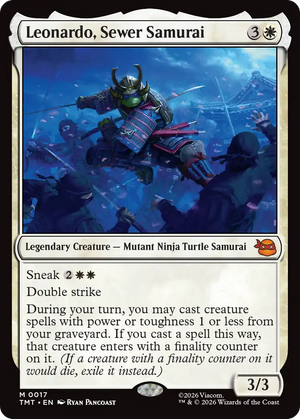
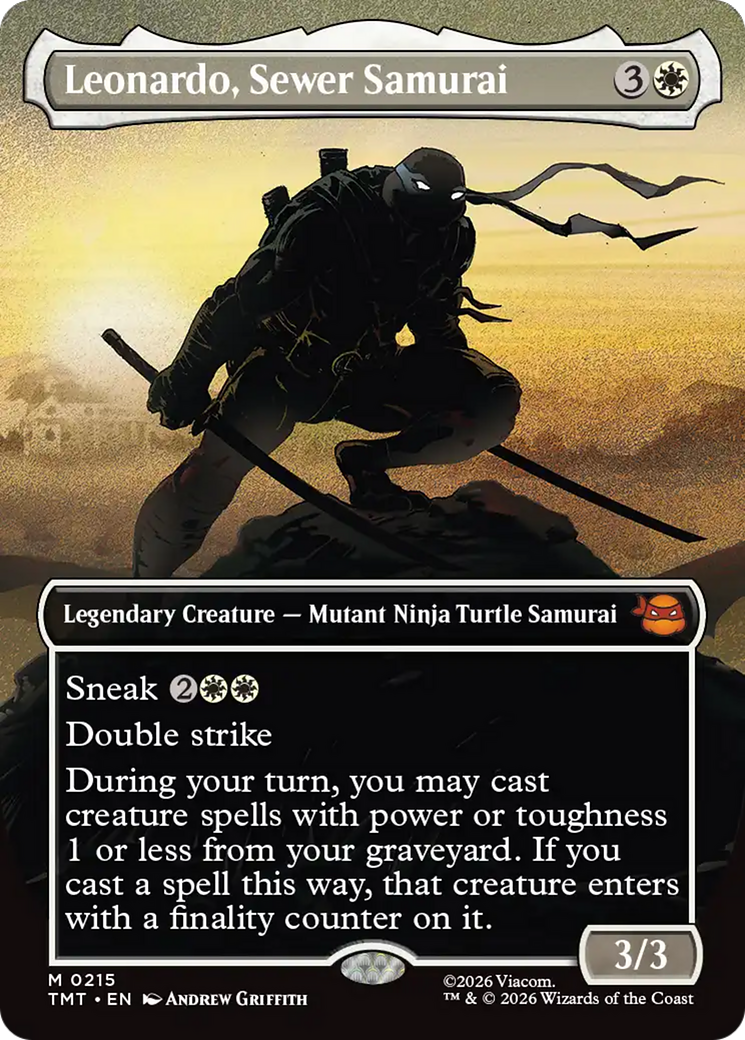
The named mythics anchor the archetypes. Leonardo, Sewer Samurai is the obvious first-pick for any deck that can support its colors. The other three Turtles play similar games at lower power levels, and the draft pivots are usually less about which Turtle than about which support package the pack is offering.
The format's quiet engine
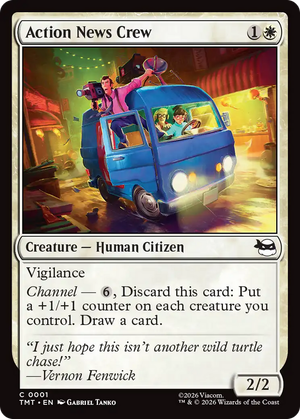
The surprise of the format is the common slot. Action News Crew is the example we keep returning to: three mana for a 2/3 with vigilance, a discard-and-draw channel ability, and a token trigger on death that turns into another card. The card looks unremarkable in a vacuum and reads as a build-around once you draft it.
The format rewards that kind of card disproportionately. Removal at common is scarce. The 2/3 statline blocks the most-played aggressive 2-drops. The channel ability turns a dead late-game draw into a fresh card. And the death trigger means even when removal does show up, the trade is closer to even than it looks.
We see versions of this design across the common slot. The format's commons are unusually high-floor, low-ceiling, and the cards reward you for finding lines that maximize their incremental value.
Speed
The format clocks at a comfortable medium. Average game length in our drafts has been turn nine to eleven, which is meaningfully slower than the last three sets. The aggressive shells exist (mono-red and white-red builds), but they are not free wins on the play, and the midrange shells have access to the same set of cheap blockers.
The implication for pick orders is significant. Premium removal goes earlier than usual because it is scarce. Two-drops with combat-relevant abilities go higher than their raw stats would suggest. And the four-mana slot is brutally competitive because nearly every deck wants a four-mana payoff.
What we are still figuring out
Two questions remain open after a week of drafts.
First: how good is the sealed format? Decklists from the prerelease suggest the format slows down further, with grinding midrange shells dominating. We have only seen a handful of competitive Sealed events; the early reads are that the named mythics matter even more in Sealed because there is no second copy of anything.
Second: how does the format evolve once players figure out the build-arounds? Right now we see drafters treating the channel-and-trigger commons as filler. As soon as a couple of trophy lists punish that read, expect the commons to climb several picks in average pick order.
The format is good. It rewards reading the table, building toward midrange synergies, and respecting the surprising power of cards that read as 2/3 vigilance for three.