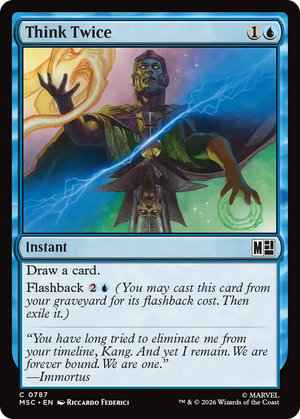
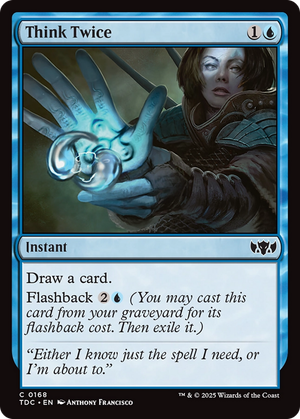
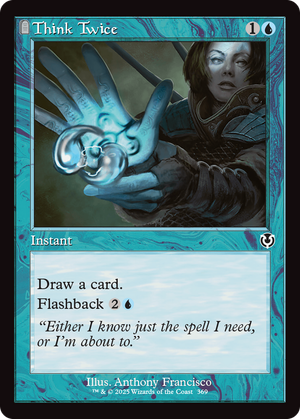
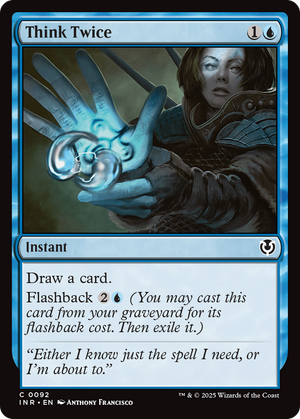
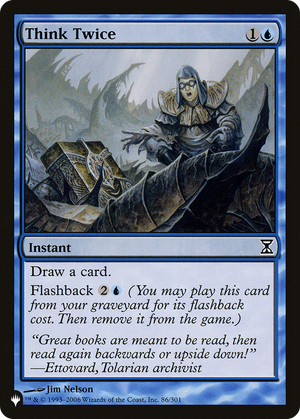
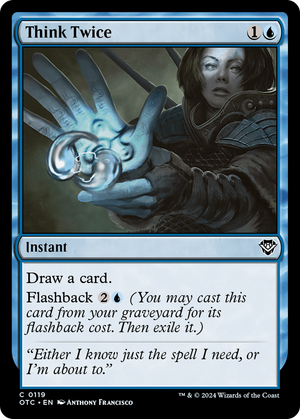
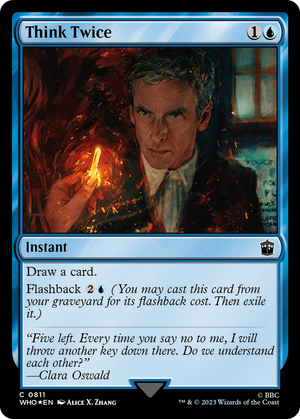
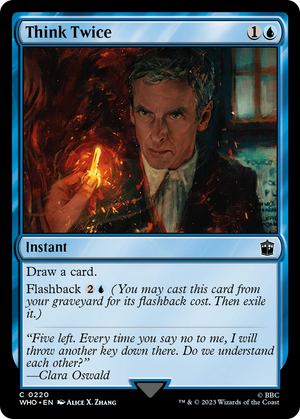
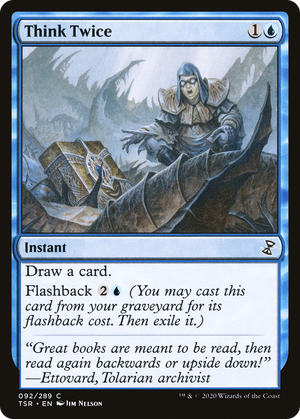
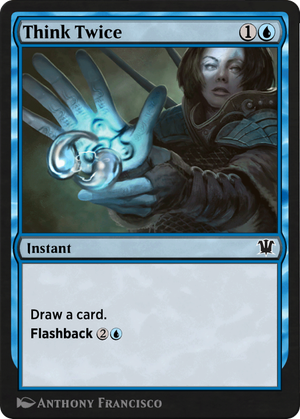
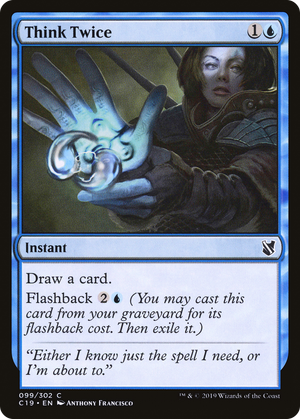
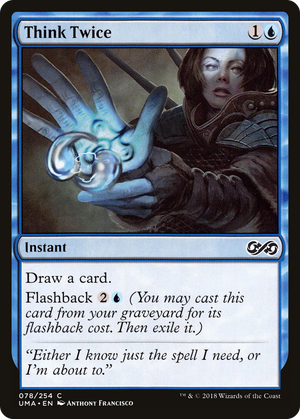
Think Twice


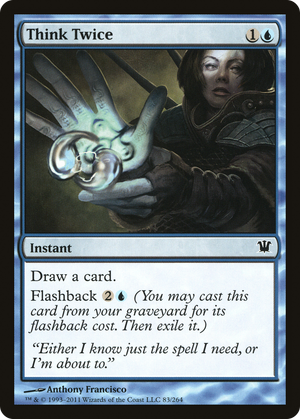
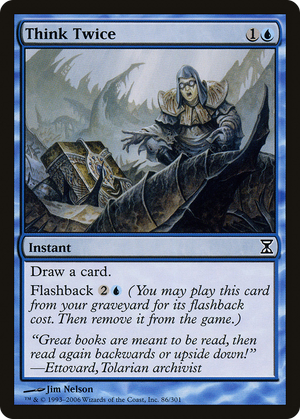
The card-advantage spell as a two-for-one bundled into a single piece of cardboard. The first cast trades down on tempo: two mana to replace itself, no immediate board impact, a draw step you could have had for free. The flashback cost is where the math turns. Three mana from the graveyard for a second card, paid whenever your mana would otherwise sit idle, means the spell is really five mana spread across two turns for two cards, with the option to split the payments however the game allows. That structure is the entire pitch. It rewards the control deck that wants to do something on every end step and never has a turn where it wishes it had drawn a land instead of a spell. The card was a fixture of the era when blue control wanted cantrips that didn't dilute the deck, because flashback lets one slot fill two: the draw early, the topdeck-insurance later. Compared to a hard cantrip like Opt or a deeper dig like Divination, the design lives in the patience axis. It is slow on purpose, and the slowness is what makes the second half free. Modern card-filtering has largely priced flashback draw spells out of competitive play by offering faster selection, but the template remains a clean lesson in how a deferred cost converts dead late-game mana into raw card count.
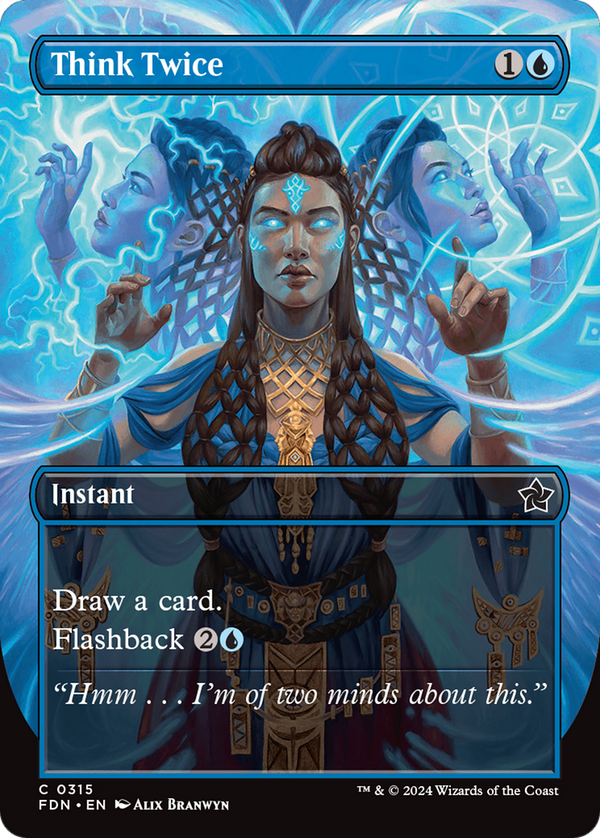
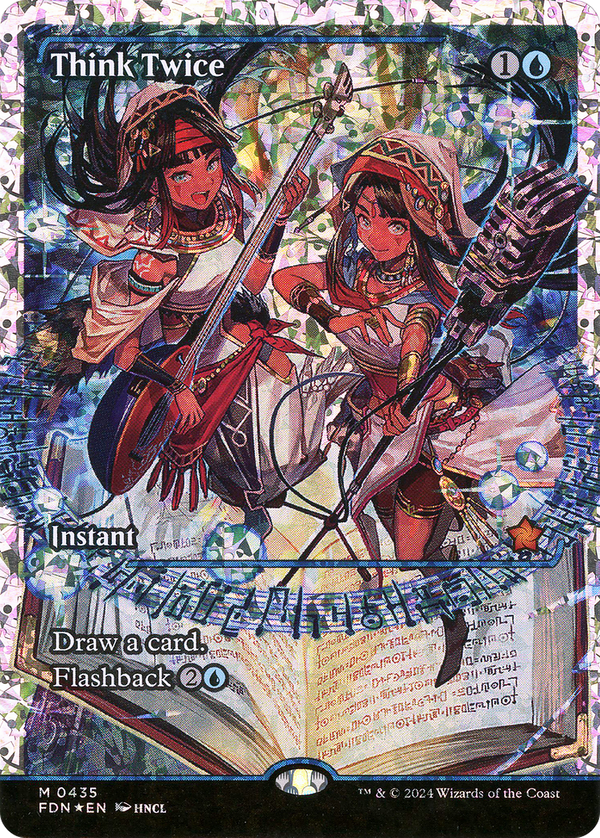
Rules text
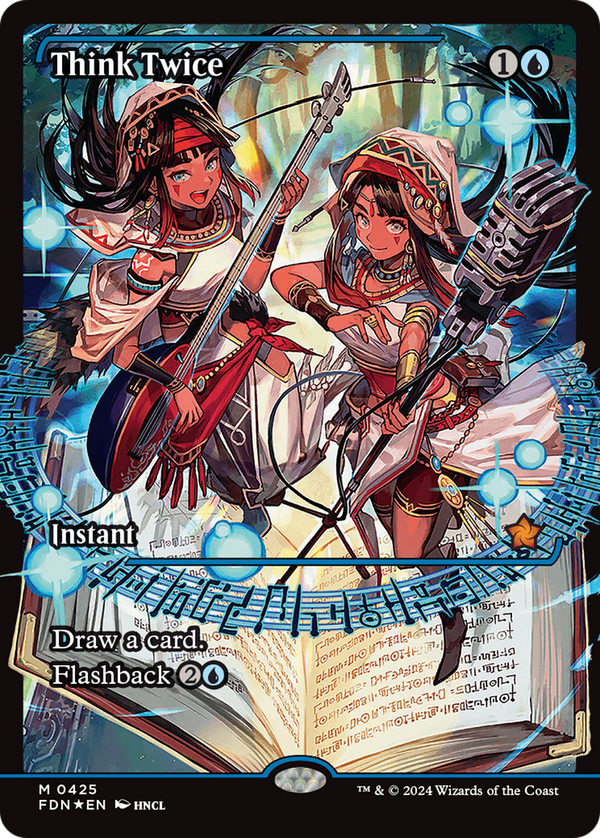
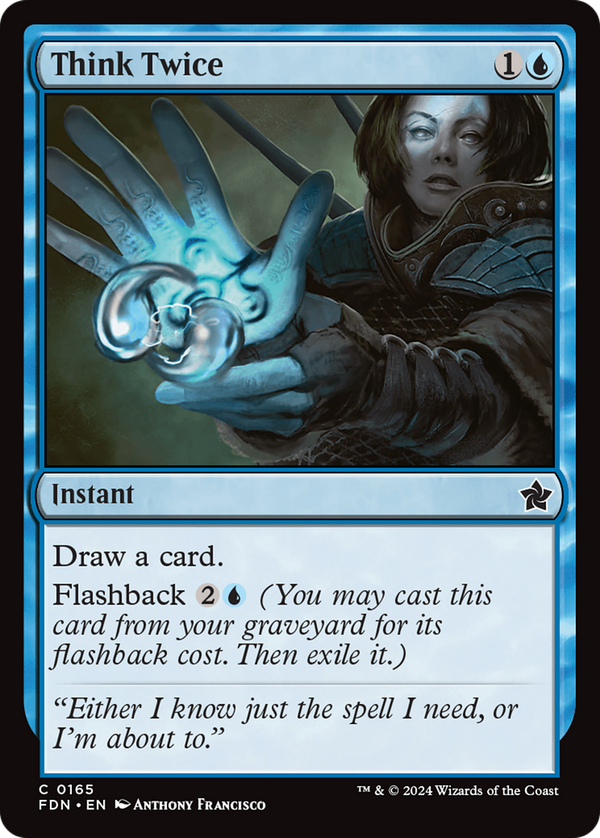
 (You may cast this card from your graveyard for its flashback cost. Then exile it.)