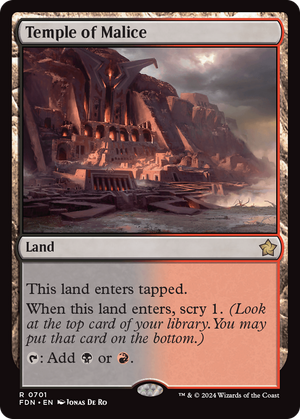
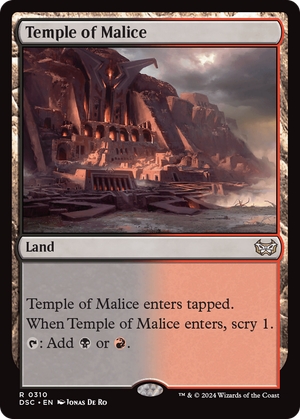
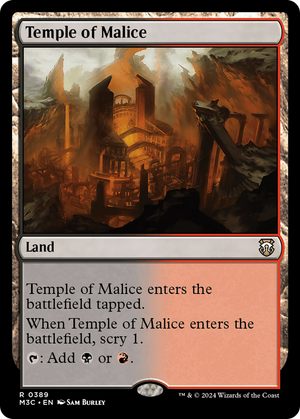
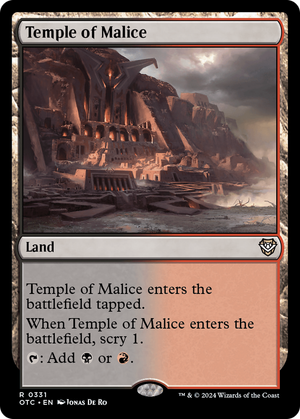
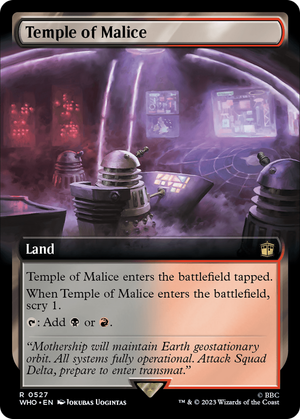
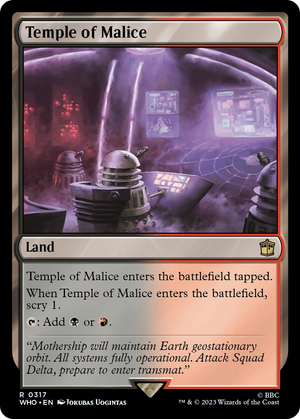
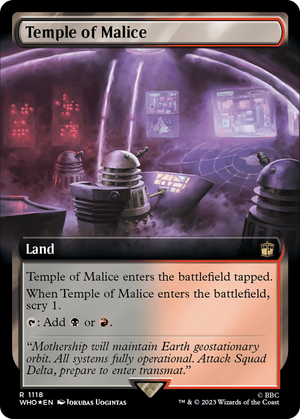
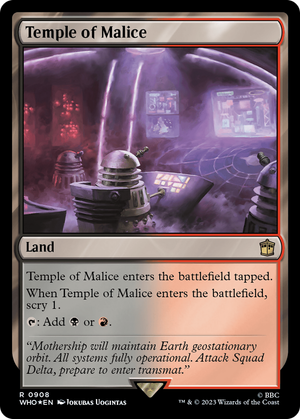
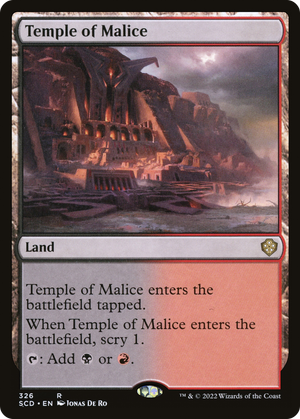
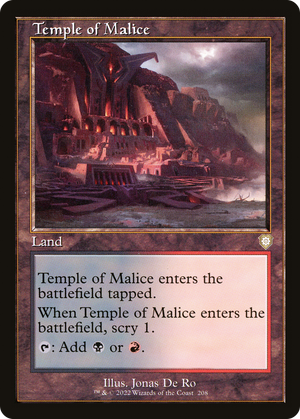
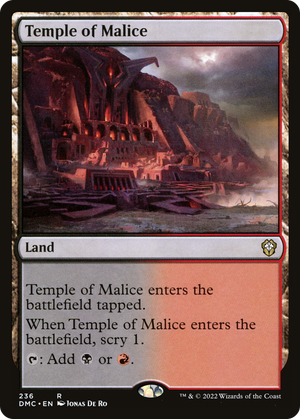
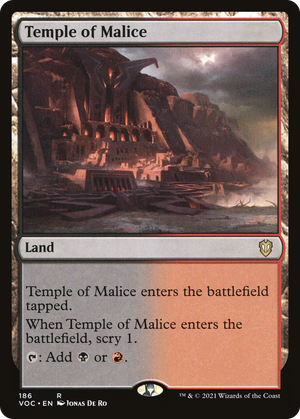
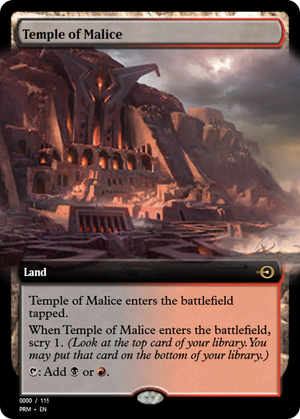
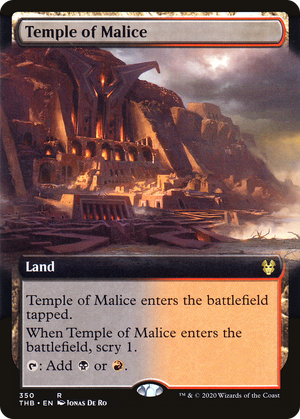
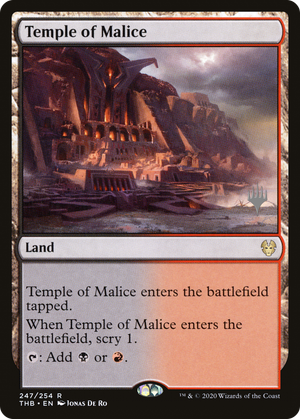
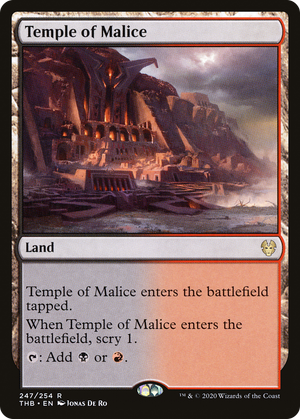
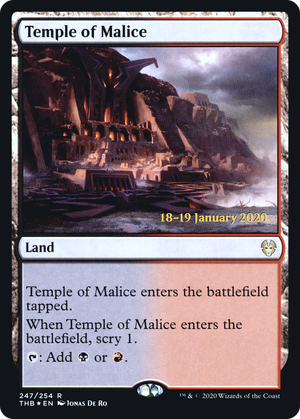
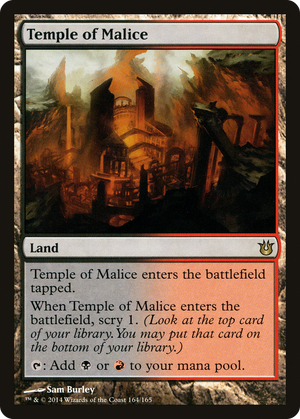
Temple of Malice
The trade in these scrylands is plain and old: a turn of tempo for a point of card selection. Entering tapped is the tax, and scry 1 is what the tax buys back, smoothing the next draw on the turn you would have spent doing nothing anyway. That symmetry is what made the whole cycle a sensible answer to the dual-land question for slower decks: if you are tapping out for a land that does not act this turn, at least let it filter. For the Rakdos pairing the scry is worth a touch more than the average, since black and red both lean on hitting specific pieces (a removal spell, a finisher, the second land) at the right moment, and the look-and-bottom lets you dodge a flood or fish for action. The cost is real and unhidden: against any deck applying early pressure, a land that comes in tapped is a half-turn handed away, and the scry does not change the board. These lands belong to the family of fixing that is graded by how much your deck can afford to wait. When the clock is yours to set, the tempo loss disappears into the scry; when the clock belongs to the other player, the tax is paid in full.
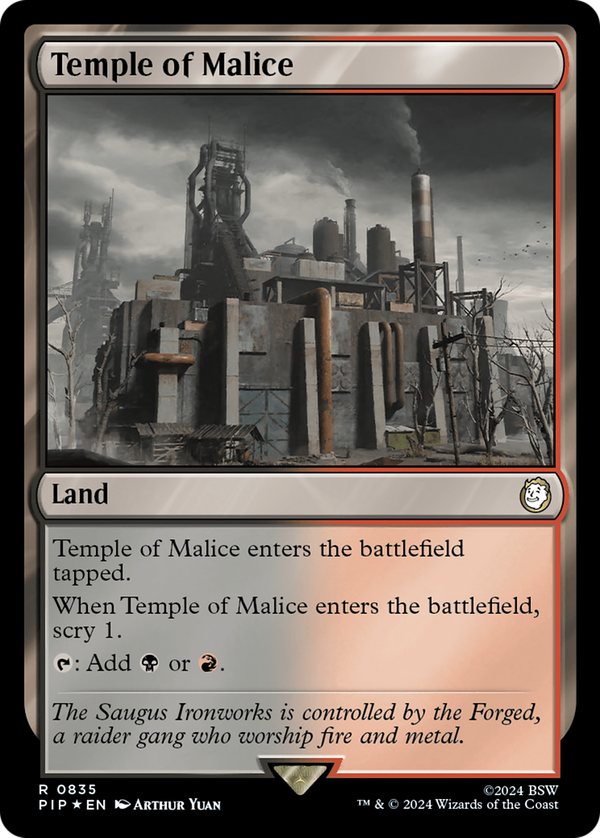
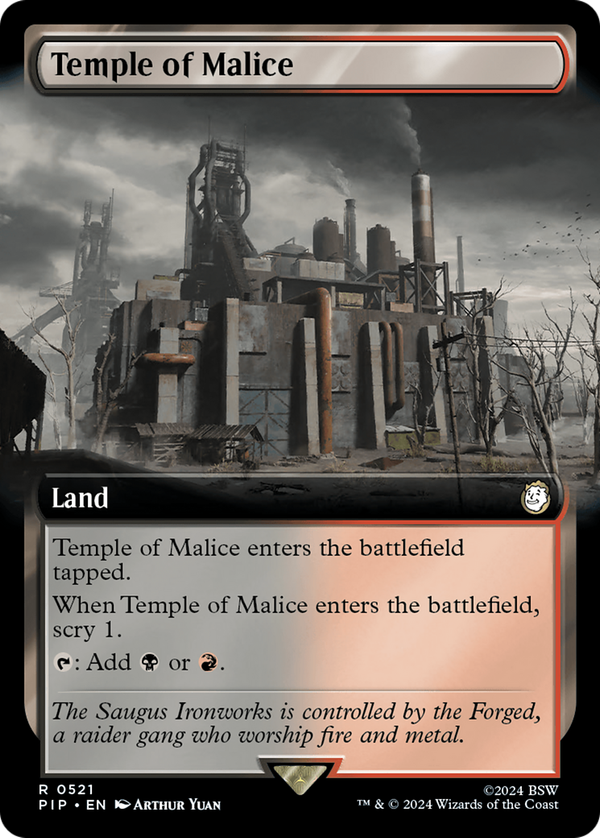
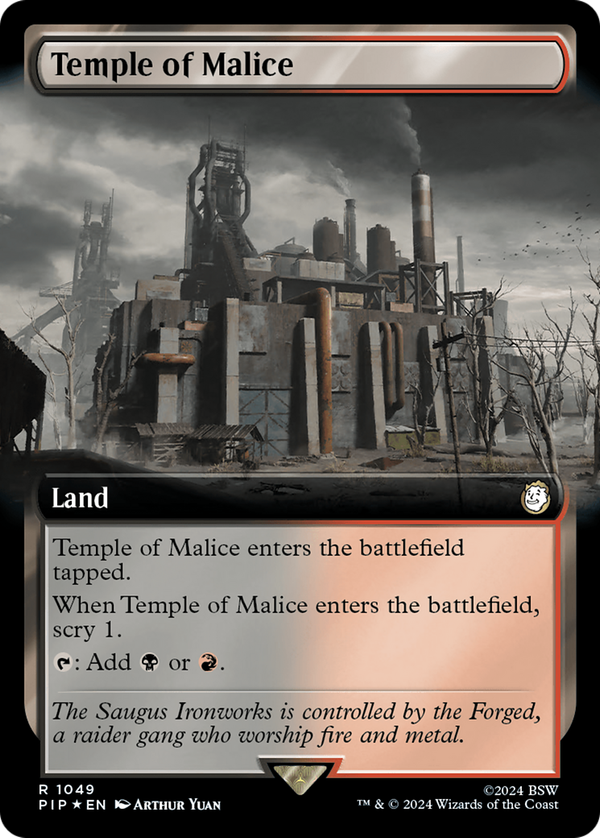
Rules text
 : Add
: Add  or
or  .
.