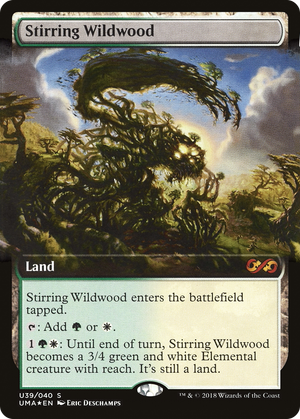
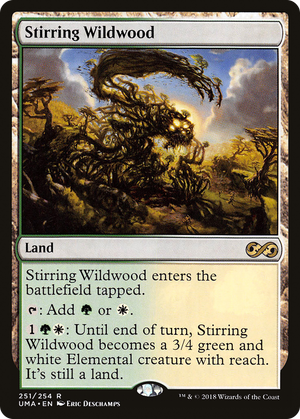
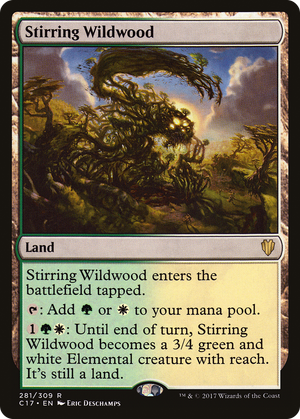
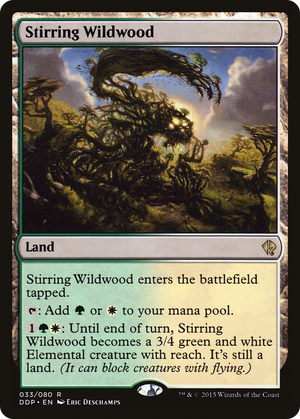
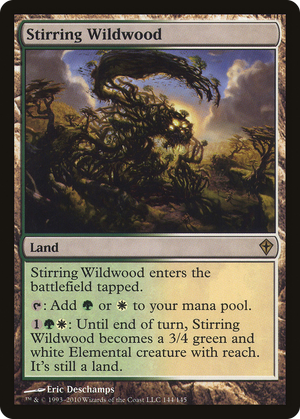
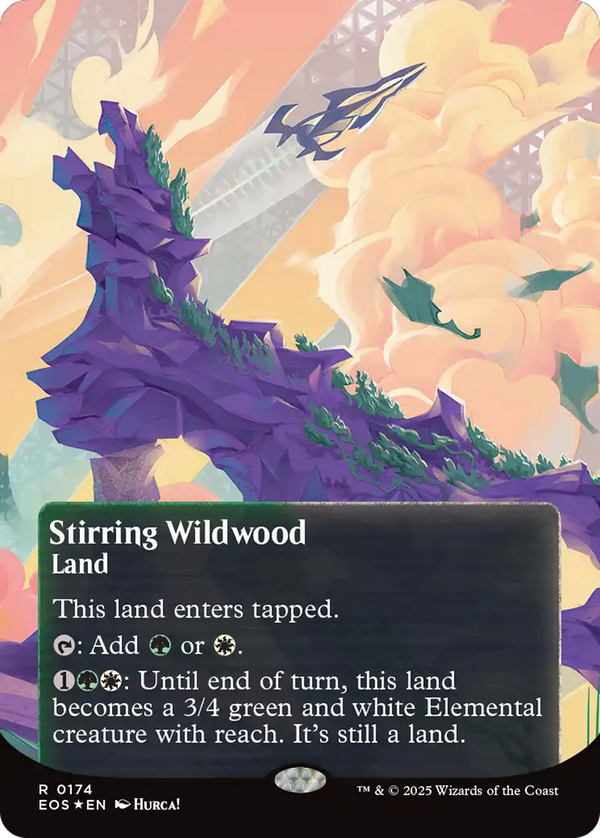
Stirring Wildwood
The Selesnya entry in the manland cycle that taught dual-color decks how to spend their late-game mana on a threat instead of nothing. The trade is fixed and visible: it enters tapped, costing a turn of tempo up front, and the body it becomes is a 3/4 with reach rather than a clean evasive beater. That toughness-over-power split is the giveaway about its intended job. Three power closes games slowly; four toughness and reach mean it blocks fliers, survives most red burn, and outlasts the small attackers that decks like this tend to face. As a creature it is a land first, so it dodges sorcery-speed removal aimed at the empty board and only becomes vulnerable in the brief window when its controller animates it, usually in combat or to break a stalemate. The deeper reason this style of land mattered is flooding insurance: a fixing land that turns into a finisher gives a deck a way to convert excess mana into pressure without diluting the spell count. The reach is the detail that distinguishes it from its cycle-mates, slotting it into ground-stall decks that needed a way to fight the air without spending a card to do it.
Rules text
 : Add
: Add  or
or  .
.
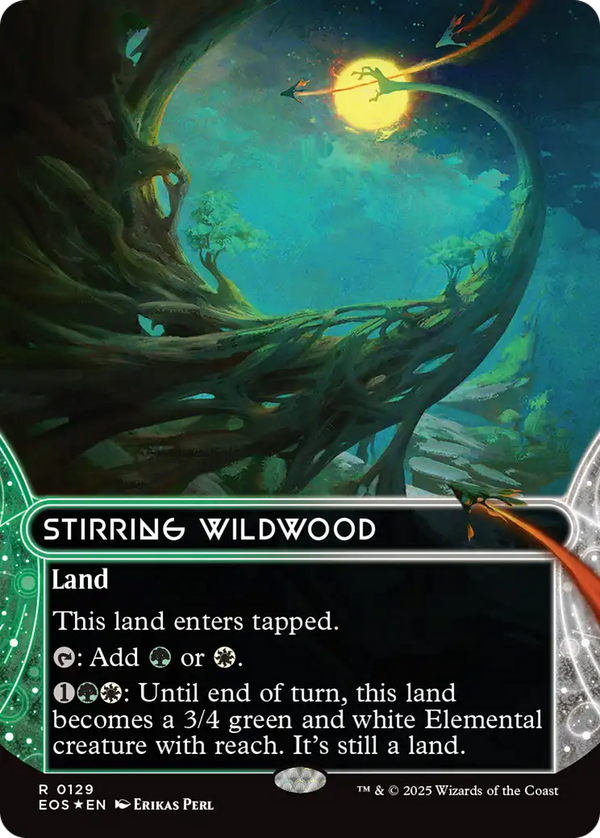
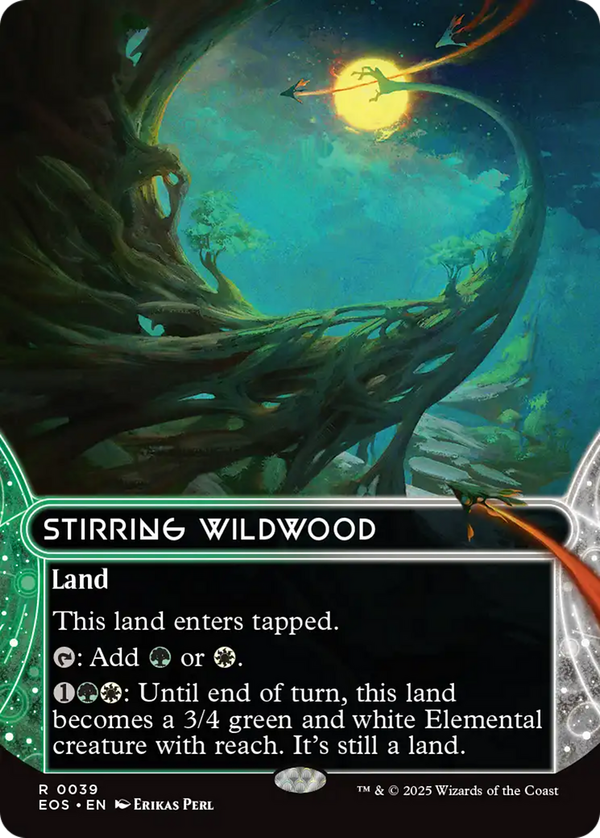
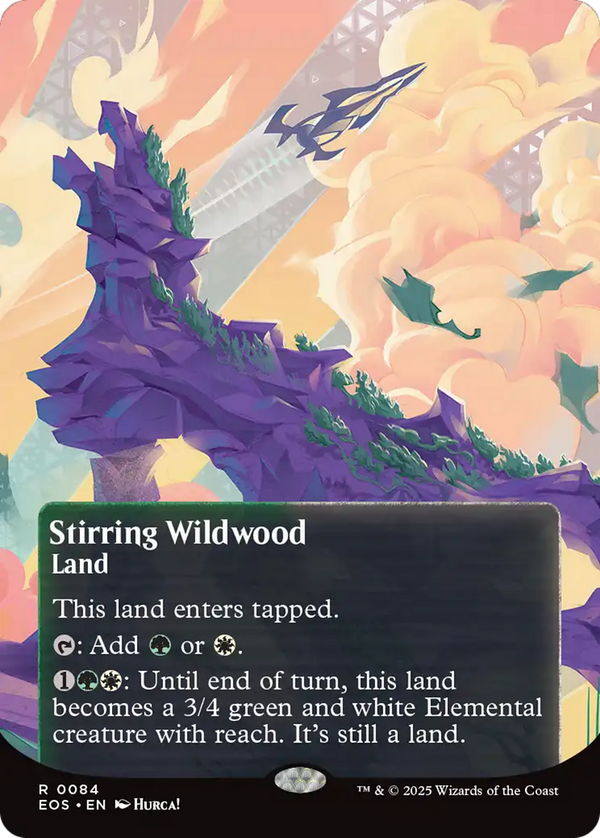
 : Until end of turn, this land becomes a 3/4 green and white Elemental creature with reach. It's still a land.