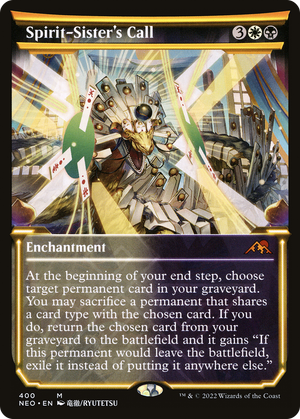
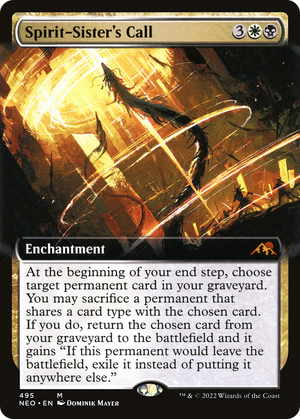
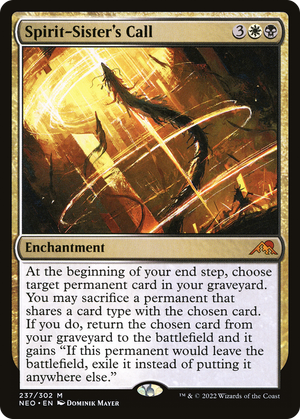
Spirit-Sister's Call



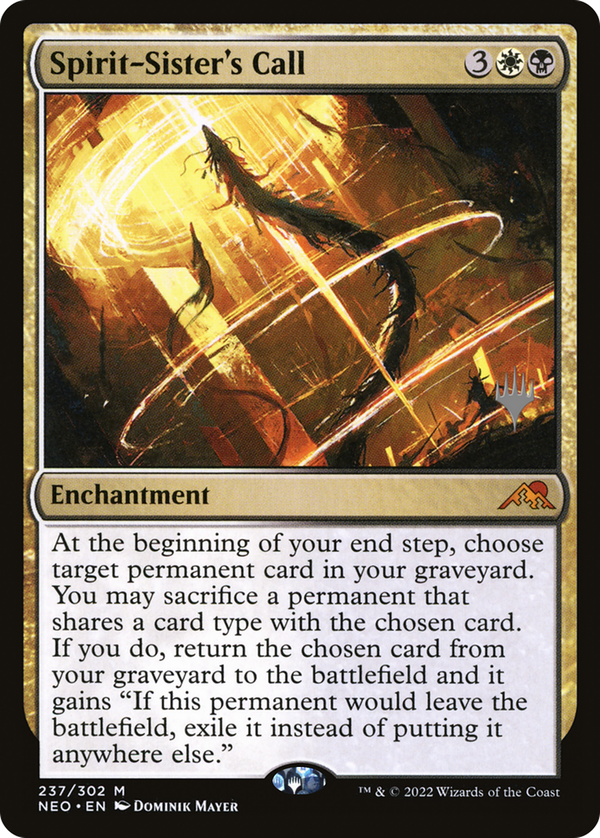
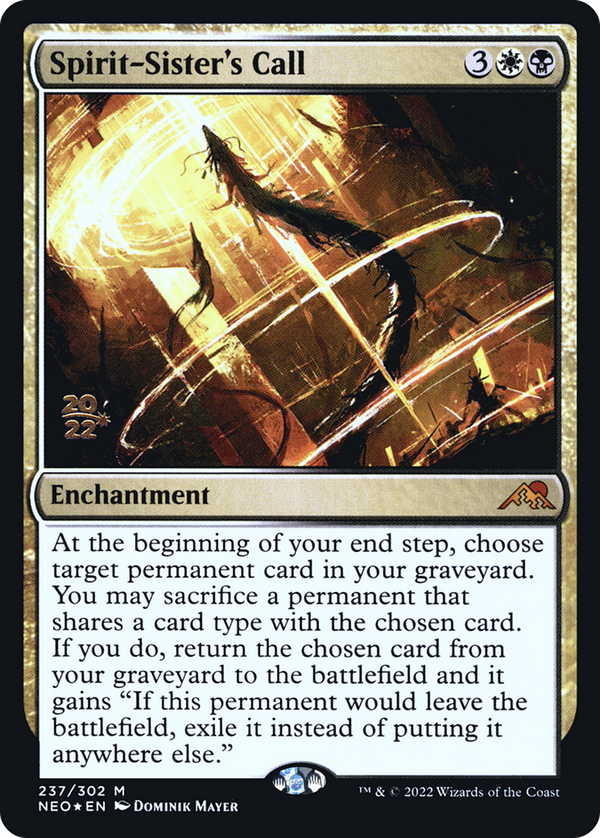
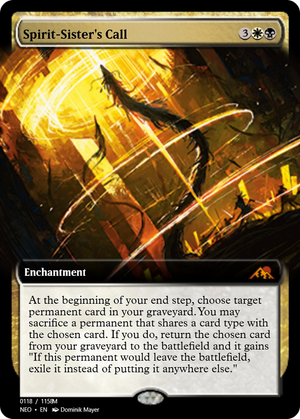
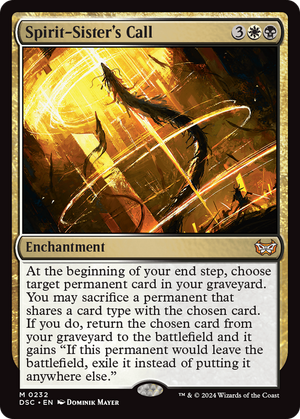
Most reanimation buys you one target and asks nothing about what it is; this recurs a permanent every end step, but taxes each return through a matching-type sacrifice. The engine runs on symmetry: return a creature by sacrificing a creature, a land by sacrificing a land, an enchantment by sacrificing an enchantment. That constraint turns the card from a raw value spigot into a sequencing puzzle, because the fuel you feed it and the payload you pull back have to share a card type, and the exile-on-leave rider stapled to each returned permanent means those bodies are one-and-done. You cannot loop a single creature endlessly; each cycle demands fresh fodder and a fresh graveyard target. The sacrifice clause reads less like a cost paid to the graveyard than a conversion: you trade a permanent you already control for a strictly better one waiting in the yard, and the shared-type restriction is the throttle that keeps the trade from becoming free. The timing carries a real cost rather than an escape hatch. The trigger fires at the beginning of your end step, so the payload never lands during combat or an opponent's turn: it arrives on your clock, and opponents get priority before your untap to answer it at instant speed. That end-step placement rewards decks stocked with enters-the-battlefield triggers and sacrifice payoffs on both ends of the swap, feeding value out of a permanent you were spending anyway.