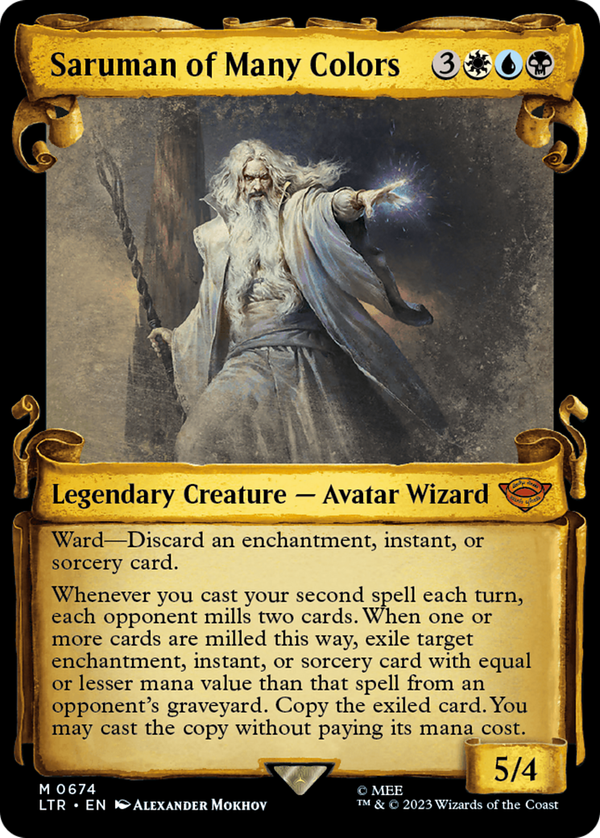
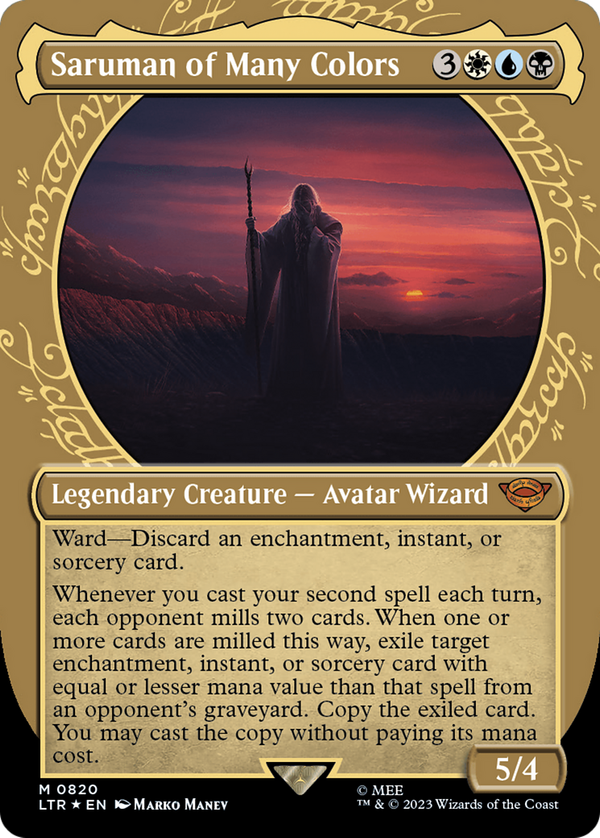
Saruman of Many Colors




The trigger reads like a spellslinger's dream, but the constraint hidden inside it is what actually shapes the deck. The mill of two on your second spell each turn is not the payoff; it is the toll you pay to open a window into an opponent's graveyard, and the exile-and-copy clause can only reach a card of equal or lesser mana value than that second spell. So the deck is a balancing act between casting cheap spells to trigger consistently and casting expensive ones to steal anything worth stealing. Cast a two-drop and you can lift a two-drop back; cast something at the top of the curve and any enchantment, instant, or sorcery is on the table. Milling opponents rather than yourself is the wrinkle: this is theft dressed as an Esper value engine, feeding your own removal and card advantage from the fuel your opponents accumulate. The ward cost is the quietly clever piece, demanding an opponent pitch exactly the kind of card the trigger wants to plunder: an enchantment, instant, or sorcery. It punishes the mage answering a six-mana threat by making them discard the very spells the deck loves to steal. As a design, it collapses two archetypes that rarely share a shell (mill and reanimation-style theft) into a single card that only rewards you for playing spells at a certain rhythm.