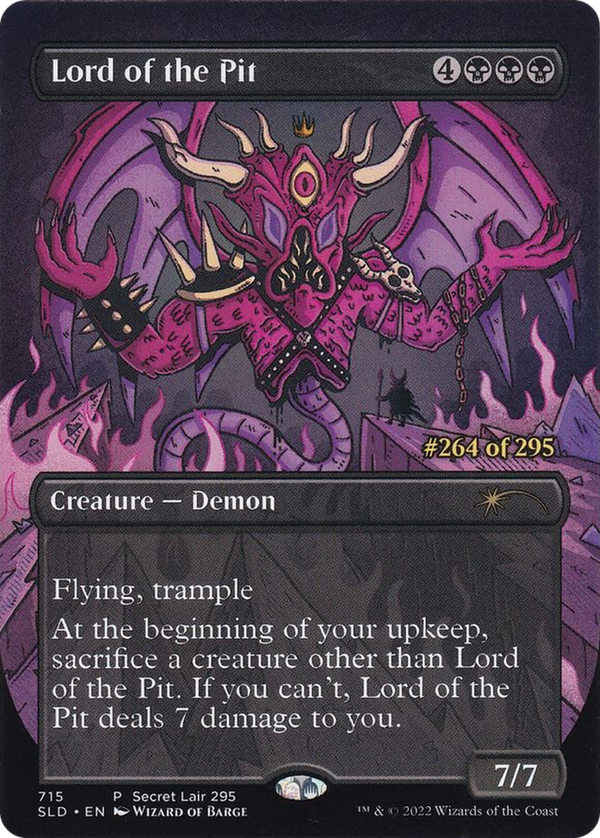
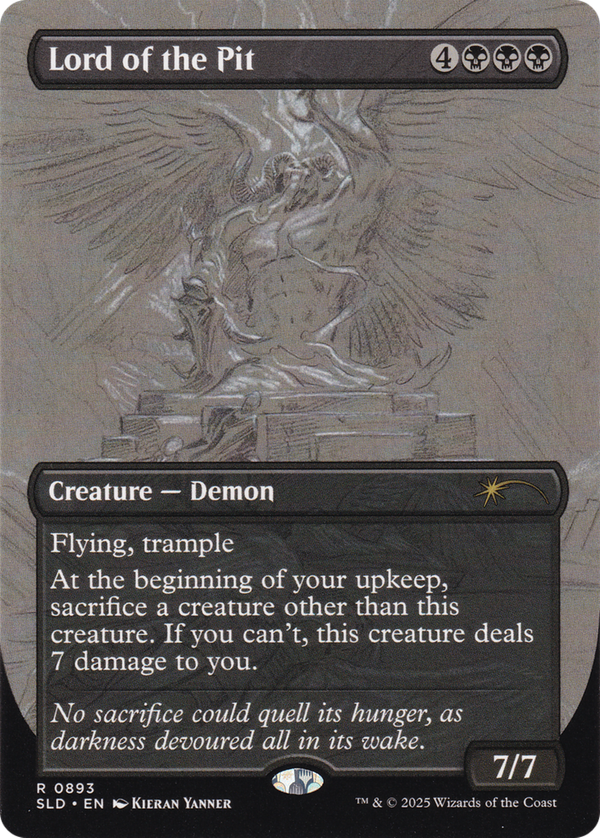
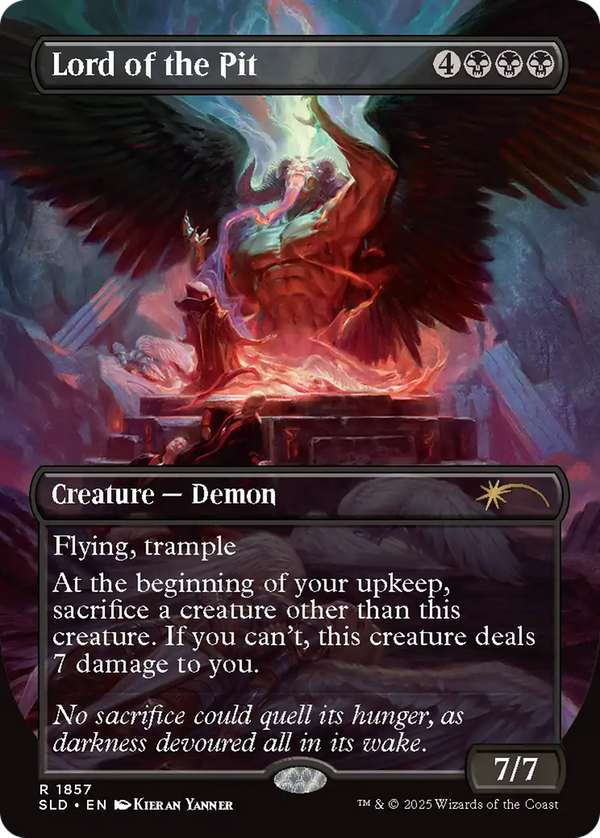
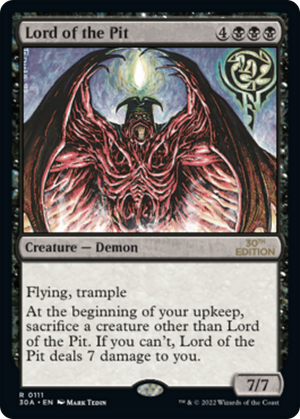
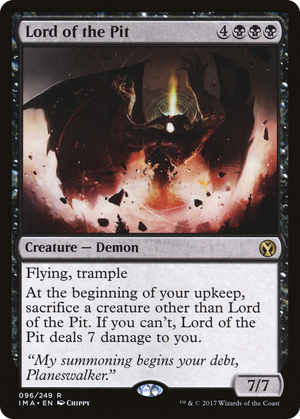
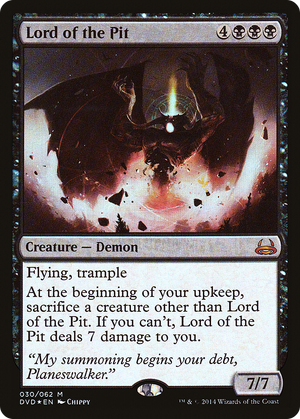
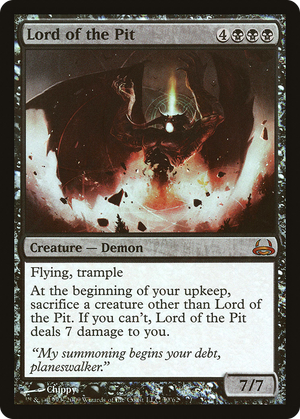
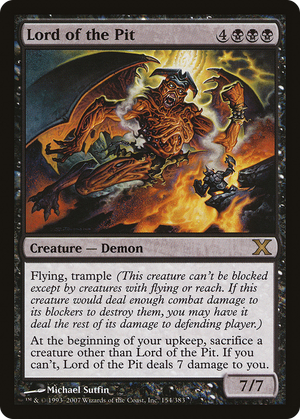
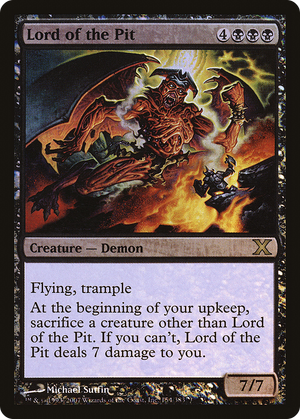
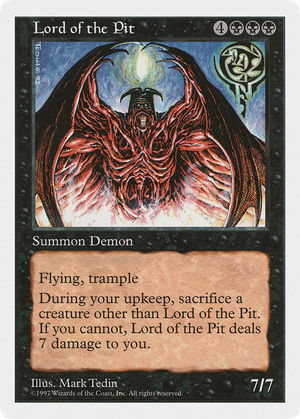
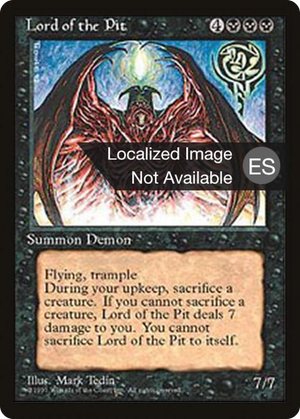
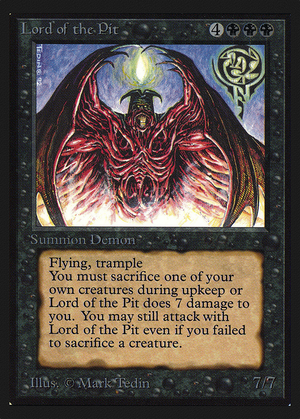
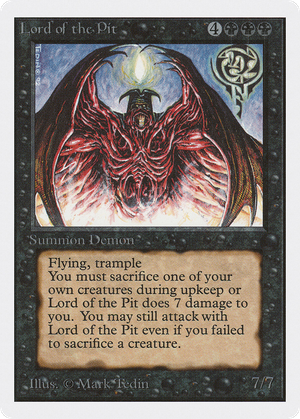
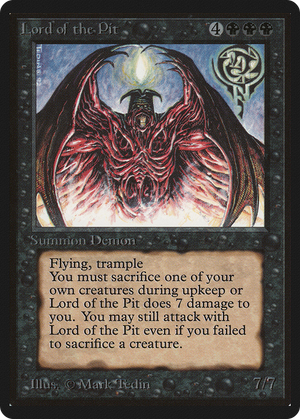
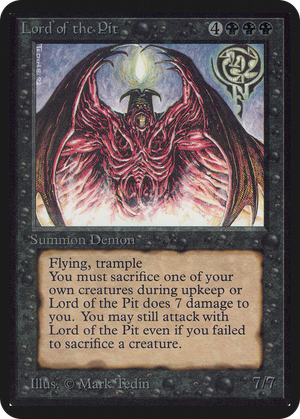
Lord of the Pit


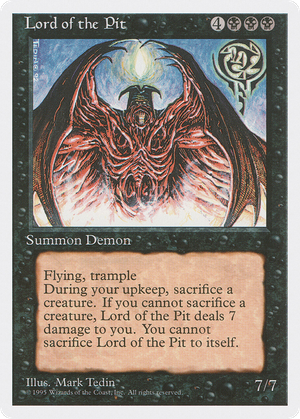
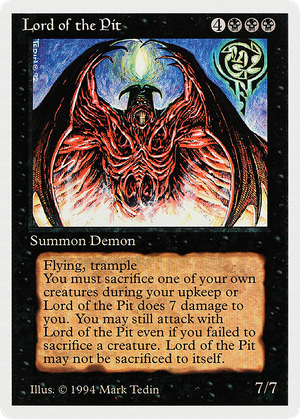
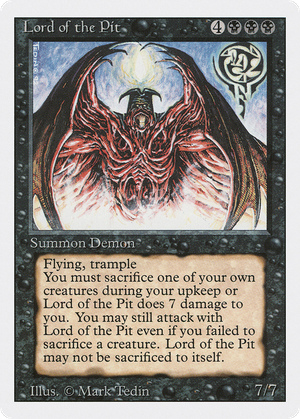
A first-principles attempt at the demon archetype: pay the mana, get a body that ends games on its own, and accept an upkeep tax your build has to be designed to pay. The 7/7 flyer with trample at seven mana was the rate; the sacrifice clause was the price, and the seven damage to the controller for failing to pay it was the threat that gave the card its identity. The design assumes the demon is a deal with the devil, not a build-around: you cast it because you are winning anyway and need to close, or because you have a sacrifice engine that turns the tax into an upside. Everything black has done with demons since has been a refinement of this tension. Later printings softened the math (a smaller body, a narrower trigger, a sacrifice that costs you something other than your whole board) or inverted it (Carnival of Souls and the aristocrats lineage turned sacrificing creatures from a cost into a resource). The original takes the deal at face value: the upkeep trigger is not optional, the sacrificed creature cannot be the demon itself, and there is no escape clause if your board is empty. It is the card the entire "demon asks for a tithe" design language is measured against, and the bluntness of the original is the reason the template has held up for three decades.