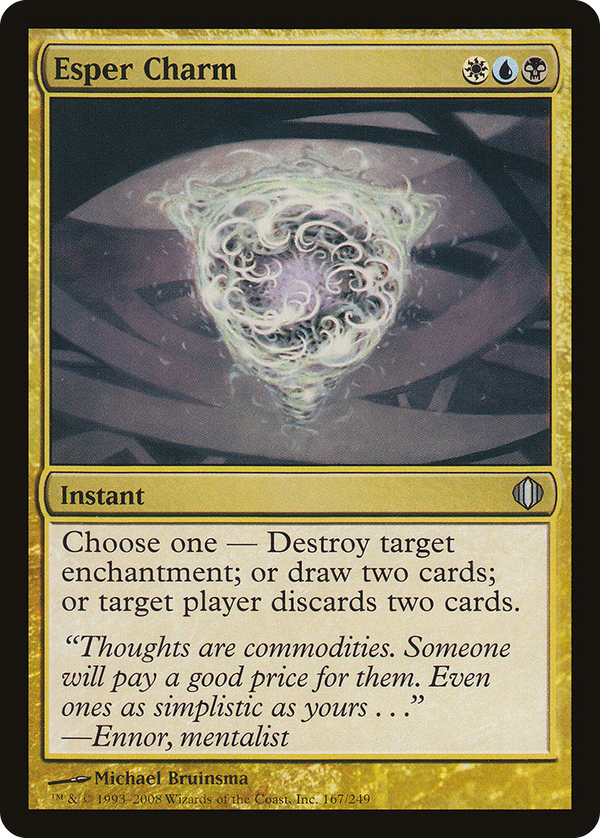
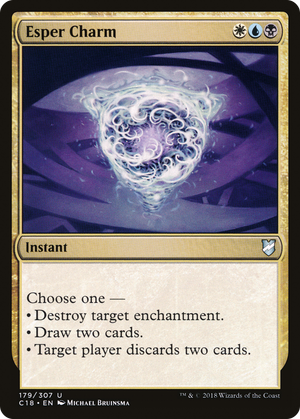
Esper Charm



Draw two cards at instant speed is the mode that does the most work here: it is Divination folded into a spell a control deck wants to cast anyway, on the end step, while holding up everything else. The discard mode gives it teeth against combo or a control mirror, stripping two cards from a hand at the precise window where information and tempo decide the game. The enchantment-destruction mode is the white tax: present so the card is never stranded against a problematic permanent, narrow enough that you never lean on it. That spread is what the charm cycle this belongs to is built to deliver: a wedge or shard pays for flexibility, and the more colors you commit, the more verbs the spell hands back. Esper takes the two colors most associated with card economics and gives them their natural modes, then staples on removal for insurance. None of the three is a card you would run a full playset of in isolation; together they form a spell that always does something relevant in the moment. The design discipline is keeping all three modes honest at the same cost rather than pushing one to the edge, so the card never feels overloaded and never feels dead. It asks a deck that has already committed to its mana for almost nothing, and pays back a draw, a disruption spell, and an answer in a single slot.