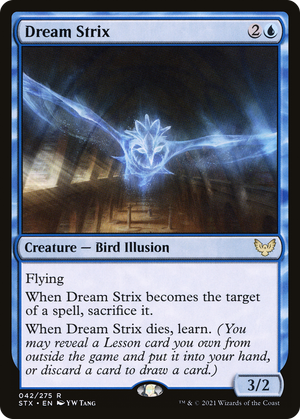
Dream Strix


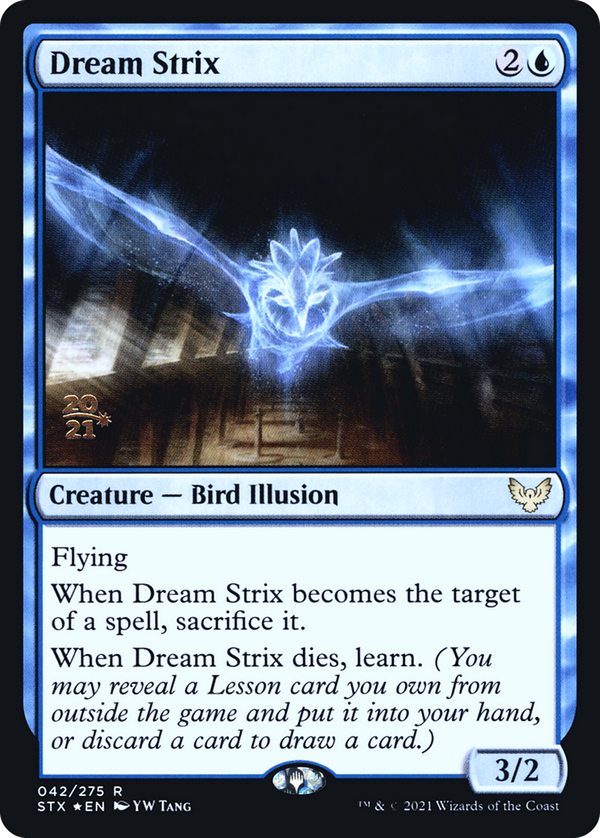
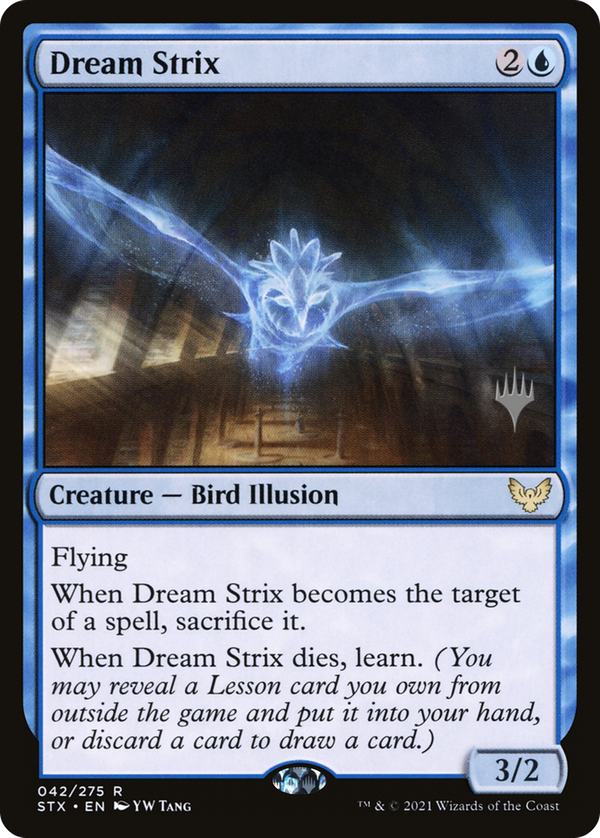
The self-sacrifice clause reads like a downside, and against most decks it functions as one: a single Illusion-style trigger means any targeted removal, any bounce spell, any pump, sends this to the graveyard before its controller gets anything back. What redeems the design is where the body goes when it dies. The death trigger converts the removal your opponent just spent into a card, either a Lesson pulled from your sideboard or a rummage that filters a dead draw into a live one. That inverts the usual math on a fragile flyer: the opponent's clean answer becomes a bad trade for them, since killing a 3/2 evasive threat now costs a card and refills your hand or fetches a tuned spell. The lineage runs back through Illusions like Phantasmal Bear and Phantasmal Image, creatures priced aggressively on the promise that they evaporate under interaction. This one pays the promise back rather than just enforcing it. The tension it resolves is a small but real one in evasive-tempo design: how do you cost a beater that dies to a spell without making the spell feel free? Attaching a resource engine to the death is the answer, and it means the card is doing work whether it swings for lethal or soaks a removal spell on turn three.