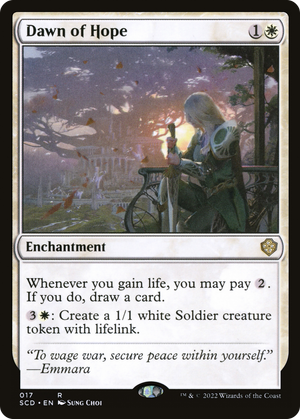
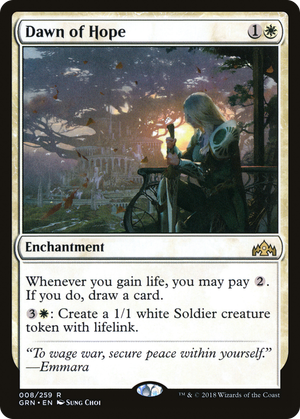
Dawn of Hope


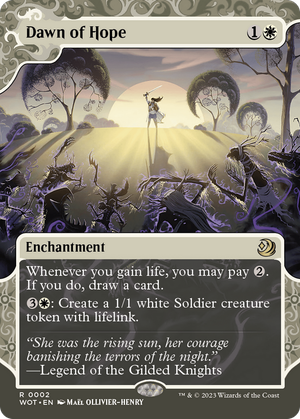
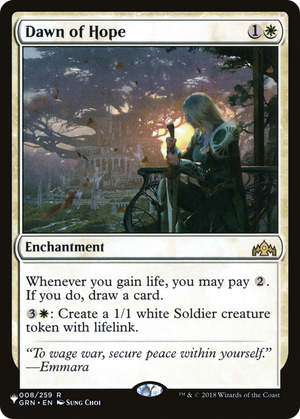
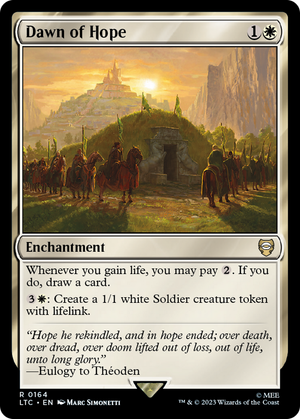
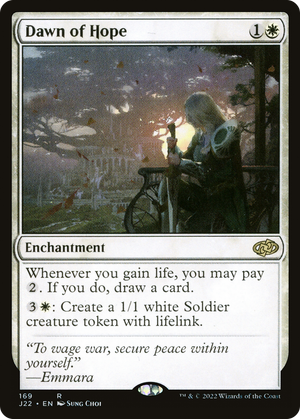
Lifegain has always struggled to justify itself as a deckbuilding axis: the life total is a resource, but gaining it back rarely converts into board presence or cards, so the payoff has to do the converting. This enchantment is that payoff built as an engine rather than a single trigger. The card-draw clause is the heart of it, and the structure matters: each life-gain event is an optional  for a card, which means the ceiling scales with how many small triggers a deck can string together rather than with how much life any one source restores. A single big gain draws once; ten incremental gains draw ten times, if you have the mana. That distinction quietly favors token-and-attrition builds over burst lifelink. The Soldier-token mode closes the loop without needing any other card: every token has lifelink, so attacking with them feeds the draw trigger, and the mana not spent drawing goes back into making more bodies. It is a self-contained value loop where the lands do double duty, the lifelink does double duty, and the only real constraint is how much mana you can route through it in a turn. The friction is its own greed: every activation competes for the same mana, so a patient build that leaves the engine running out-earns one that dumps everything at once.
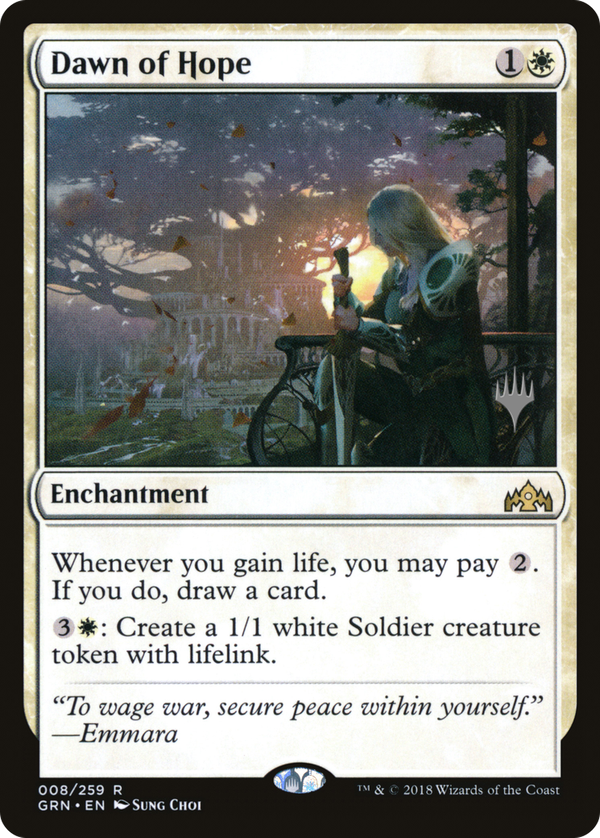
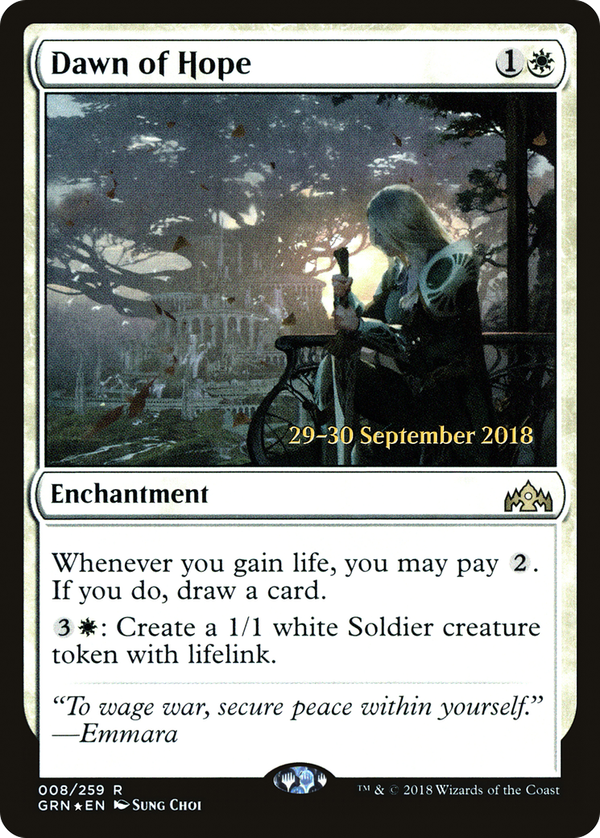
Rules text
. If you do, draw a card.
 : Create a 1/1 white Soldier creature token with lifelink.