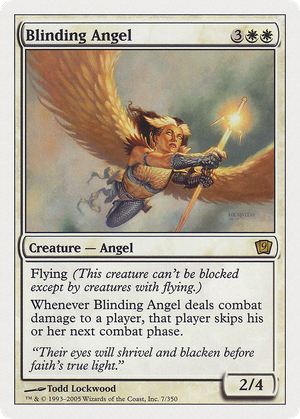
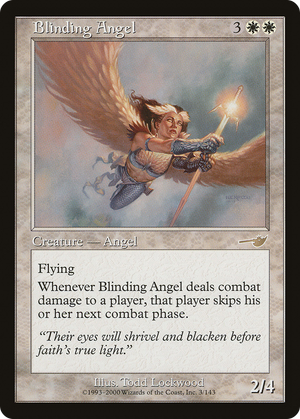
Blinding Angel


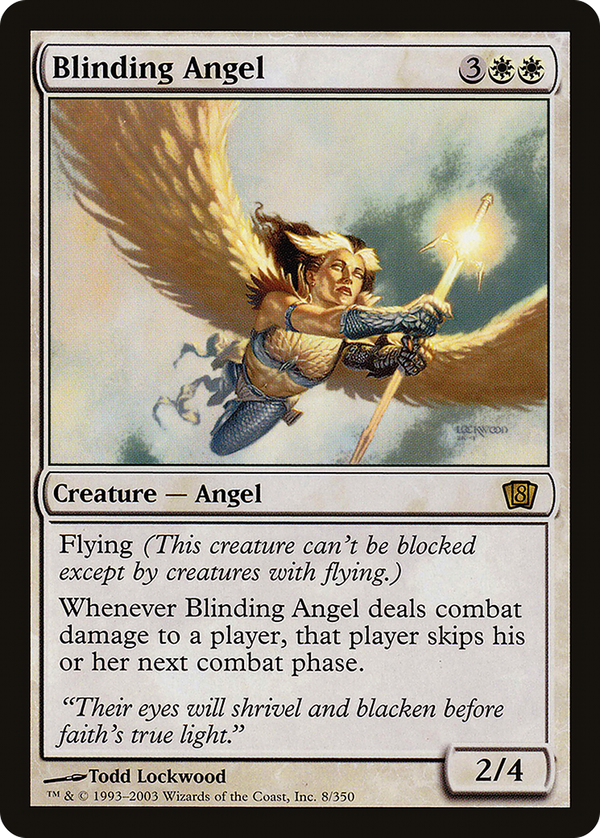
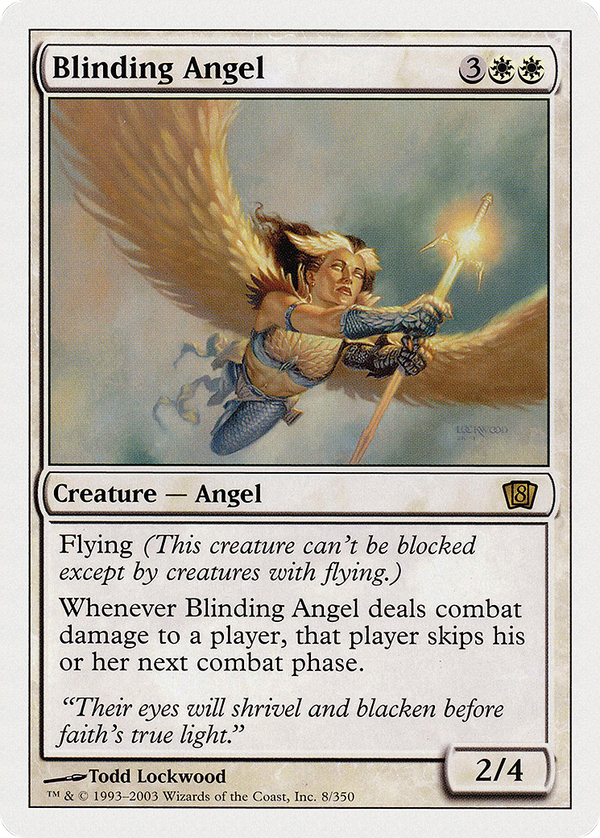
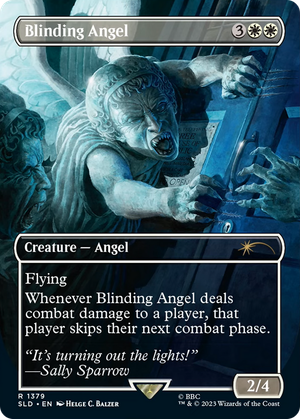
The threat here is not the body but the lock it threatens to build. Connect once and the defender loses their next combat phase, which on a flier they struggle to block means a soft prison: they cannot swing back while you keep swinging, and if you connect again before that skipped phase resolves, the next one is gone too. The 2/4 frame is the calibration that keeps the engine playable without breaking it. It is built to survive a counterattack and to stick on the board long enough for the combat-denial trigger to compound, not to race; a bigger body would have made the lock trivial to assemble, while a smaller one would have died before the second hit landed. The trigger sings because it depends on connection. It does nothing in a stalled board, rewards the kind of evasion flying already provides, and hands the opponent a clear out (block it, kill it, race it). That tension between a recurring combat-phase tax and the fragility of the creature imposing it is the whole card. It is a tempo piece dressed as an Angel, asking whether you can land enough hits to turn a small advantage into a one-sided combat step that never ends.