Ancient Gold Dragon


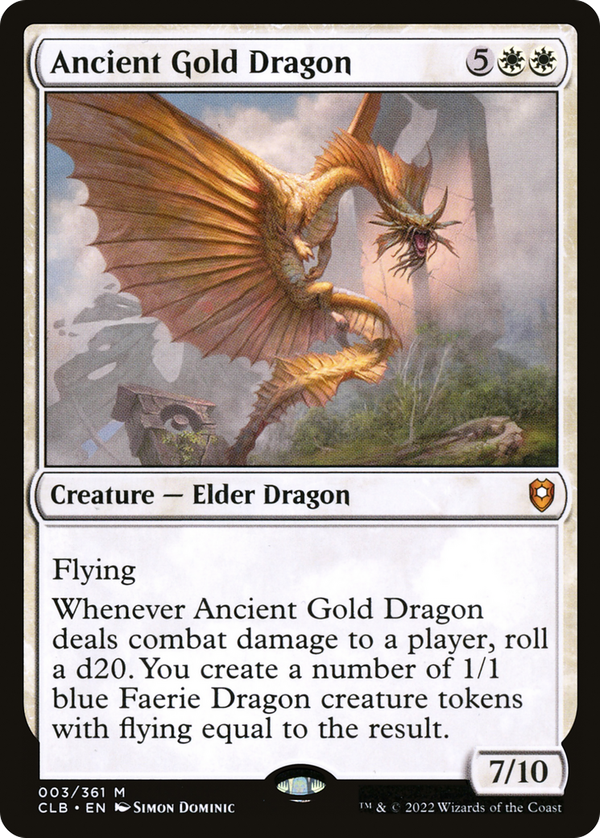
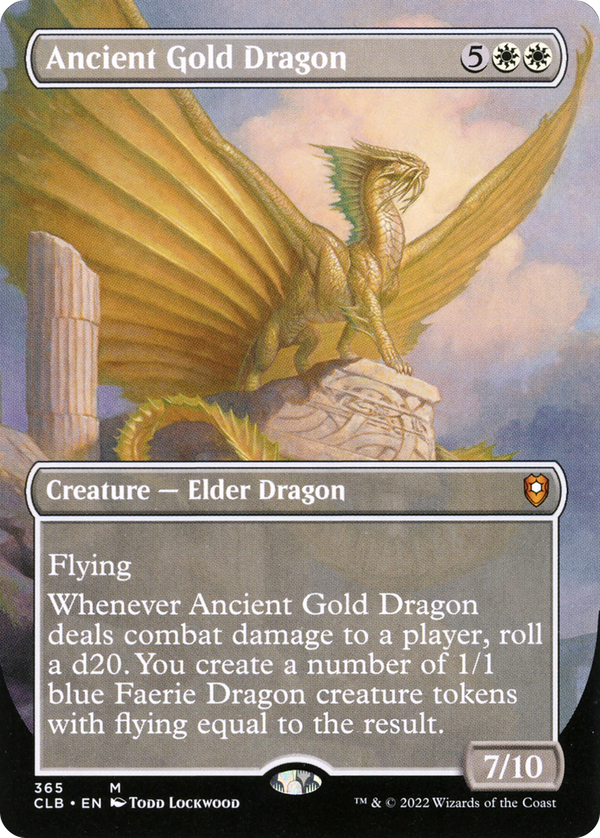
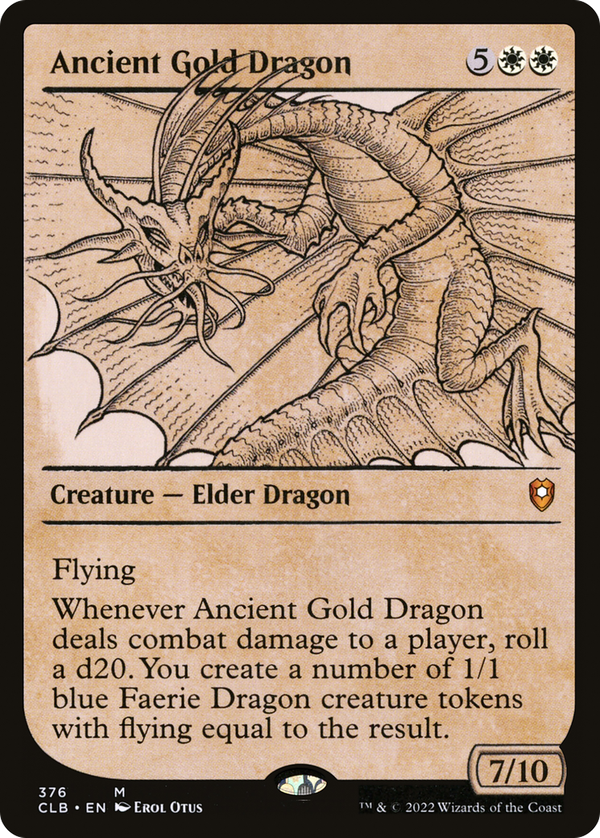
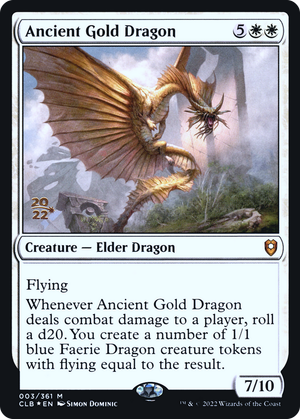
Connecting with this in combat is a slot-machine payoff: the d20 makes the reward swing wildly, from a single measly Faerie Dragon on a roll of one to a sudden battalion of twenty flyers on a natural twenty. That variance defines the design, the sort of high-ceiling gamble the twenty-sided die was imported to enable, echoing the roleplaying source material where a critical hit means everything hinges on one roll. What keeps the card from being pure chaos is the body underneath it. A 7/10 flyer is enormous: it shrugs off most damage-based sweepers, blocks nearly anything out of the air, and demands to be dealt with even before it starts generating tokens. The toughness in particular is what makes the payoff repeatable, because a fragile finisher connects once and dies to a burn spell before it can swing again. This one lands, absorbs a removal effort or two, and keeps connecting. The tokens themselves compound the flying pressure that already made the Dragon hard to answer, turning a single unblocked hit into a self-reinforcing air force. It sits at the top end of a lineage of white beaters that ask you to commit seven mana for a haymaker; the difference is that the haymaker here doubles as a token engine whose output you cannot predict but can absolutely build around.