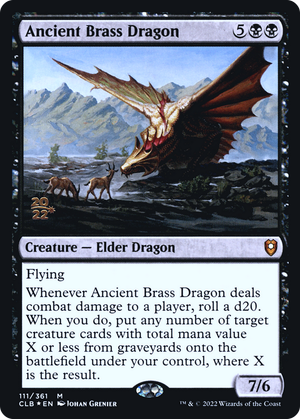
Ancient Brass Dragon


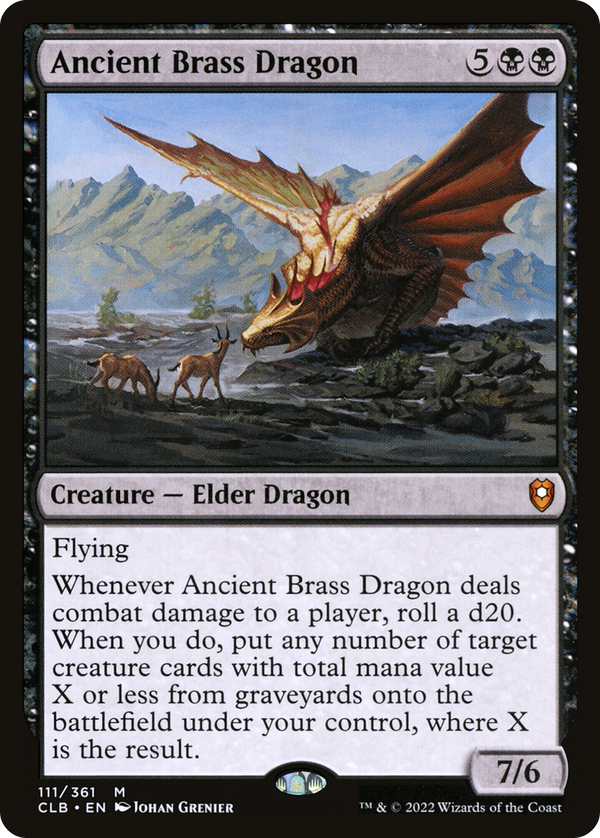
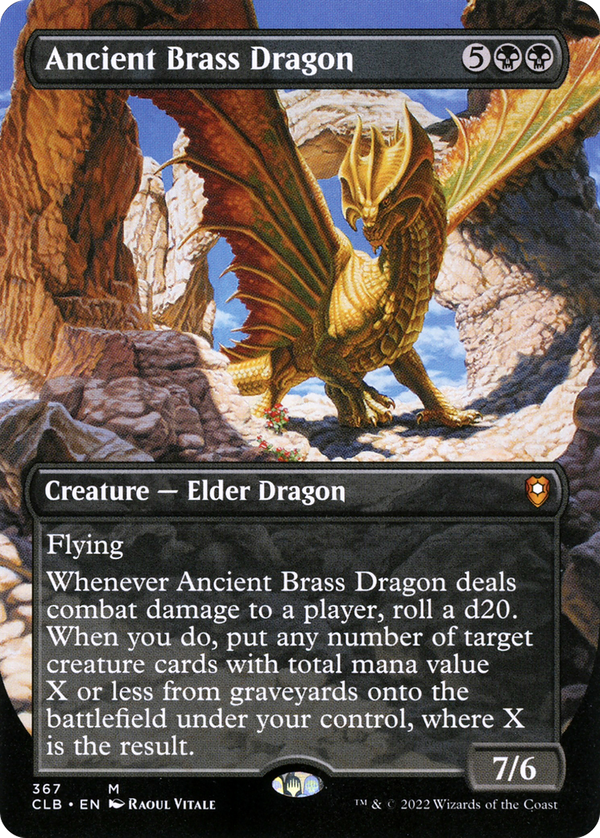
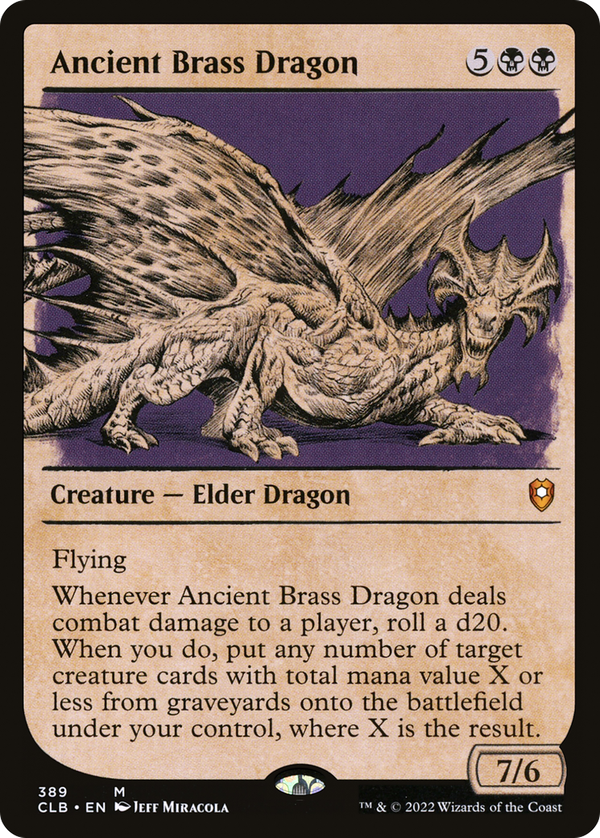
The d20 roll is the wrinkle, and the way this card handles the variance is the whole point. Combat-damage reanimation is not new; what the die does is scale the payout to a range instead of a fixed number, then hand you a target selection after you know the result. You roll, X resolves, and only then do you pick which graveyard creatures with total mana value X or less to return, so a low roll still fills a small quota and a high roll lets you empty two or three yards at once. The delayed targeting matters: unlike a cast reanimation spell that commits to its target on the stack, this reads the board state and the die together, so you are never wasting a slot on a creature you can no longer afford. Reanimating from any graveyard (not just your own) makes it a punishment for opposing self-mill and sacrifice engines as much as a value engine for your own. The 7/6 flying body is doing real work here too: it has to connect to trigger, and evasion is the delivery mechanism, so the whole design hinges on getting one hit through. The friction is that first swing; land it, and the roll turns a single point of combat damage into a battlefield's worth of bodies.