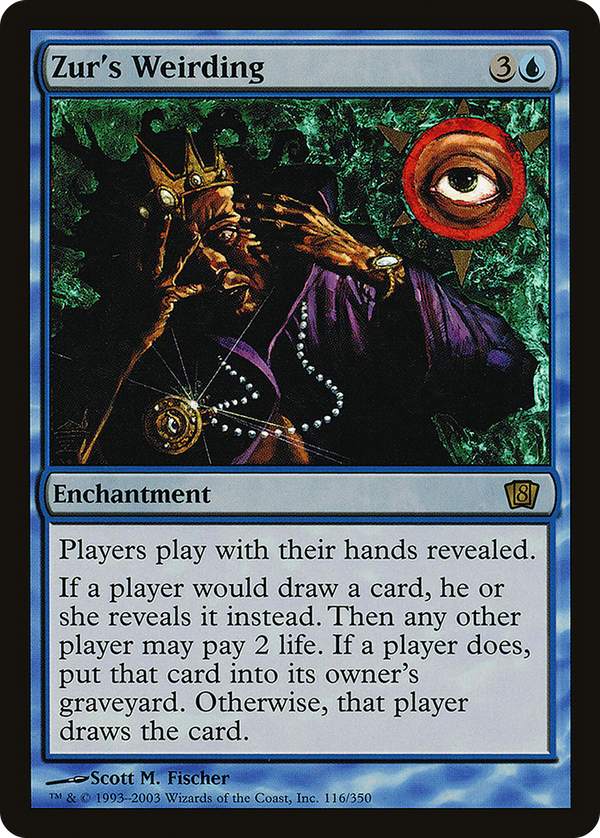
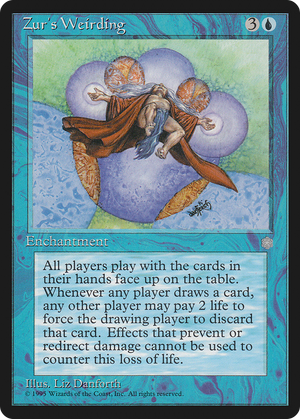
Zur's Weirding

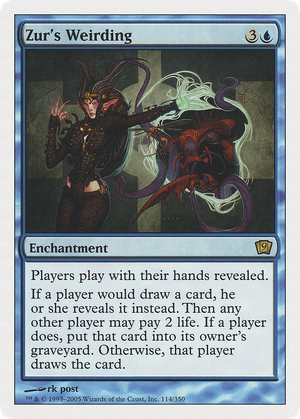
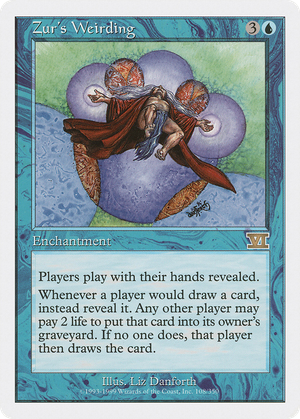
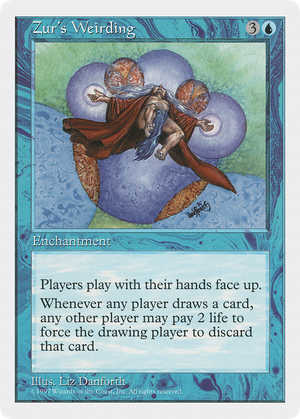
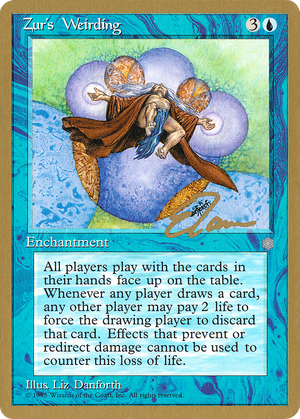
A symmetrical attempt to legislate the draw step itself, and one of the strangest control engines ever printed. The card hands everyone perfect information by turning all hands face up, then bolts a tax onto the most fundamental action in the game: drawing. The crucial wrinkle is who pays. When a player reveals a card they would draw, anyone else may pay 2 life to bin it instead. So if you want to deny an opponent the card they just turned over, you are the one bleeding two life to do it, and that obligation falls on whoever wants the denial. The symmetry is real in the rules but a fiction in practice: whoever can most reliably afford to keep paying that toll controls what opponents get to draw, which makes the enchantment a lock waiting on a life engine to close it. Pair it with a steady source of lifegain and you have built a soft prison, paying two life at a time to strip opponents of every draw worth stopping until they run out of relevant cards. The revealed-hands clause is not a side effect; it is the information layer that makes the life-payment decision tractable, because you can see exactly which draw is worth two life and which to let through. It is a puzzle box more than a removal spell, treating card draw as a negotiable transaction rather than a guaranteed right, and that conceptual audacity is why it keeps resurfacing in conversations about stax and prison strategies decades after its printing.