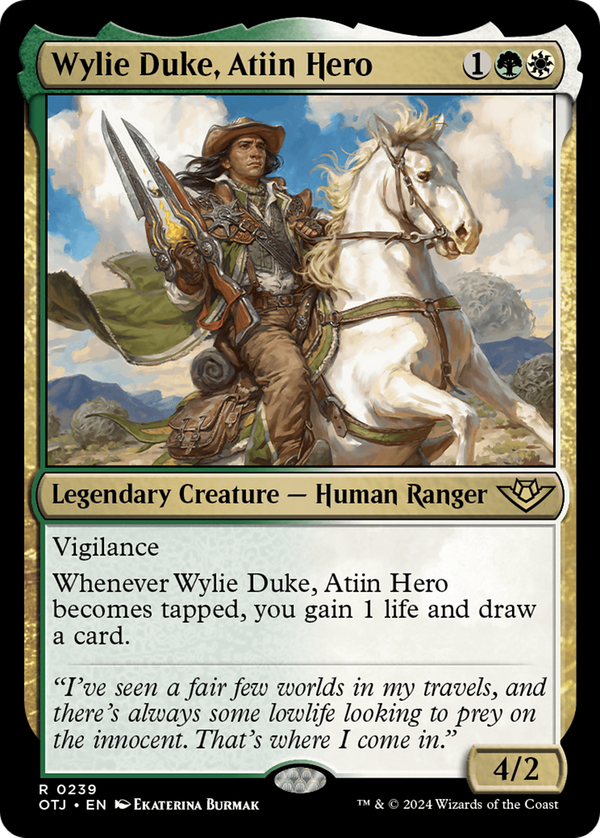
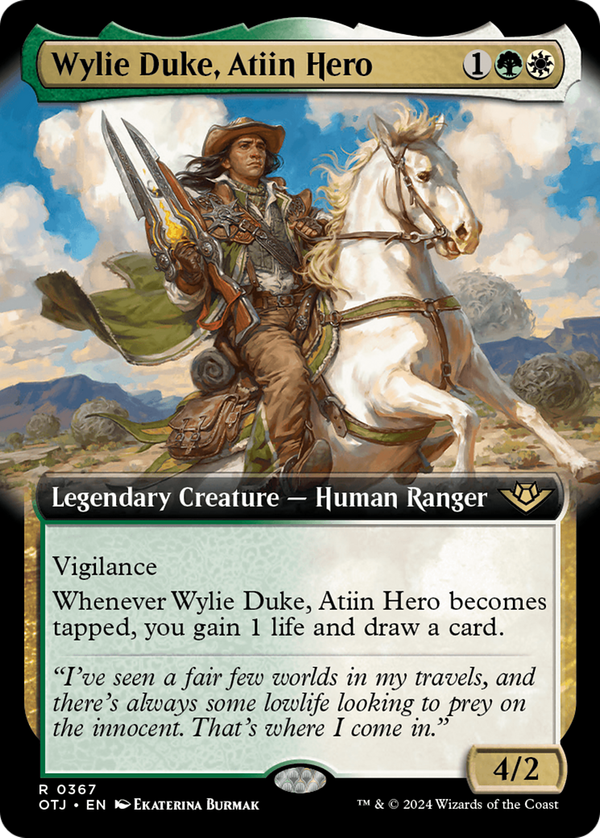
Wylie Duke, Atiin Hero



The design trick here is routing the payoff through the tap event rather than through combat itself. Vigilance normally reads as a defensive rider: attack without going down, keep the body available for the crackback. Bolted onto a trigger that fires whenever the creature becomes tapped, it changes character entirely. Because vigilance means attacking no longer taps the body, the draw-and-gain has to ride on some other reason it becomes tapped: crewing a Vehicle, convoking a spell, or paying a tap cost on an activated ability. Each of those turns into a card and a point of life, so the incentive is to find repeatable ways to tap it that leave it alive to do so again next turn. That reframing is what makes a 4/2 with vigilance more than a fragile beater. The body is deliberately glass (four power that dies to almost any burn or blocker) because the engine is only worth building around if the creature survives the turns you are wringing value out of it. The design problem underneath is a familiar green-white one: how do you attach card advantage to an aggressive creature without handing the aggro deck a grind engine it does not need? The answer is to make the payoff conditional on tapping it for something and on it living long enough to be tapped again, and to leave the body exposed enough that point removal erases the whole apparatus for a single card.