Weftwalking


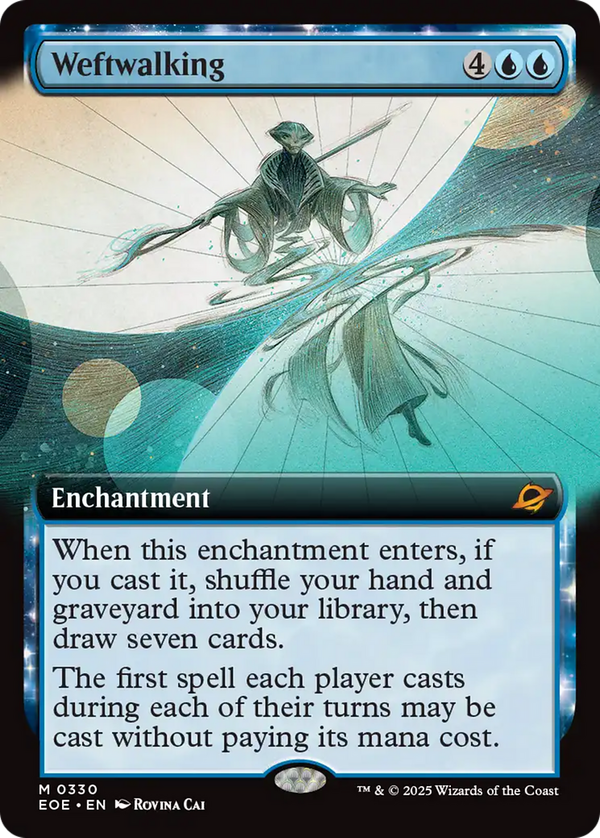
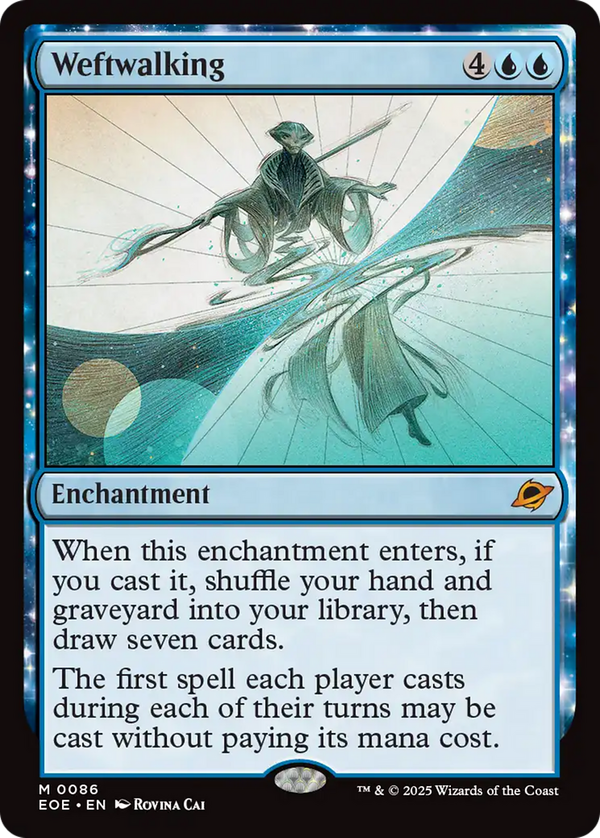
The wheel is the bait; the ongoing engine is where the value hides. Casting it refills you to a full grip, but the enchantment sticks around afterward and taps open a free spell on the first cast of every player's own turn. Free-cast symmetry has always been a design liability, because the player who built around it breaks the mirror: your first spell each turn can be a game-ending payoff, while your opponents' first spell is whatever they happened to draw. Crucially, the discount fires only during a player's own turn, so it hands opponents no cheap interaction while you develop; the asymmetry runs entirely through deck construction rather than timing. The wheel front-loads a fresh hand to weaponize immediately, and every turn after that the tap stays open, turning free casts into a recurring resource rather than a one-shot burst. Note the conditional on the shuffle-and-draw: it triggers only if you cast the enchantment, so blinking it or reanimating it delivers the ongoing free-spell tap without wiping your graveyard, a distinction that matters the moment your yard is worth more than a reset hand. The whole card is built for the deck that can reliably convert one uncontested spell per turn into a lopsided advantage, and the six-mana cost is the wall the design leans on to keep that engine from arriving before the board can support it.