Wail of the Forgotten


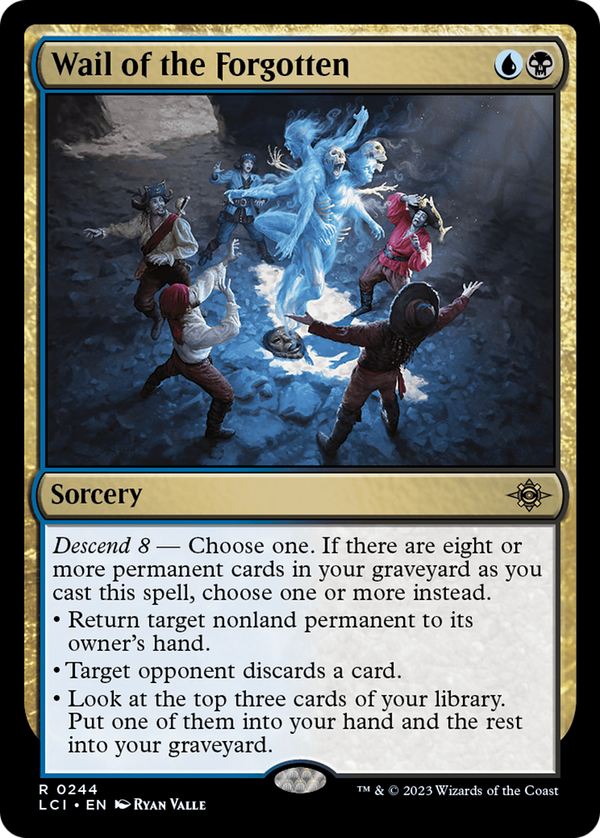
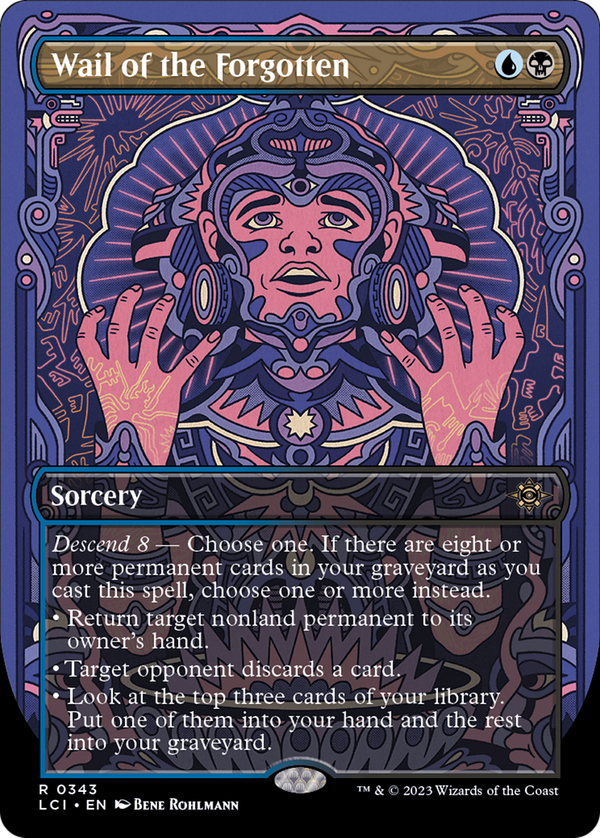
Three effects live inside one two-mana sorcery, and the graveyard decides how many you get. Early, with a shallow yard, it resolves as a modest single-mode spell: bounce a nonland permanent, force a discard, or dig three cards deep for the best one. Reach the descend threshold (a full eight permanent cards buried) and the "choose one" becomes "choose one or more," folding what would otherwise be three separate spells into a single turn. That escalation is the entire engine. Every mode is individually beatable by a cheaper, cleaner card, so the spell asks you to earn its ceiling instead of paying for it up front, and that ceiling arrives at a rate no two-mana sorcery could justify without the graveyard doing the accounting. The gate rewards a particular kind of deck: it counts permanent cards specifically, so the instants and sorceries you have already cast do nothing to fill it. Only creatures, artifacts, and other permanents in the yard advance you toward the payoff, which points the card at strategies grinding bodies into the graveyard on their way to a long game anyway. This is the design tension the whole Descend line keeps circling: how to print a threshold reward that stays fair when the graveyard is empty and swings games once it is stocked. The answer here is a spell that plays like a cantrip in the opening turns and a three-for-one in the closing ones.