Visions of Duplicity


The front half is not the interesting part; swapping control of two creatures you don't control is a purely political tool, a lever for shuffling someone else's board without spending a threat of your own. You gain nothing directly: you take a menace off one opponent and drop it on another, redirecting the pressure at the table rather than pocketing a body. The design lives in the flashback line. A flat recast at ten mana would be dead weight, so the graveyard cost scales down by how expensive a general you keep, whether that legend is already on the battlefield or still parked in the command zone. That is an unusual place to point a cost reduction: it rewards top-heavy legend builds without touching the front-side rate at all. The card gets a two-stage life. First it's a cheap sorcery that reorders an opponent's creatures at their expense; later it climbs out of the graveyard for a second pass, its price already discounted by the general you'd have cast regardless. The exile clause caps it at exactly those two uses, so the ceiling stays bounded even as the floor stays low. It's a design built entirely around the singleton-general structure it was made for, treating the command zone as a cost lever rather than a value engine.
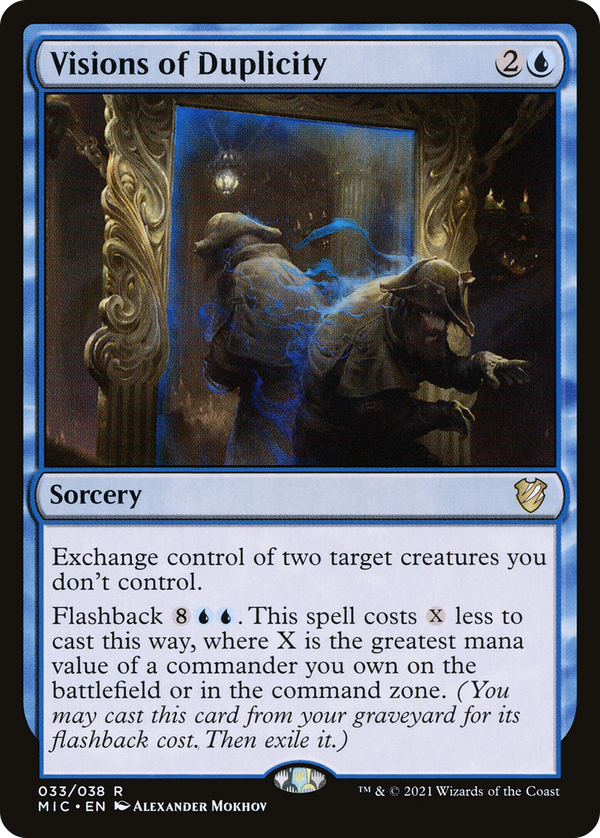
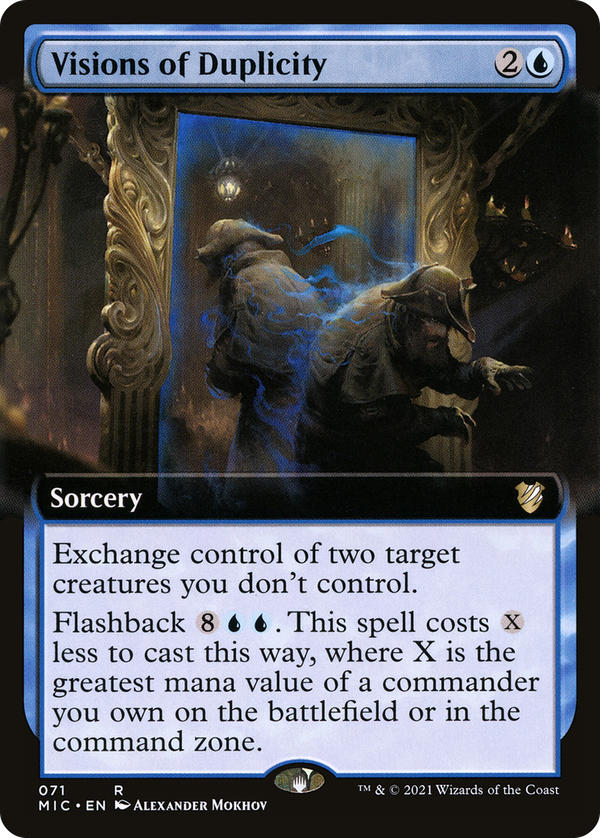
Rules text
 . This spell costs
  less to cast this way, where X is the greatest mana value of a commander you own on the battlefield or in the command zone. (You may cast this card from your graveyard for its flashback cost. Then exile it.)