Viewpoint Synchronization


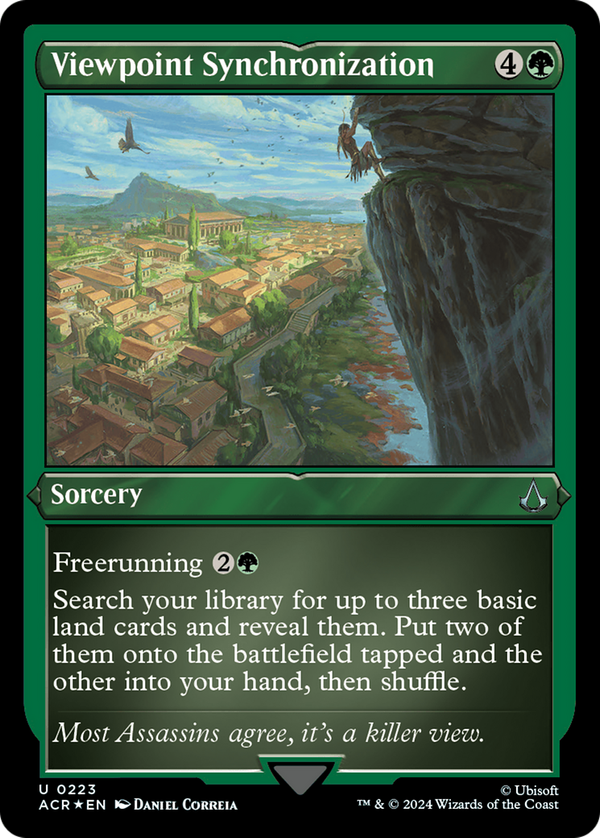
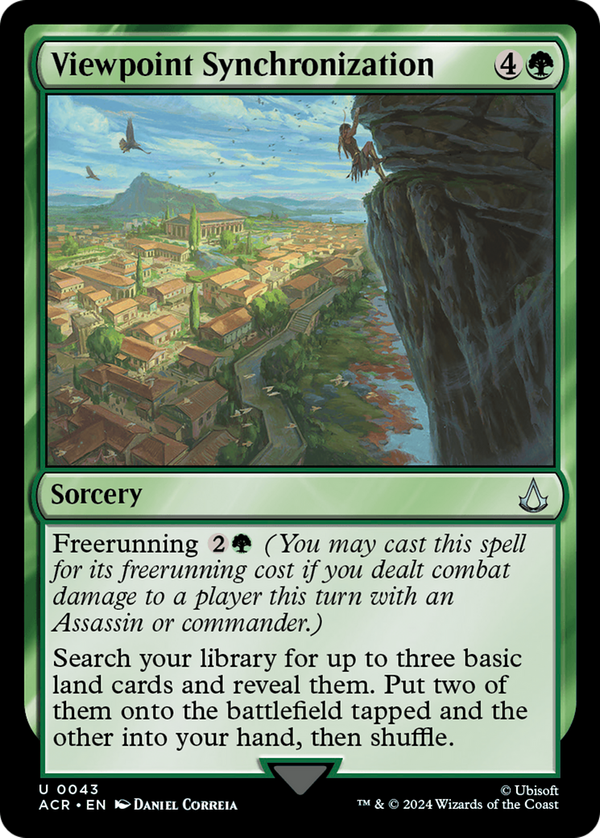
The interesting move here is what the freerunning cost does to a stock ramp effect. The base function is a familiar green fixing package: three basics found, two hitting the battlefield tapped, one to hand, a slightly more generous take on the kind of land-fetch sorcery green has run for decades. At full price it is unremarkable ramp with built-in card advantage. But freerunning reprices it around a combat condition, letting the spell cost  instead of if an Assassin or commander connected for combat damage that turn. That is the design idea worth sitting with: ramp is a proactive, tempo-negative play (you spend a turn setting up mana), and freerunning inverts the incentive by tying the discount to having already been the aggressor. The payoff flows to a board-committed deck pressing an advantage rather than one hanging back to durdle. The land arrives tapped either way, so the discount buys mana efficiency without buying a faster clock, which keeps the effect from spiraling. The result is a ramp spell that only gets cheap once you no longer strictly need the ramp, an intentional tension that pushes it toward aggressive shells where the combat trigger is a natural byproduct of the game plan rather than a hoop to jump through.
Rules text
(You may cast this spell for its freerunning cost if you dealt combat damage to a player this turn with an Assassin or commander.)
Search your library for up to three basic land cards and reveal them. Put two of them onto the battlefield tapped and the other into your hand, then shuffle.