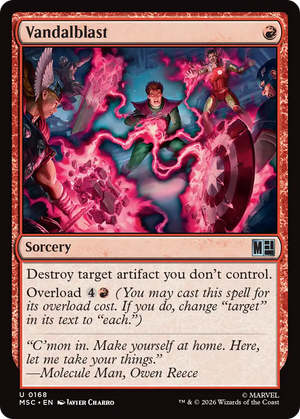
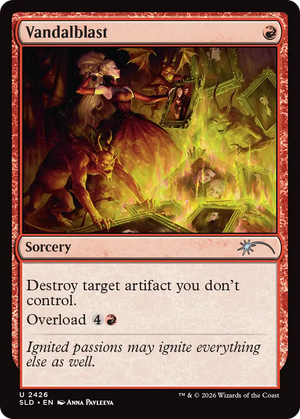
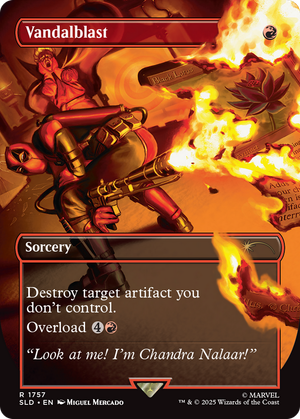
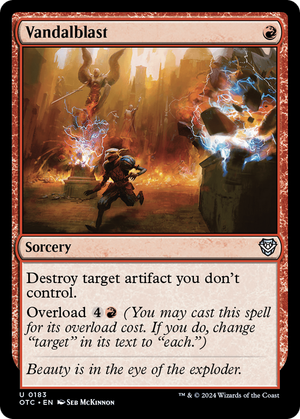
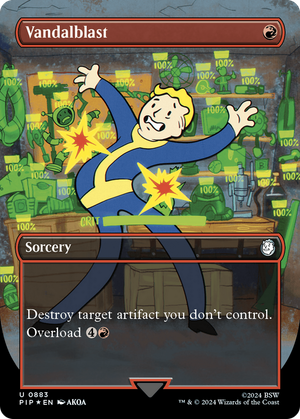
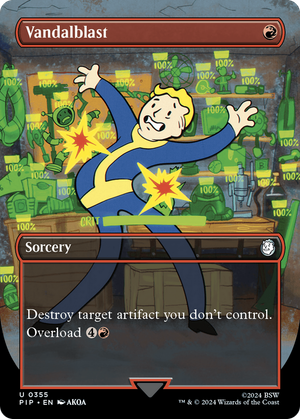
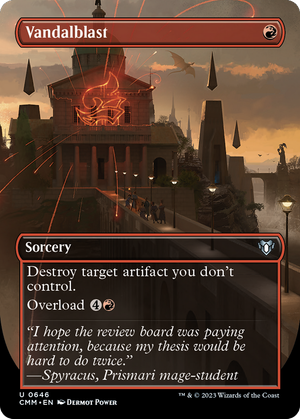
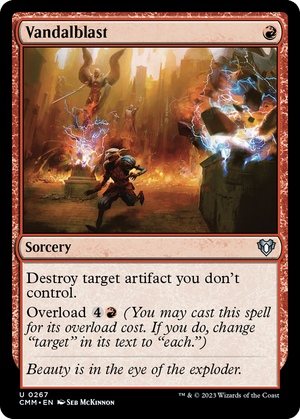
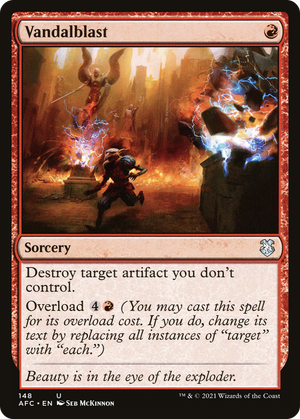
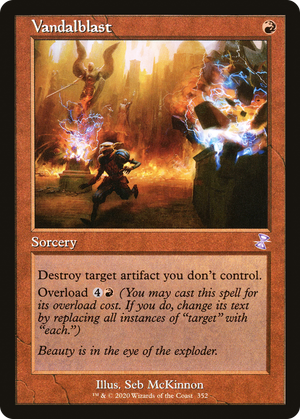
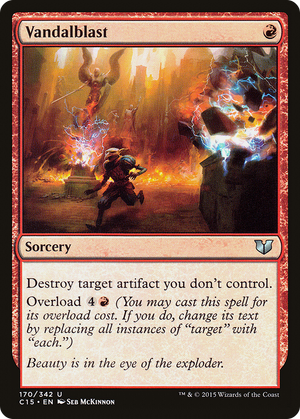
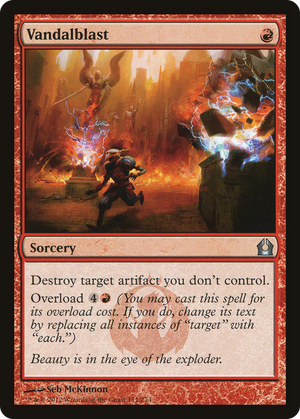
Vandalblast

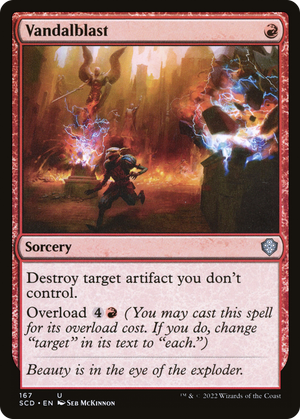
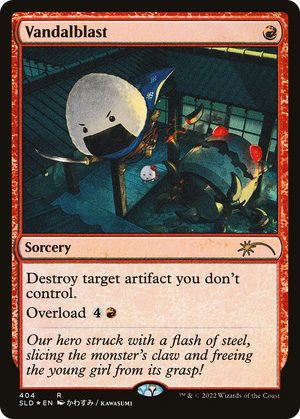
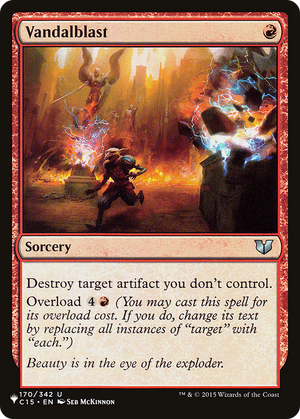
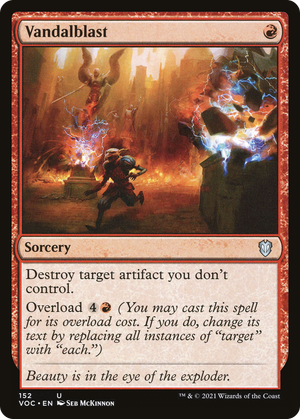
The whole design hangs on the spread between its two costs. For a single red, it is a targeted artifact answer, deliberately modest: you cannot use it on your own permanents, so it stays an interactive tool rather than a sacrifice enabler. The overload cost is where the card changes character entirely. For five mana it stops targeting anything and instead destroys every artifact you do not control, leaving your own boards untouched while the table's mana rocks, equipment, and combo pieces all hit the bin at once. That asymmetry is the point: a symmetrical artifact wrath would punish the caster as much as anyone, but the "you don't control" clause carved into both modes means the player firing it always comes out ahead. Overload exists precisely to let a spell scale from a surgical answer into a one-sided sweeper without printing two separate cards, and few examples of it deliver as cleanly as this one, because destroying an artifact is the sort of removal that genuinely wants the option to go wide against artifact-dense boards. The flexibility is real and unhedged: the cheap mode keeps it relevant when you only need to kill one thing, and the overload mode keeps it in the deck against boards where killing one thing accomplishes nothing.

Rules text
 (You may cast this spell for its overload cost. If you do, change "target" in its text to "each.")