Valgavoth, Terror Eater


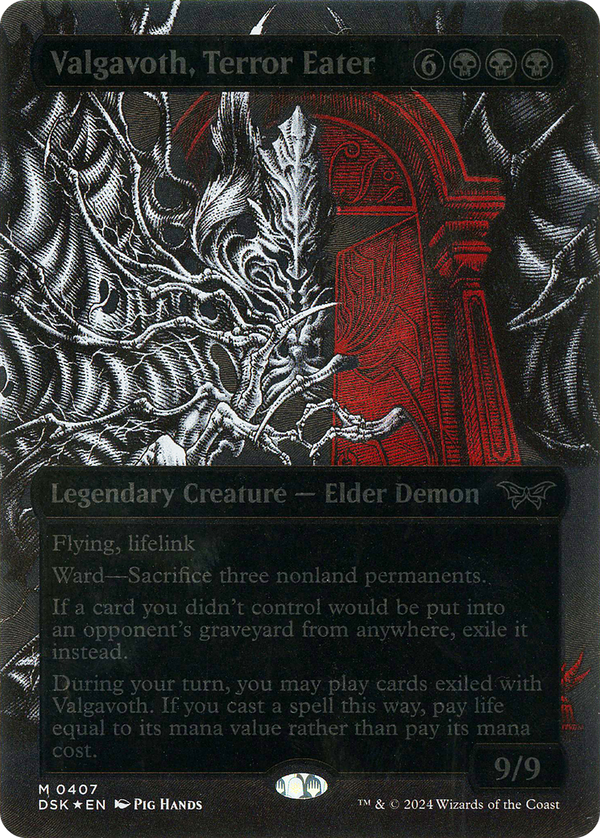
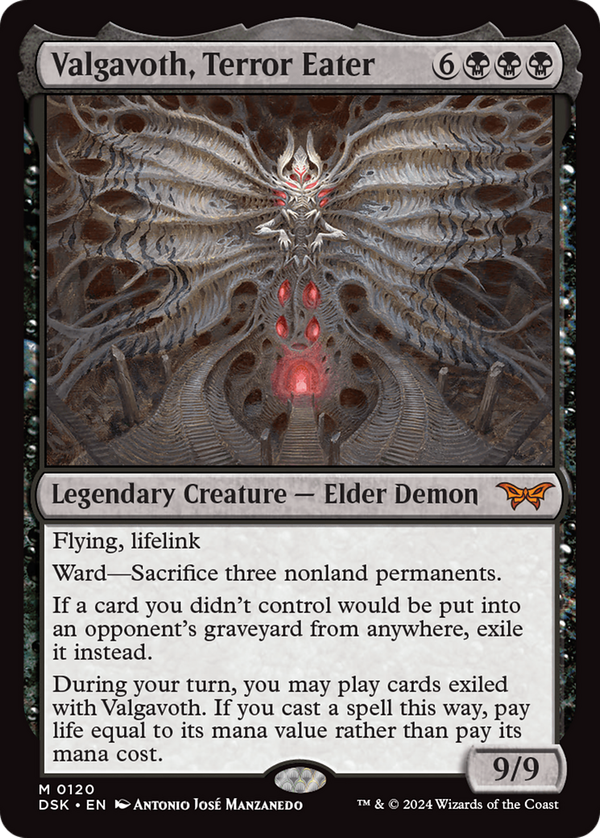
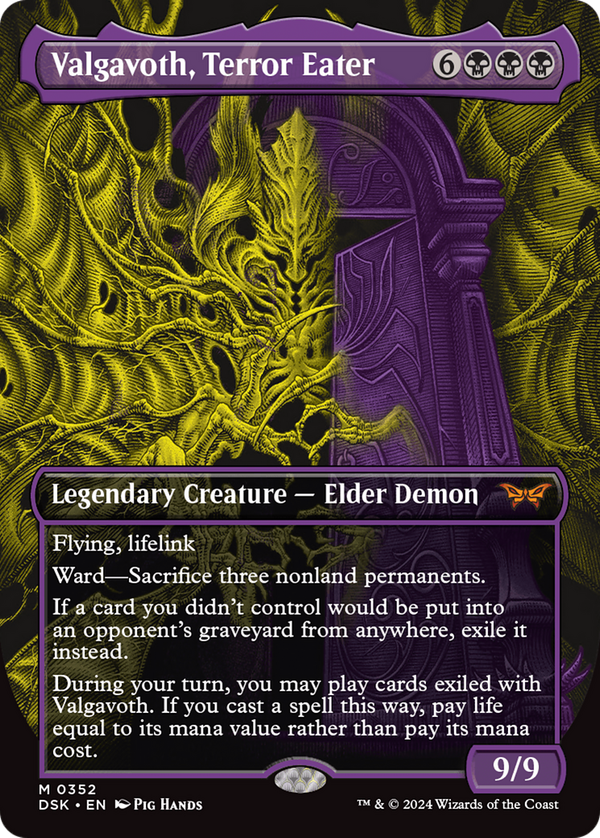
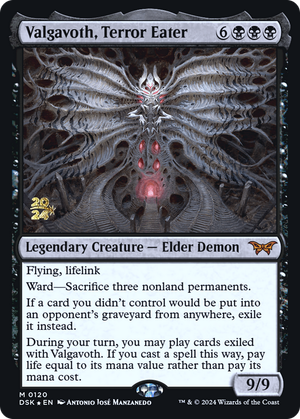
Ward that demands three nonland permanents fed into the maw is the whole design thesis: this Demon was built to make interaction ruinous. Most protective ward reads as a mana tax, a speed bump; here the price of removal is a number so steep that opponents rarely have the board to spare and, when they do, must dismantle their own position just to answer one threat. That ward goes live the instant the body resolves, so the safest window to kill it is on the stack, before it ever enters. The graveyard clause is where the real appetite lives: it does not merely deny opponents their recursion, it exiles everything that would die, mill, or discard into their yard, then hands that stockpile back as a private library. The second wrinkle rewrites the price of the theft: spells cast from exile cost life equal to their mana value rather than their mana cost, which pairs with the built-in lifelink to make a 9/9 flier both the payment method and the payment source. Attack, gain life, spend that life recasting the cards you stole, attack again. What restrains a machine this greedy is the front-loaded nine mana and the exile effect's timing: it only starts hoovering after resolution, so anything an opponent buries in their graveyard beforehand is safe. Get it to resolve and stick, though, and the game stops being about whether your opponent's cards answer you and starts being about them becoming your resources.