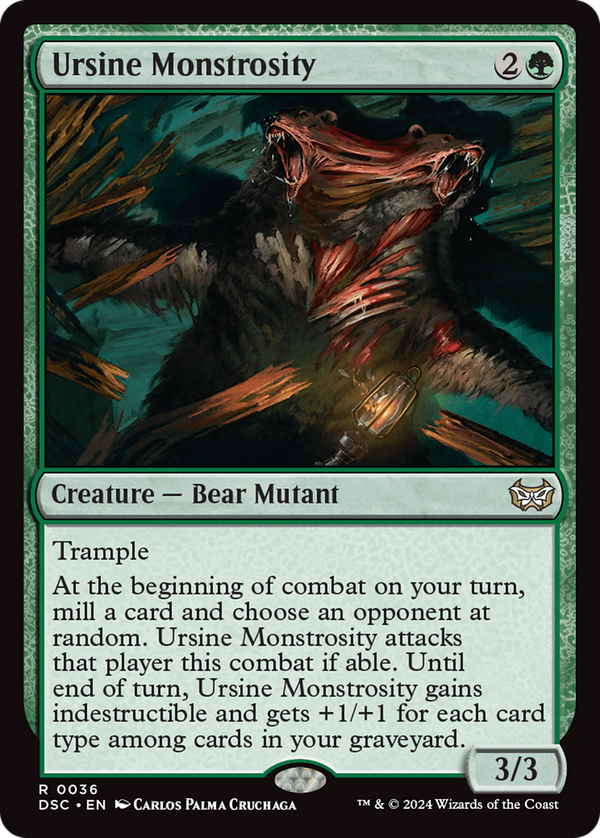
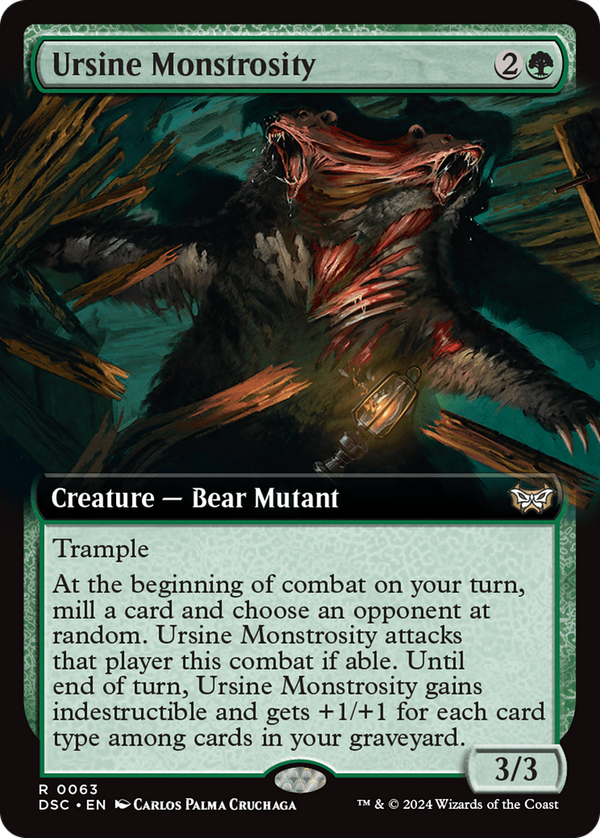
Ursine Monstrosity


Most self-mill payoffs ask you to feed the graveyard elsewhere and then spend a card cashing it in; this one does its own mining. The combat trigger mills before attackers are declared, so the +1/+1-per-card-type count reflects a graveyard that just grew, and indestructible means the beefed-up body survives the block it invites. The tension is the random-opponent clause: it strips your agency over where the attack points, which is the price for the rest of the package. In a two-player game that clause is inert; the design clearly wants a wider table, where the coin-flip target keeps a value creature from becoming a political weapon you aim at will. Card-type diversity is the real deckbuilding lever, so the payoff scales with a spread of instants, sorceries, artifacts, enchantments, planeswalkers, and lands in the yard rather than raw card count, rewarding a toolbox graveyard over a monochrome one. What results is a green graveyard threat built around a stat that grows on its own schedule: as turns pass and the yard diversifies, the swing hardens, with trample pushing surplus damage past a chump block once the body outgrows the defender. A modest floor and a ceiling that climbs each turn, gated by the loss of control over who it hits.