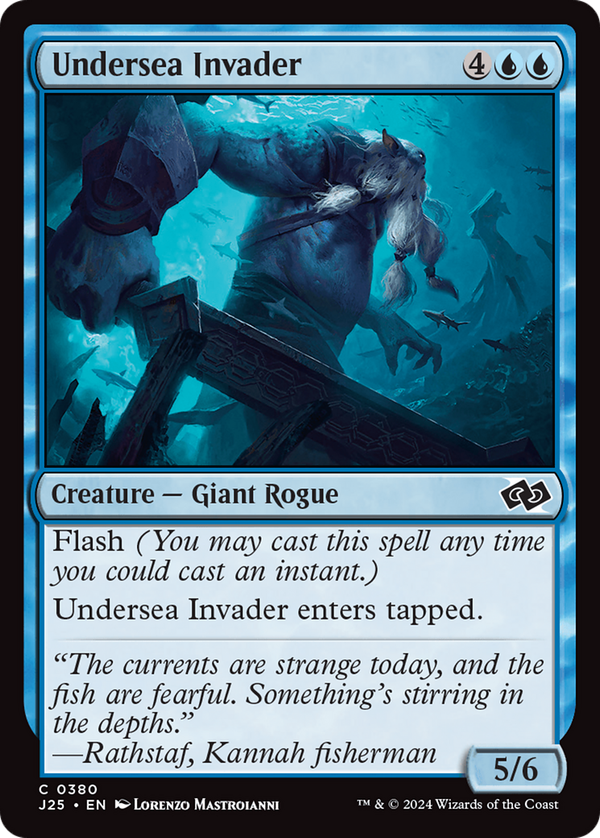
Undersea Invader


Flash on a body this large would ordinarily be a blowout: cast at instant speed, a 5/6 for six could ambush an attacker and then swing back, collapsing offense and defense into a single window. The enters-tapped clause exists to remove one of those two upsides entirely. Because the creature arrives tapped, it can never be flashed in to block: the reactive-blocker line simply does not exist. What flash buys you here is not surprise defense but deployment timing. Cast it on the opponent's end step and it untaps for your turn, arriving as a threat that dodged sorcery-speed removal windows and slipped past their chance to answer it on curve. The tapped line is the whole cost structure: it strips the ambush-block value that makes cheap flash creatures like Ambush Viper terrifying and leaves only the tempo of holding up mana and committing nothing until you choose to. That reframes what looks like a reactive card into a proactive one, since the correct play is almost always to bank the flash for information (see what the opponent does, then land the body on their end step) rather than to hold it as an interactive tool it cannot be. This is a recurring pattern on oversized flash creatures: give them the size and the instant-speed casting, then tax the tempo back on arrival so the flexibility never becomes a two-for-one. Built as a curve-topping blue body for creature decks that want to leave mana open and still land a real threat.