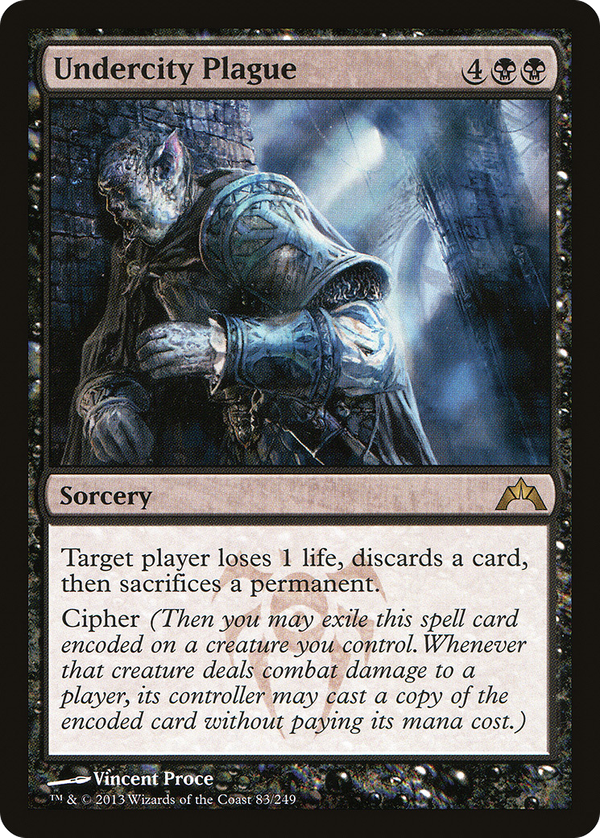
Undercity Plague


The triple-tax effect was a recurring black design from the era of multi-axis discard: hit a life total, a hand, and the battlefield in a single resolution, the way Mind Sludge or Despoil split their attention across resources. What sets this apart is the cipher rider, which converts a one-shot six-mana sorcery into a per-attack tax engine. Once it is encoded onto a creature, every connecting hit refires the whole package for free, so the cost of the spell is really an entry fee for an attrition loop that compounds the longer it lands. The sacrifice clause is built around player choice (the target picks what to give up), which is the friction holding it back: a savvy opponent feeds the least valuable permanent every turn, so the engine grinds rather than executes. That makes the card less a removal tool than a slow bleed, dismantling a hand and a board over several combat steps instead of one decisive turn. Cipher's whole conceit was tying a spell's value to combat damage, and few cards in that small mechanic asked a creature to do as much per swing; the encoded copy means the threat in front of you is also a discard outlet, a life-drain, and a sacrifice edict on legs. The body that carries it matters more than the spell itself, since an unblocked attacker turns this from a fair six-mana play into an inevitability.