Ultima


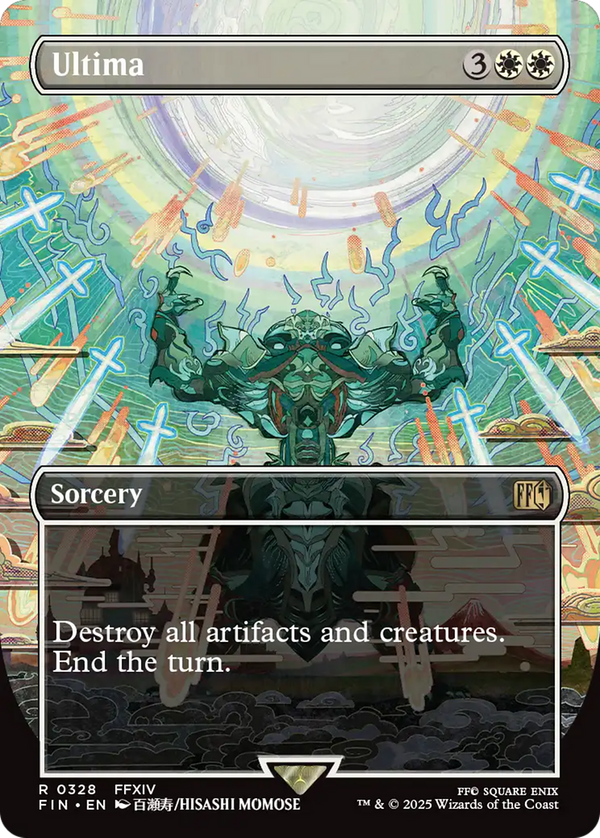
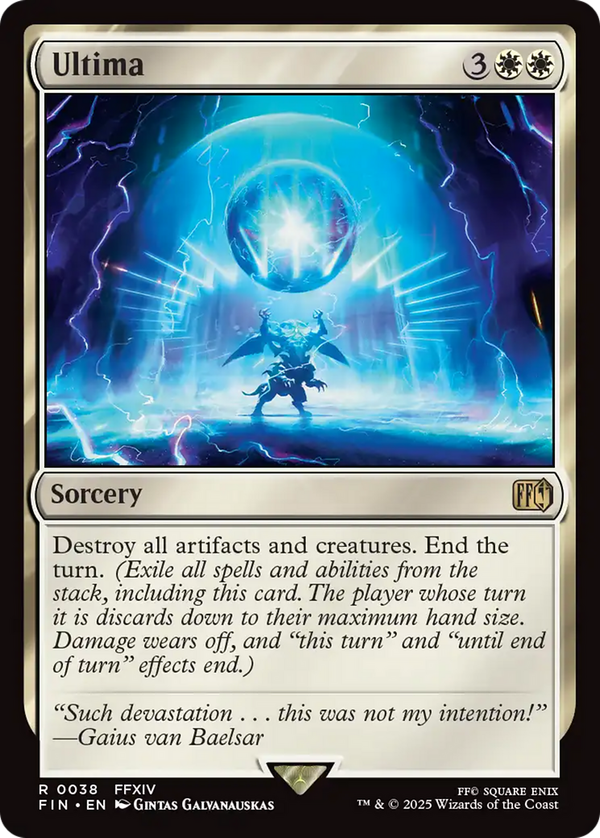
A wrath that spares lands is old news; the second clause is where this one earns its keep. Board wipes have always had an exploitable seam: they resolve, but the game keeps going, so once the smoke clears an opponent can rebuild at instant speed, or flash a threat onto the freshly emptied board before your turn is over. Ending the turn slams that window shut. The moment the destruction resolves, everything remaining on the stack is exiled and the turn simply stops before anyone can act on the cleared battlefield: no post-wrath flash-in, no reactive play for the rest of the turn. That is a meaningfully different transaction than destroying the board alone. You are not just resetting the field; you are denying the response window that makes most sweepers a temporary reprieve. What it does not do is protect itself: this sits on the stack like any other spell, so a counter, or an indestructibility effect held for exactly this moment, resolves first and does its work before the wrath ever happens. The lock is on what comes after resolution, not on responses to the card itself. The cost of that airtightness is symmetric time theft: your own turn also ends the instant it resolves, so you cast this having already spent your main phase, or as a hard reset when you need the clock stopped more than another attack step. It belongs to a small family of white effects that switch off the normal flow of priority, and it is among the more brutal expressions of the idea.