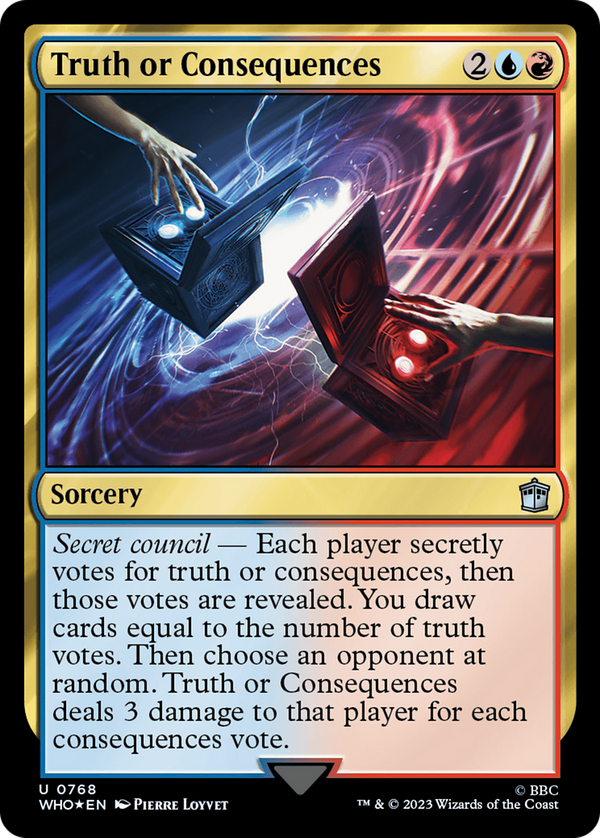
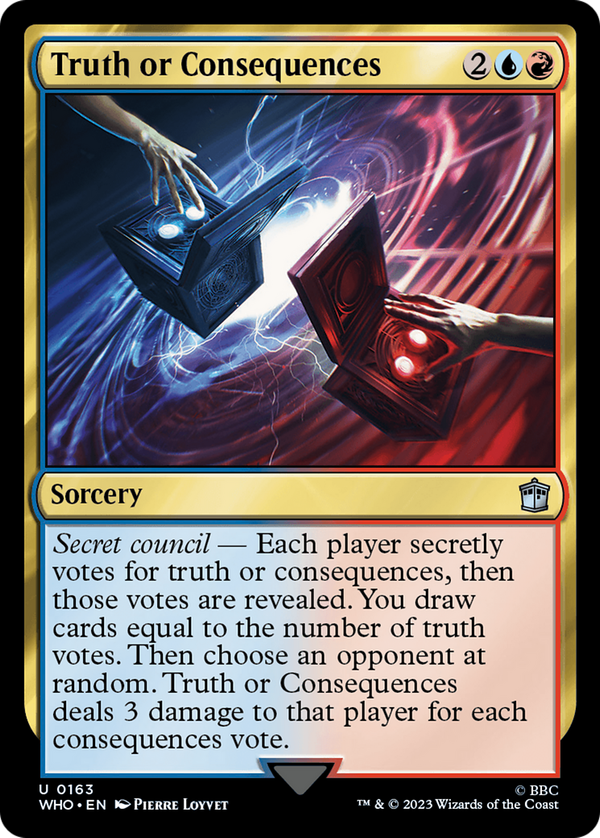
Truth or Consequences


The vote is a trap, and it works because everyone is answering the same question with opposite incentives. Each player picks truth or consequences in secret, and the caster reaps both piles: cards for every truth vote, three damage to a single random opponent for every consequences vote. That structure inverts the usual council-vote politics. The classic voting cards ask the table to fund your value while spreading the cost, but here every voter is choosing which of two bad outcomes to hand the caster. Vote truth and you draw them cards; vote consequences and you might be the random opponent who eats the burn. The randomness is the load-bearing piece: because the damaged player is chosen at random among opponents after the votes resolve, a consequences vote is a gamble on your own life total, which nudges the table toward truth and toward feeding the caster a fistful of cards. It reads as a group hug and plays as a group slug, all of it aimed away from the person who cast it. The caster wins on both axes and only loses if the table coordinates against them, which secret voting is specifically designed to prevent. That is the wrinkle that makes an otherwise symmetrical-looking sorcery lopsided: symmetry in the prompt, asymmetry in who collects.