Training Center
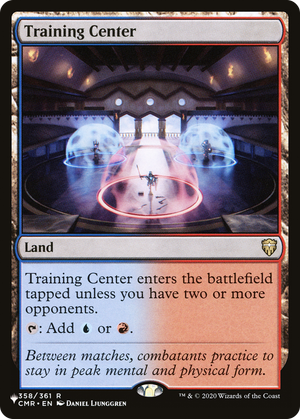
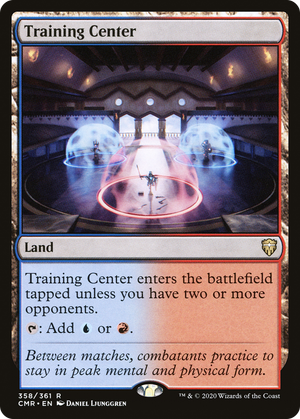
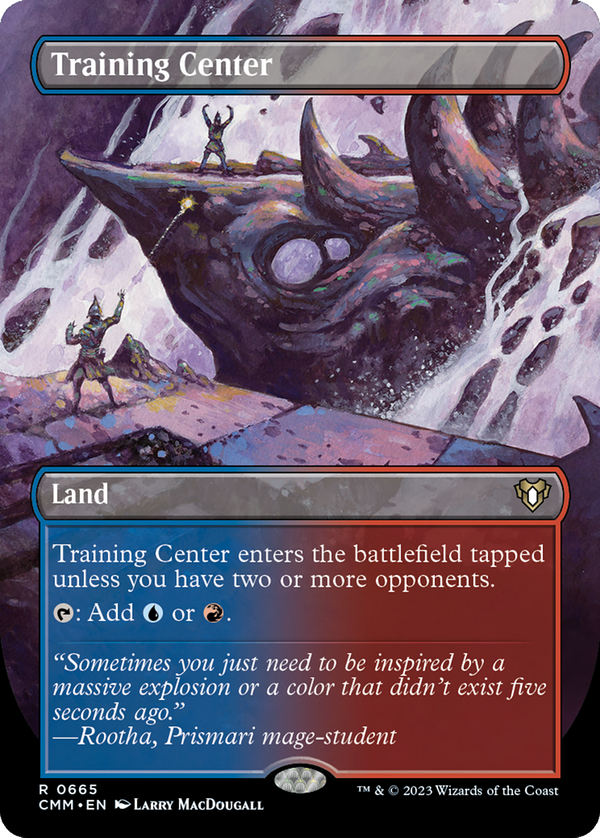
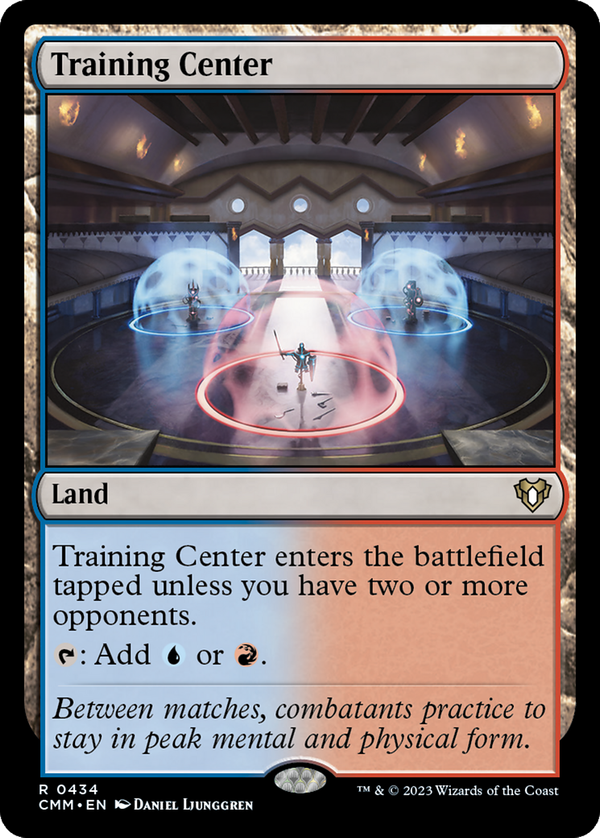
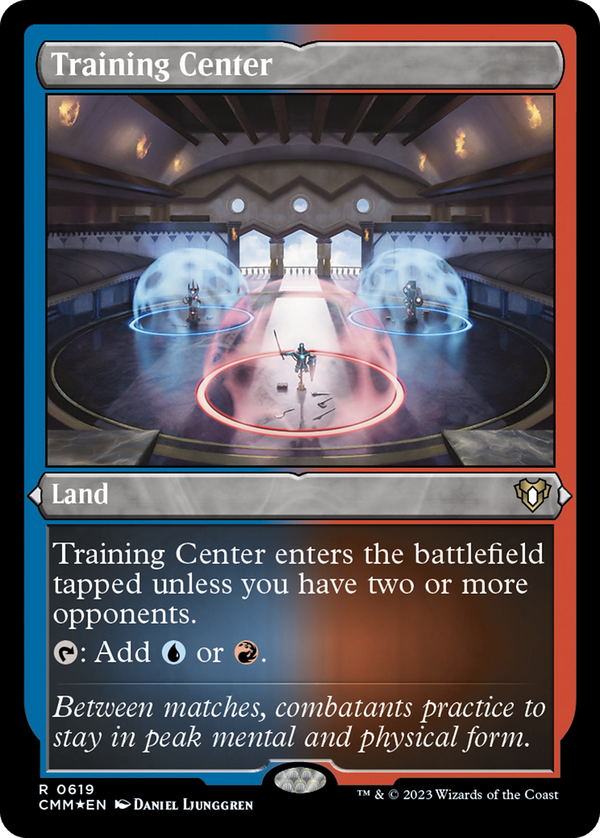
Read the enters-tapped clause backward and the design intent surfaces: this land arrives untapped exactly when you are surrounded, and stumbles into play a turn slow when you are not. Taplands normally penalize you flatly, and untapped duals reward you flatly; here the outcome swings between full power and a wasted turn based on how many opponents share the table, a condition no single player controls alone. Facing one opponent, the clause never fires, leaving a fixed blue-or-red source that sits below the untapped duals it otherwise resembles. Add more opponents and the same land becomes a clean, painless Izzet source with nothing owed for it. That single conditional lets designers push a fixed-rate dual to its ceiling in plurality environments without loosening the manabases where lands are expected to enter untapped or pay for the privilege. It belongs to a set of ten built on this exact template, one per allied and enemy color pair, each pivoting on pod size rather than raw output, which is a strange axis for a land to turn on. The color fixing itself (a Wizard's Guild taproot into blue and red) is unremarkable; the clever move is charging the entire cost to a table state the player cannot manufacture alone.
Rules text
 : Add
: Add  or
or  .
.