Tomb Blade


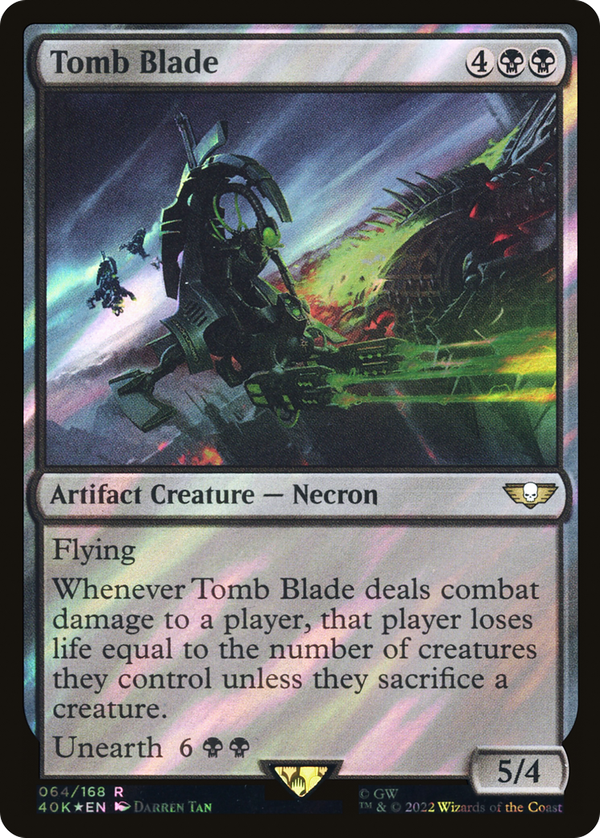
The combat trigger reads like a tax aimed squarely at the wide board. When the 5/4 flyer connects, the defender picks their poison: bleed out at the exact rate of their own developed board, or feed a creature to the graveyard. Because they choose the body, they will always throw away their most expendable one, so this is a blunt tax against tokens and go-wide chaff, not a way to pry loose their best threat. The design inverts the usual diminishing-returns curve: the more a player commits to the table, the steeper the life loss becomes, which reframes a middling six-mana body as a soft deterrent against overdevelopment. Against a go-wide deck they will simply toss an expendable token to dodge the massive drain; against a lean board they will usually just take the small hit rather than sacrifice their valuable threat. The flying evasion is doing the enabling work here, because it demands blockers most boards cannot spare and keeps the math ticking upward turn after turn. Unearth is the recursion clause, and the price is deliberately punishing: at  it costs more to bring back than to cast the first time, so the design does not want you looping the trigger cheaply. You get the flyer out of the graveyard once, at a premium, for a single decisive swing before it exiles itself. The whole thing is built to extract a body or a chunk of life on one clean connection, not to grind a table down over many turns.
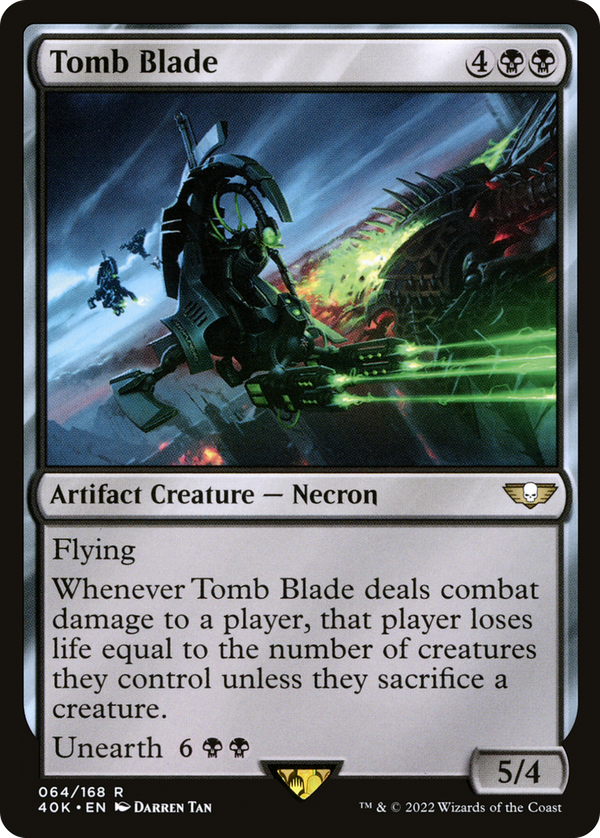
Rules text