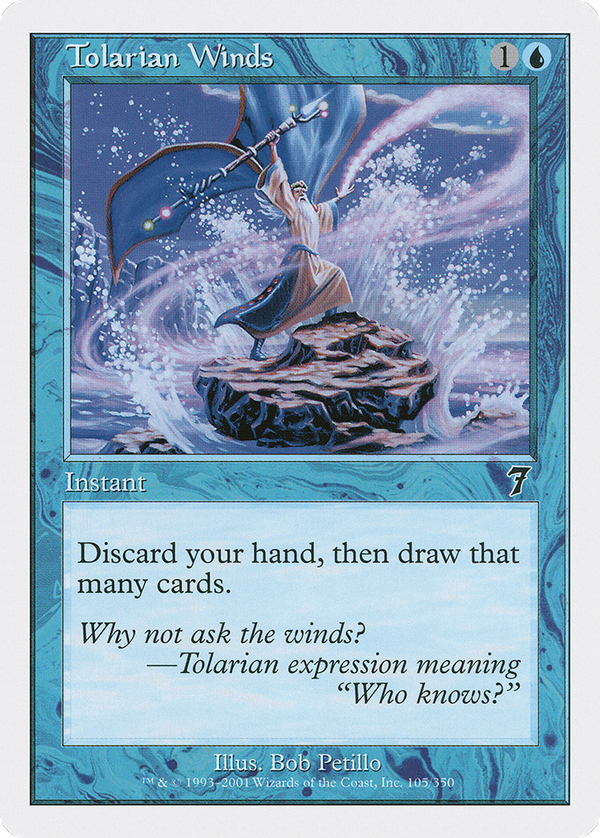
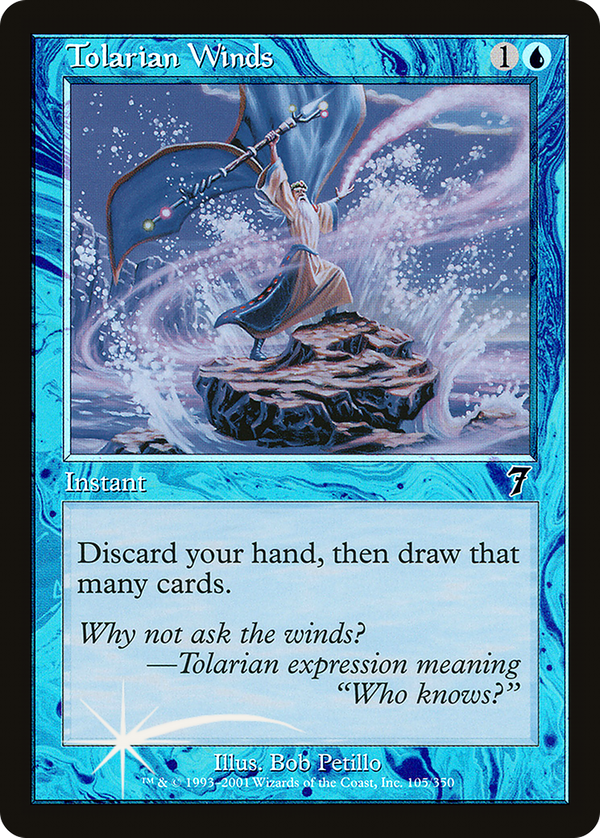
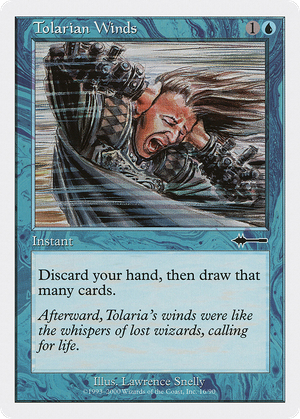
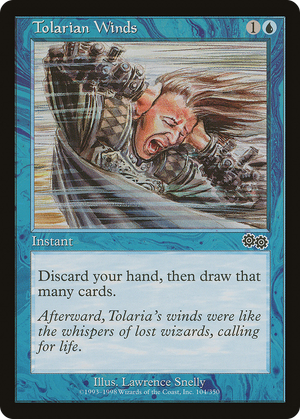
Tolarian Winds


Blue's bluntest wheel, and the one that teaches what discard-and-draw actually costs. The transaction looks even because the numbers match: pitch your hand, draw back the same count. But matching counts is not free card advantage. It is card velocity, a refresh that swaps the grip you have for the grip you would rather hold, and the moment you cast it with cards still in hand you are paying them away to draw replacements. Cast it with one other card and you are down a card outright: two spells leave, one comes back. The dig is real; the parity is an illusion. What sets this apart from blue's draw of the era is where you can do it. Most early refills were sorcery-speed or fixed in quantity; this resolves at instant speed and scales to whatever your hand happens to be. Sitting on five clogged-up spells you cannot deploy? Dump the whole hand and draw five fresh, holding the spell until the size of the transaction suits you. The discard is total, never selective: you empty your hand and replace it wholesale, with no choosing which cards to keep, and that all-or-nothing clause is what prices the effect. It found its truest homes where the graveyard wanted feeding, since every discarded card lands as fuel rather than loss, and where a deck wanted to churn toward an answer without committing to a fixed draw count. The effect has been smoothed and sweetened many times since, but the core trade, your current hand for a different one, was landing in blue right around here.