Thorn of Amethyst
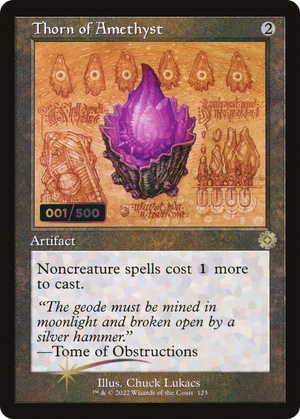
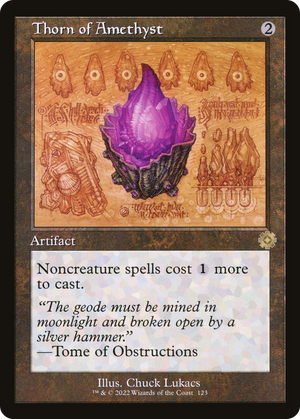
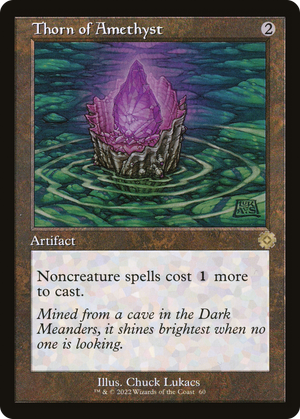
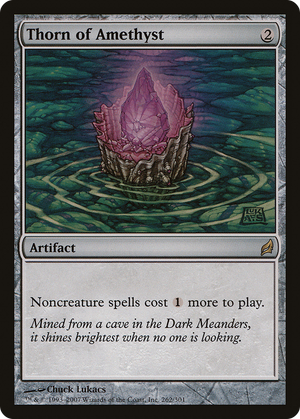
The tax is asymmetric in a way that defines an entire archetype: it touches noncreature spells and leaves creatures untouched, which means a deck built almost entirely of bodies pays the price only on its own removal and combat tricks while the opponent's instants, sorceries, planeswalkers, and enchantments all cost more. That carve-out is the whole strategic point. Where the symmetric Sphere of Resistance and the escalating Trinisphere ask both players to pay, this one aims the friction in one direction, sitting among the resource-denial pieces that punish spell-heavy decks (control, combo, ramp) without slowing a creature-first plan. The two-mana investment is the point of leverage: it can deploy early, before the opponent's curve commits, turning every reactive spell they want to hold up into a half-measure. The creature exemption is what separates it from a generic Sphere: it asks you to win with permanents that touch the battlefield rather than running the stack as a value engine, which is why it has always lived in tribal and creature-aggro shells that can afford to skip the noncreature half of the game almost entirely. The card does not stop a spell; it raises the floor on every turn the opponent wants to interact, and against a deck whose plan is a string of one- and two-mana answers, lifting that floor by a single mana is often the difference between answering on time and answering a turn too late.
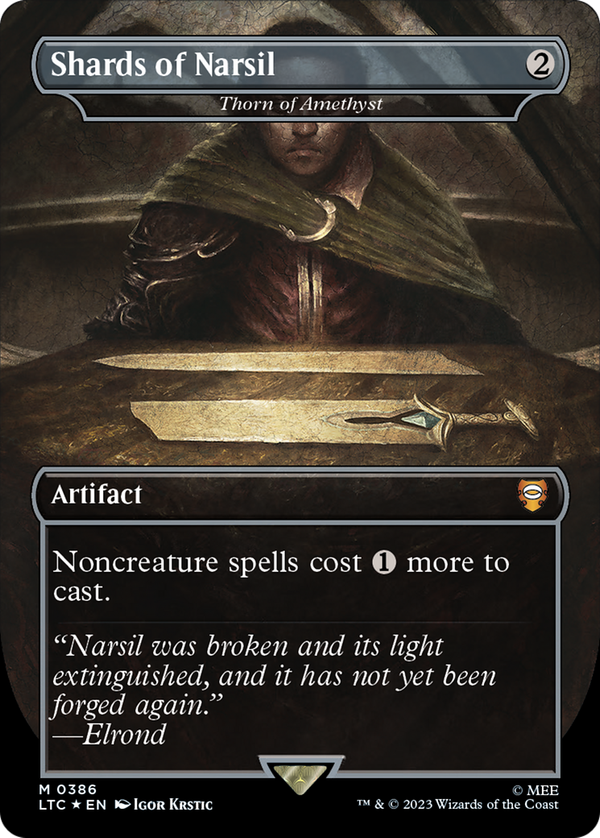
Rules text
 more to cast.