The Ur-Dragon






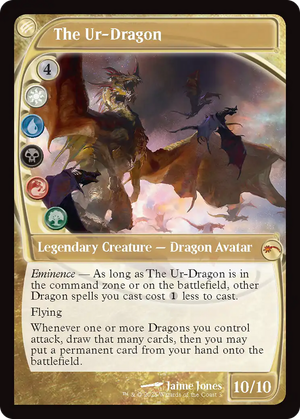
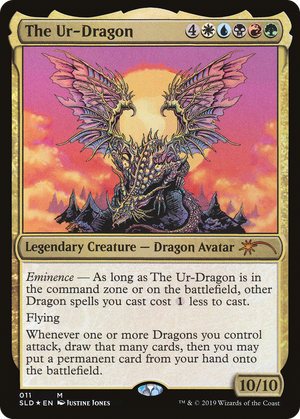
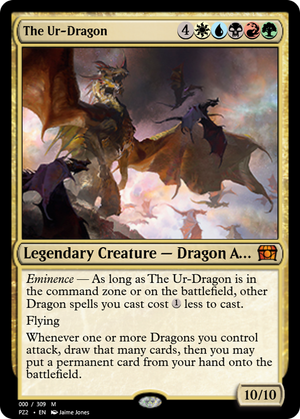
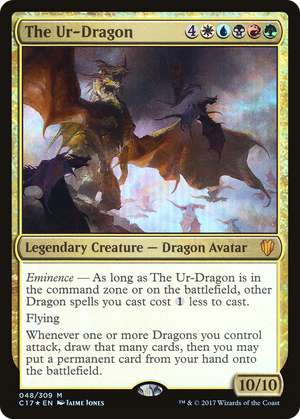
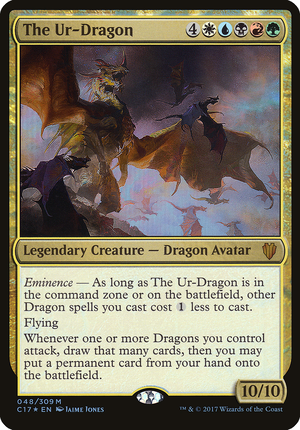
Wizards had circled the tribal five-color Dragon commander for years before committing to it, and the design solves the fundamental problem of that archetype: Dragons are expensive, and casting more than one per turn is the whole fantasy. Eminence answers the cost problem from the command zone, so the discount applies before this ever touches the battlefield; the deck starts cheating on its curve from turn one whether or not you have nine mana lying around. The attack trigger answers the payoff problem. It scales with board width rather than triggering once, and the sequencing matters: draw first, then deploy a permanent from hand for free, which means each swing refuels and rebuilds at the same time. Because the trigger counts any Dragons you control, not just this one, the reward compounds with every body the discount let you land early. The free permanent clause is deliberately broad (any permanent card, not just Dragons or creatures), which turns an attack payoff into a full ramp-and-value engine that snowballs harder the longer a game runs. What holds it in check is the obvious thing: a nine-mana 10/10 that wants to attack is a lightning rod, and the engine only fires from the battlefield, so the eminence discount is doing the real load-bearing work while the body waits its turn. This is the synthesis the tribe had been asking for, built so the payoff and the enabler live in the same card.
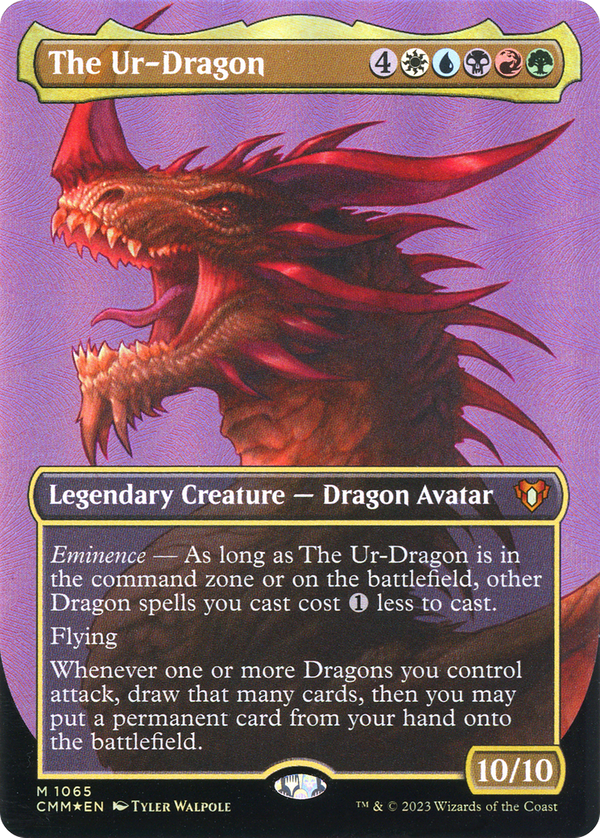
Rules text
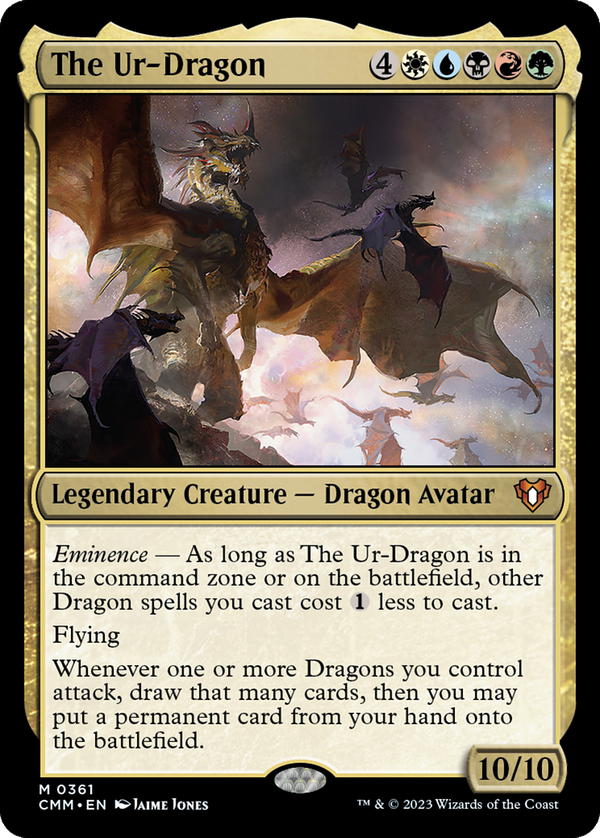
 less to cast.
Flying
Whenever one or more Dragons you control attack, draw that many cards, then you may put a permanent card from your hand onto the battlefield.
less to cast.
Flying
Whenever one or more Dragons you control attack, draw that many cards, then you may put a permanent card from your hand onto the battlefield.