The Flux


Most Sagas treat the lore-counter clock as a cost to be tolerated; here the timer is the point. The opening chapter clears a lane with four damage to an opponent's creature, then chapters two through five convert the middle of the story into a run of impulse draws: after each draw step a new lore counter arrives and exiles your top card, playable only on that turn. That is the discipline built into the design. You cannot bank the exiled cards, so each turn is a small ultimatum, spend what you flipped now or lose it, and the deck has to be shaped to make those one-turn windows land. The finale is where the frame's built-in escalation pays off. On chapter six the Saga sacrifices itself and dumps six red mana at once, a single scripted ritual you have to grind five turns to reach rather than a mana source you can hold open. That burst does not refund the earlier impulse cards; those are already gone. It exists to fund one decisive action on the turn it fires: an overloaded spell, a large X cost, a hungry mana sink that turns six into something lethal. The whole card lives or dies on whether the deck around it is built to survive to chapter six and then do something enormous with the payoff, rather than merely enduring the intervening turns.
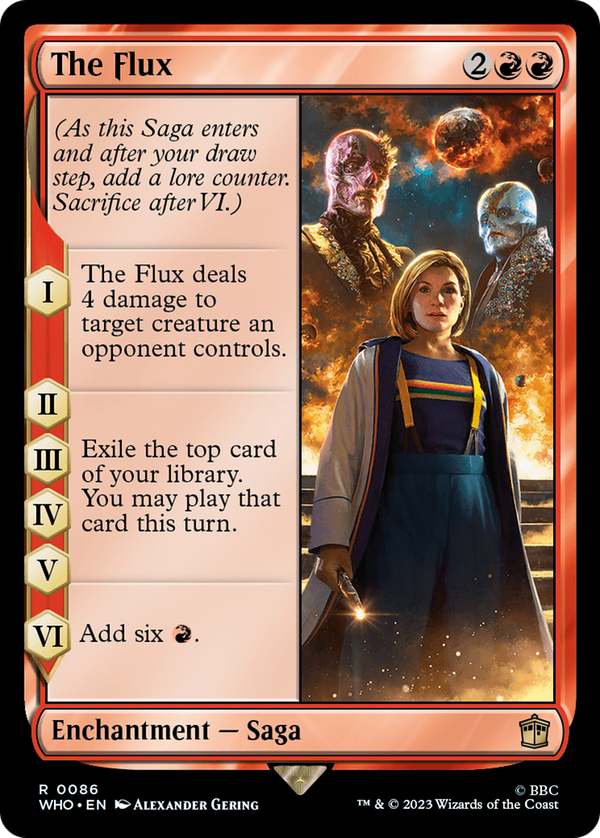
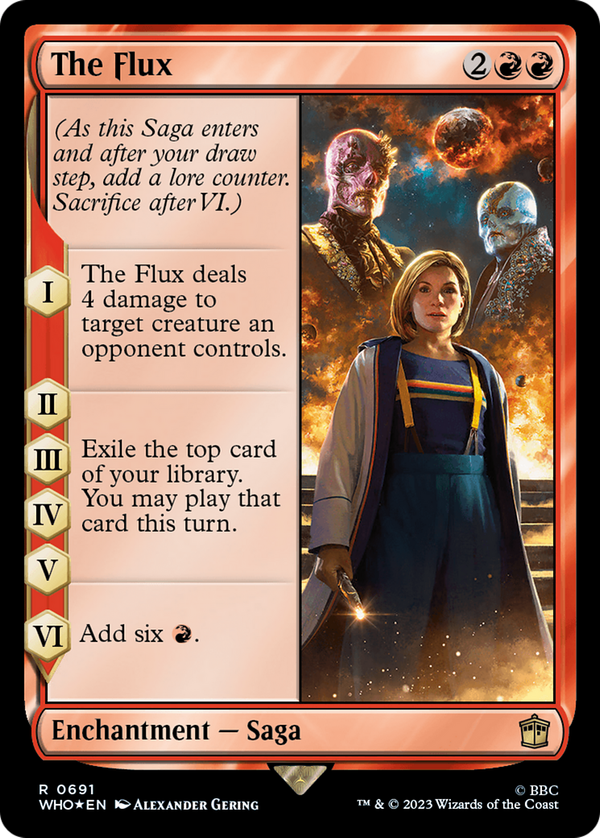
Rules text
.