The Battle of Bywater


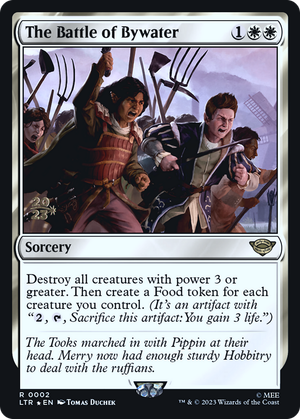
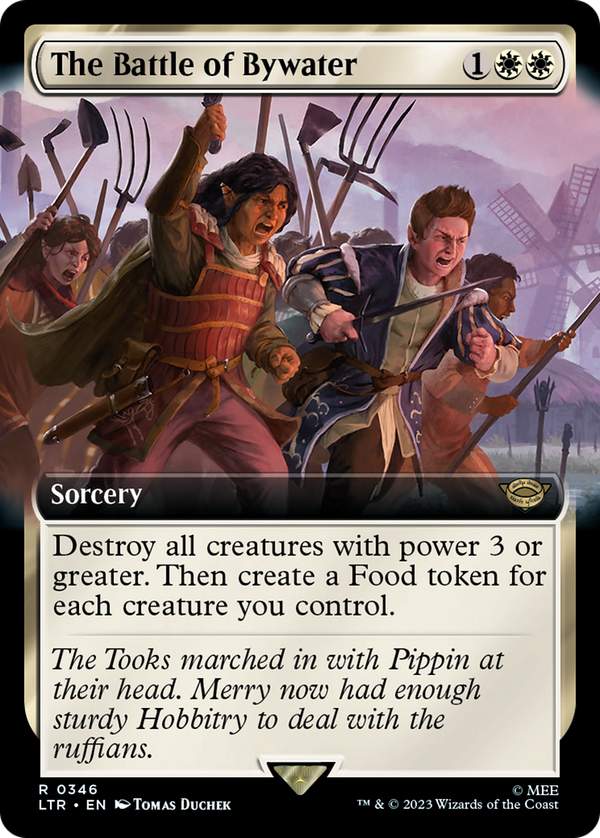
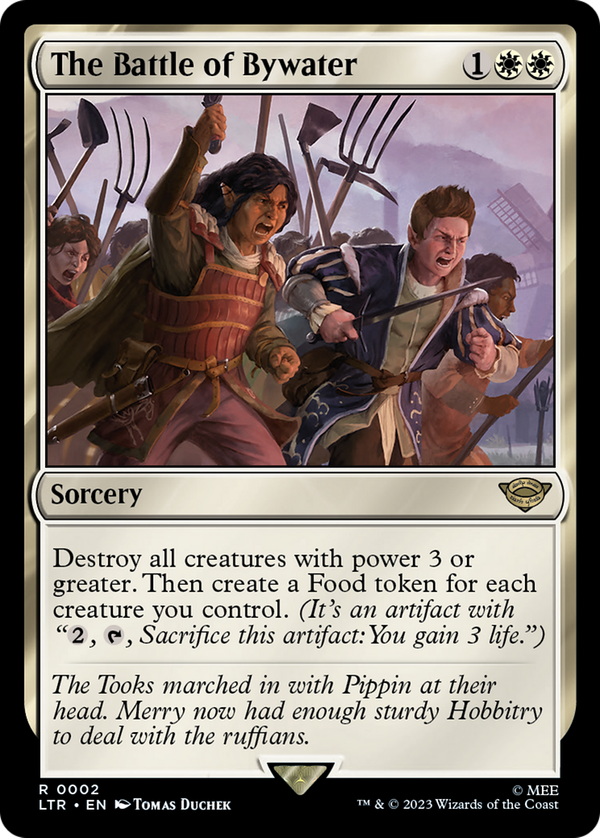
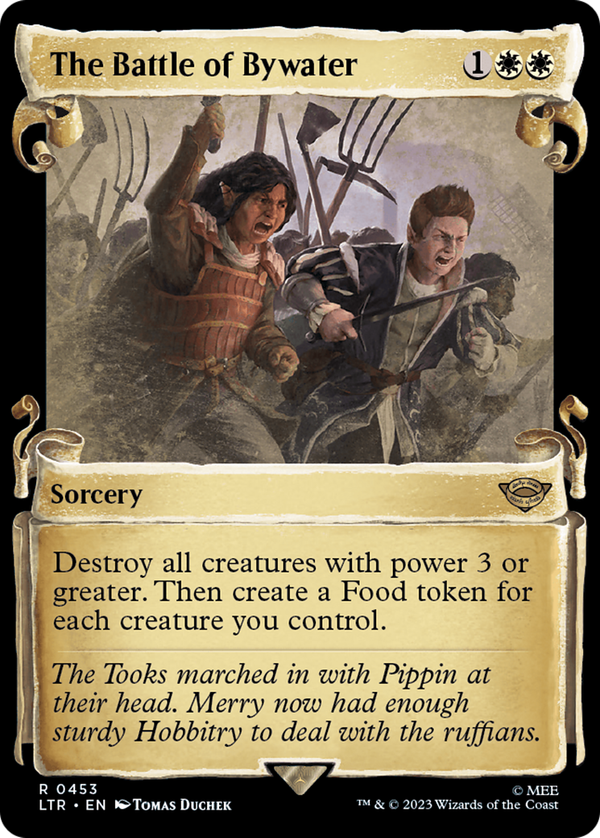
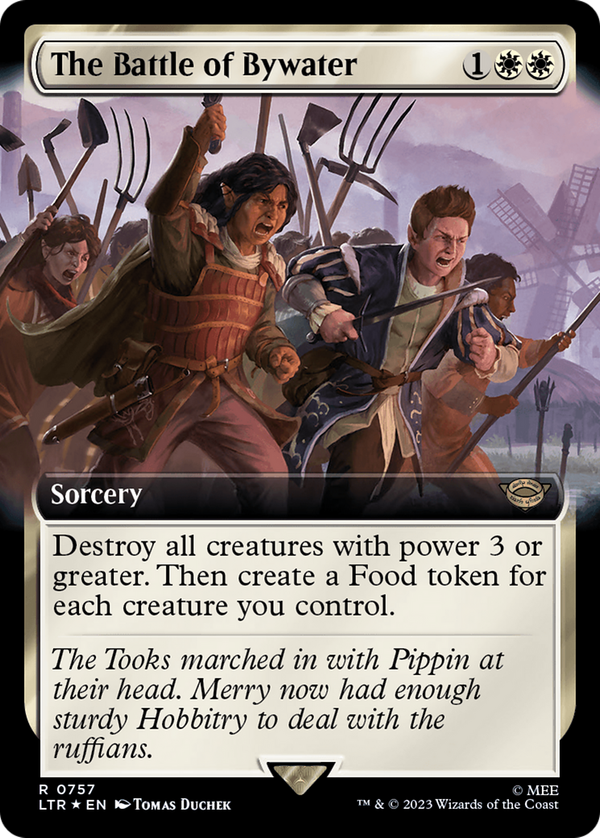
The threshold is the whole trick: three power sets the cut, so the wrath sweeps the beefy midrange threats and game-ending fatties while leaving your mana dorks, one-drop utility bodies, and tokens standing on the other side. That asymmetry is the design lever most one-sided wraths pay for with a color-of-creature restriction or a devotion clause; here it's a flat power line, which means the survivors are exactly the small pieces white weenie and go-wide decks want to keep. Then the second clause turns those survivors into value: a Food for each creature you still control, so the more of your board that ducked the sweep, the deeper the life buffer you bank. Sequencing is doing real work. Because it counts creatures after the destruction resolves, you get paid for every two-power attacker and utility body you deliberately kept under the bar, which flips the usual sweeper math on its head. Most wraths ask you to weigh whether your own side is worth losing; this one asks you to build a deck whose threats sit below three power, then hands you a stack of sacrificial life gain for doing so. The Food tokens are slow and clunky on their own, but they are the honest price of a board wipe that leaves your half of the battlefield mostly intact.
Rules text
 ,
,  , Sacrifice this token: You gain 3 life.")