The Balrog of Moria



The oldest problem with top-of-curve demons is what happens when you draw one you cannot cast. A seven-mana 8/8 with haste and trample closes games when the board is right, but the failure state (stuck on lands, or a game already past the point where a big ground threat matters) is what usually keeps a card like this out of decks. Cycling for  answers that directly, and the two-Treasure rider on the cycle turns the discard into acceleration rather than pure card selection: pitch it early, ramp toward the real threat, or cash the tokens to fix a color you were missing. The death trigger is the other half. Trading an 8/8 in combat or eating a removal spell usually feels like a loss; here it exiles one creature per opponent, so the body threatens value on its way out and answers indestructible or recursion-heavy boards that ordinary removal cannot touch. The ordering matters: exiling the Balrog itself is the prerequisite for the second trigger, which is what lets it reach around the table cleanly rather than firing once. Between the cycling floor and the death-trigger ceiling, the demon has something to do at every point in a game, whether it lands as a threat, a resource, or a delayed answer. That range is the modern answer to why fat legendary finishers so often rot in hand.
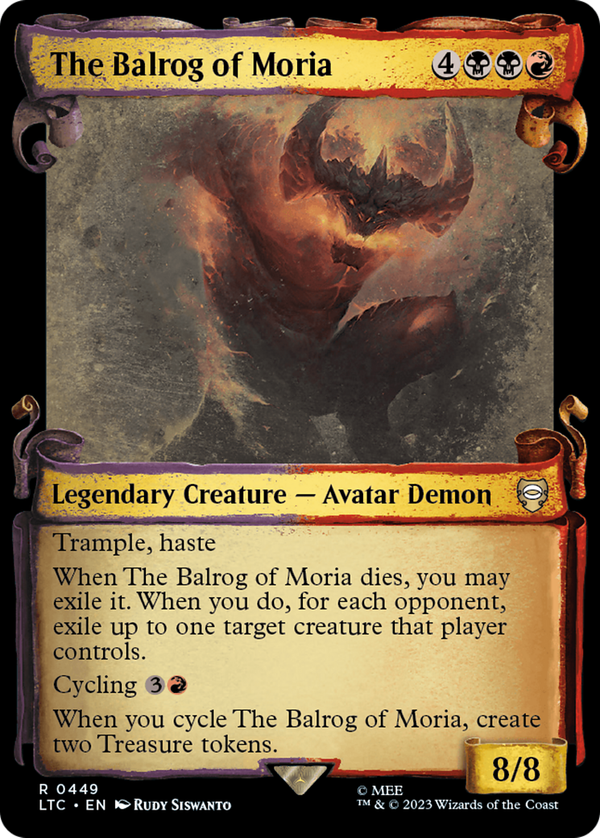
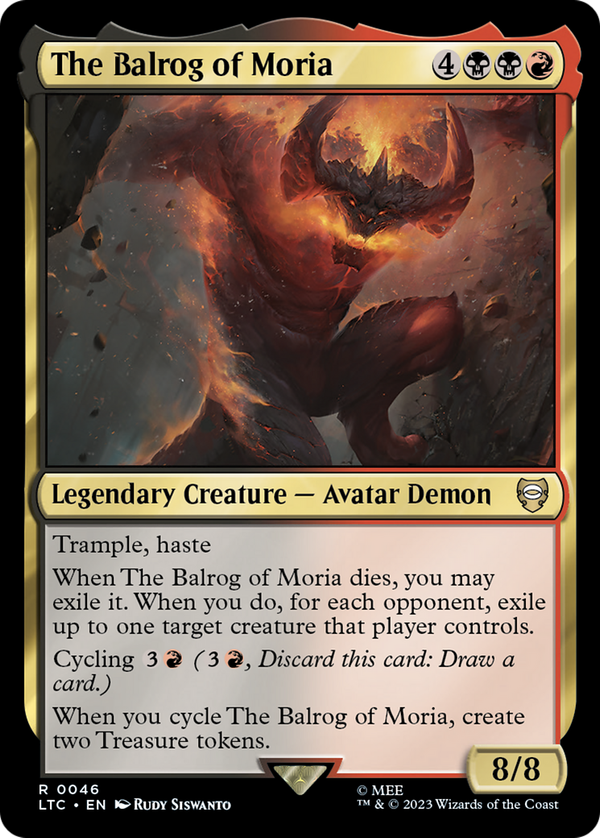
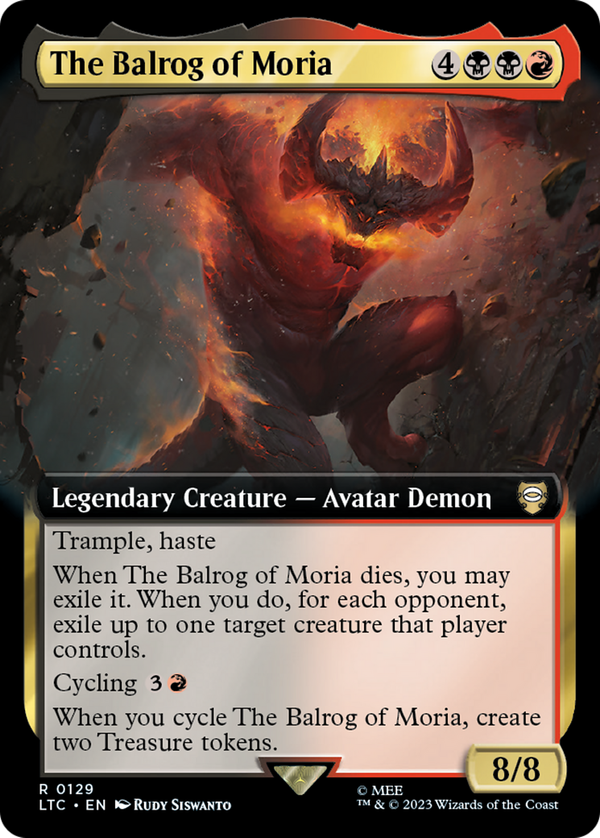
Rules text
(, Discard this card: Draw a card.)
When you cycle this card, create two Treasure tokens.