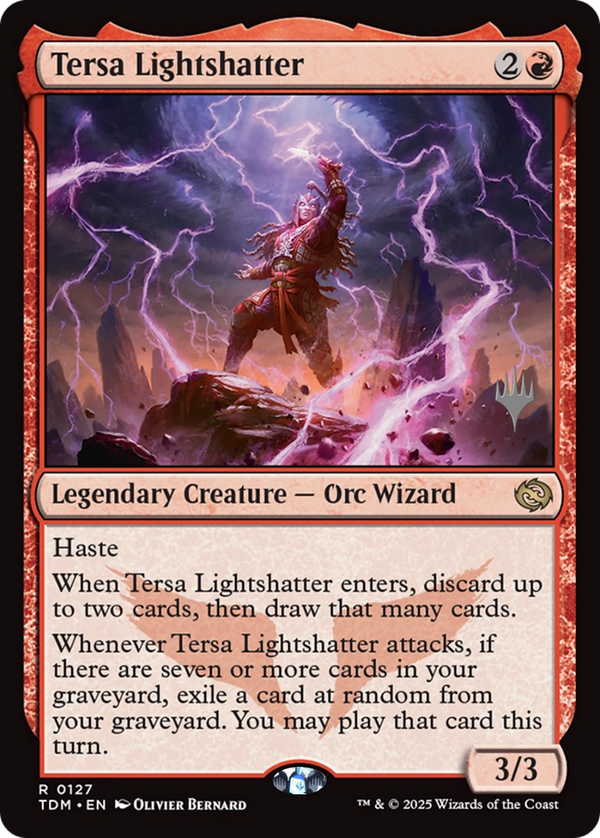
Tersa Lightshatter


The rummage-on-entry effect is old hat: loot a couple cards, dig for the pieces you need, discard toward whatever payoff is waiting. What this design does is turn that graveyard from a byproduct into an attack trigger. The enter ability seeds the yard (discard up to two, draw as many, netting nothing in cards but everything in selection); the combat trigger then cashes it out once you've hit seven cards, exiling one at random and letting you play it that turn. That threshold is the balancing pin. The random exile means you can't cherry-pick your best card, so the effect rewards a deck where the whole graveyard is live rather than one bomb you're hoping to flash back. Haste does real structural work here: the body wants to be swinging the turn it lands to start converting the yard immediately, and the enter-and-attack sequence can compress across a single turn rather than stalling for a full rotation. The tension is the seven-card gate racing against a 3/3 that has to survive combat to keep paying out; too slow filling the graveyard and the attack trigger does nothing, too greedy and the random exile hands you a land when you wanted the payoff. It is a red graveyard engine built around velocity rather than raw card advantage, asking you to fill a bin fast and then swing into the reward.