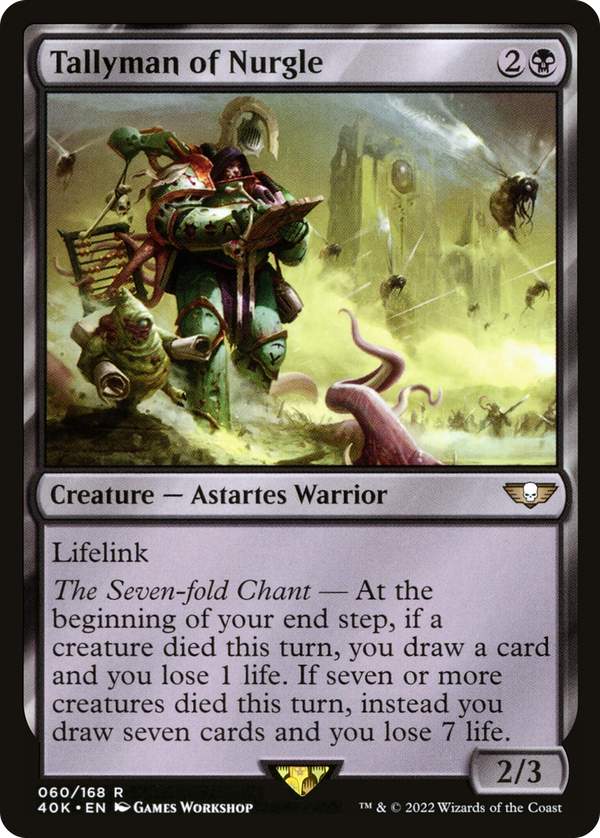
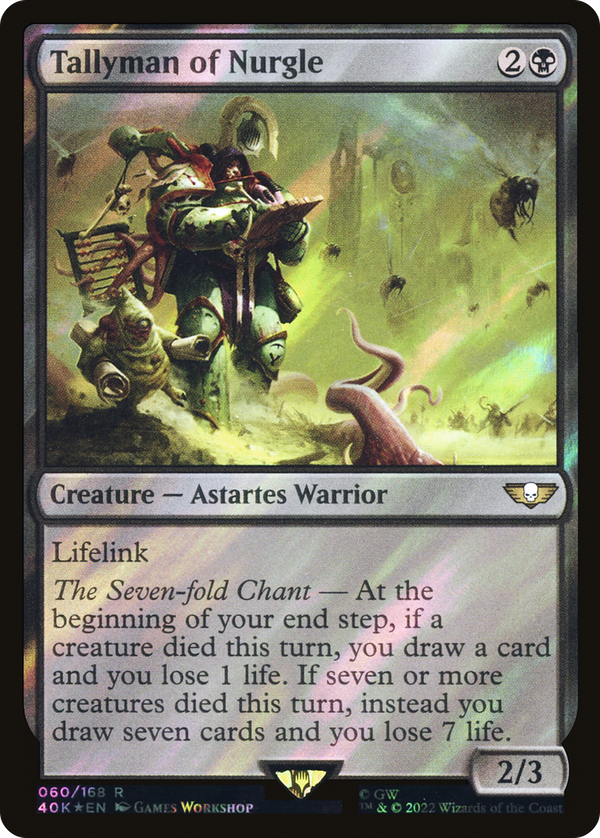
Tallyman of Nurgle


Death-triggered card draw is a black staple with a familiar shape: one creature dies, you draw one, you pay a life. This flips that math on its turn-scale rather than per-death, and the number it cares about is seven. The base mode is a modest attrition engine, the kind of steady chip-draw that black has printed in various forms for years. But the escalation clause rewires the whole card: cross the threshold of seven creatures dead in a single turn and the payload jumps from one card and one life to seven cards and seven life, all at once at your end step. That is not a value trickle; it is a burst refill that asks you to sequence a mass sacrifice, a board wipe, or a token dump into a single deliberate turn. The seven count is doing the balancing work here: the reward is enormous, but it demands a genuine graveyard event rather than incidental deaths, and the life loss scales right alongside the payoff so a mistimed trigger can hurt as much as it helps. The lifelink on a 2/3 body is the quiet counterweight, offering a slow way to buy back the seven life you spent to draw seven cards. It is a payoff built for the aristocrats and token-swarm decks that can manufacture a mass-death turn on demand, and it does nothing halfway: either a slow drip or a flood.