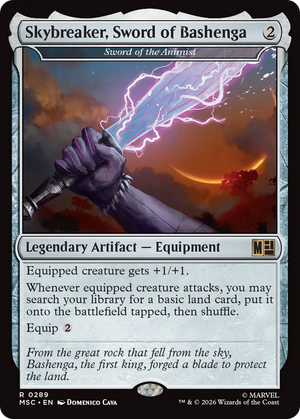
Sword of the Animist

Equipment that ramps was a quietly clever piece of design, because it routes the value through the combat step rather than the cast or the equip. The +1/+1 is almost incidental; the real engine is the attack trigger, which turns every swing into a land tutor that staples a basic onto the battlefield tapped. That single timing choice does most of the balancing. You pay the equip cost, you commit a creature to the red zone, and only then, once the attacker is exposed to blocks and removal, do you collect. A creature sitting back on defense produces nothing, so the card asks you to push into damage to earn your ramp. Because the equip cost is sorcery-speed and attackers are declared all at once, you get exactly one trigger per combat unless something grants an additional combat phase, so the natural homes are decks that take extra turns or extra combats and convert each one into another fetched basic. The thinning is the underrated half: every search shuffles a basic out of the deck, so over a long game you are also smoothing future draws. Against the dead-on-defense equipments that came before it, this one converts an aggressive board state directly into mana advantage, which suits decks that want to attack anyway and would rather not spend a card slot on a dedicated ramp spell. The trigger only finds basics, which keeps it honest in two-color and mono-color builds and largely shuts it out of greedy fixing-dependent manabases.


Rules text