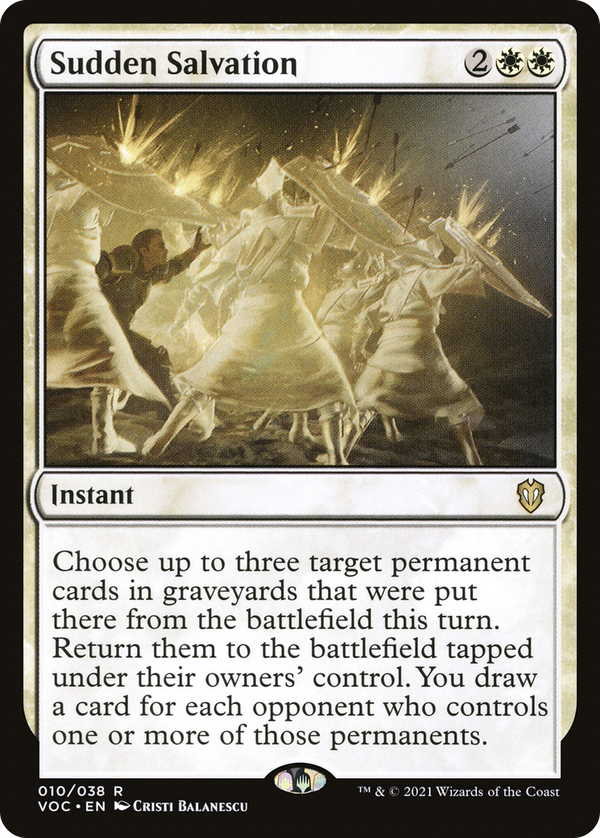
Sudden Salvation


The timing constraint is the entire design: the reanimation only reaches permanents that hit a graveyard from the battlefield this turn, which means the card is not a graveyard rummage but an instant-speed answer to a board that just died. Play it after a wrath, an edict chain, or a big combat trade, and you scoop up to three of the freshly dead permanents back onto the battlefield tapped. That window makes it a defensive counterpunch rather than a value engine you set up over time. The multiplayer wrinkle is where it gets pointed: because it can target permanents in any graveyard, it draws you a card for each opponent whose things you return. So the incentive is not to selfishly rebuild your own board but to reanimate opponents' dead permanents onto their side, converting a table-wide sweeper into your own card advantage while handing back creatures that are now tapped and, ideally, someone else's problem. Returning permanents under their owners' control is the balancing hinge: white gets the mass-recursion and the draw, but pays by giving the bodies away, which keeps this from being a clean one-sided rebuild. It is a rescue spell built for the specific chaos of a four-player board resetting all at once, rewarding the player who reads the timing rather than the player with the deepest graveyard.