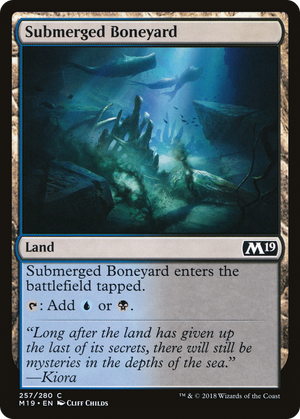
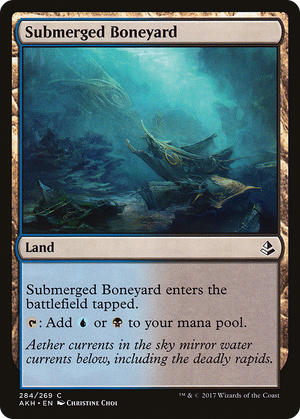
Submerged Boneyard
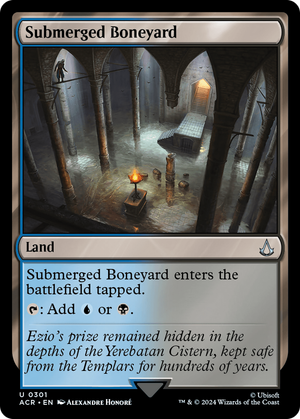
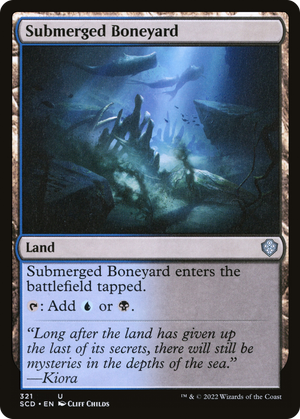
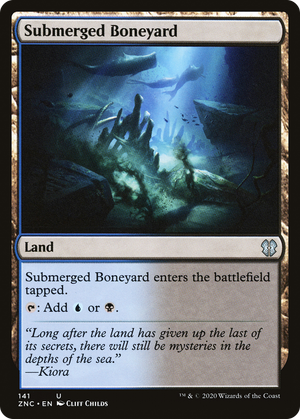
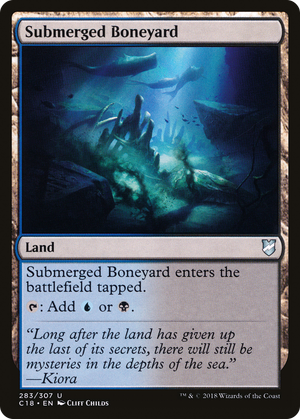
The Karoo-and-Vivid family eventually settled into a humbler, more common shape: the tapland dual that does nothing but fix two colors and cost you a turn's worth of tempo for the privilege. This is the Dimir entry in that workhorse cycle, and the entry-tapped clause is the entire transaction. There is no life loss to weigh, no basic-land type to fetch, no scry or surveil bolted on to soften the blow; you pay in the one resource these lands are designed to tax, which is speed. The design exists because a manabase needs a floor: a fixing source cheap enough to print at common, predictable enough that a deck can run several without doing the math, and weak enough that no constructed format ever has to worry about it. That floor matters more than it looks. Tapped duals like this are the baseline against which every fancier dual gets priced, the reason a painland or a check land or a fetch-fetchable shock reads as an upgrade rather than the default. Submerged Boneyard asks one question of the deck running it: can you afford the tempo, turn after turn, in exchange for never being color-screwed between blue and black? When the answer is yes, it does its quiet job and gets out of the way.
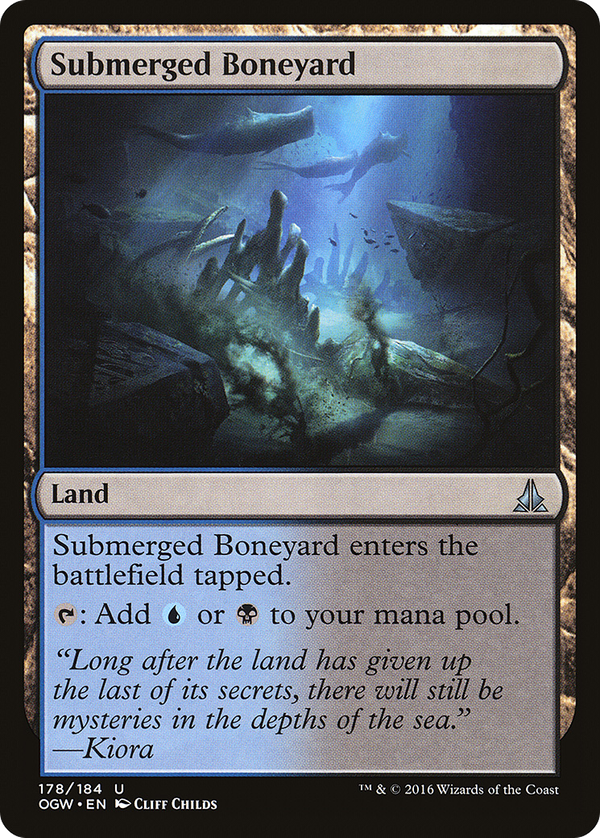
Rules text
 : Add
: Add  or
or  .
.