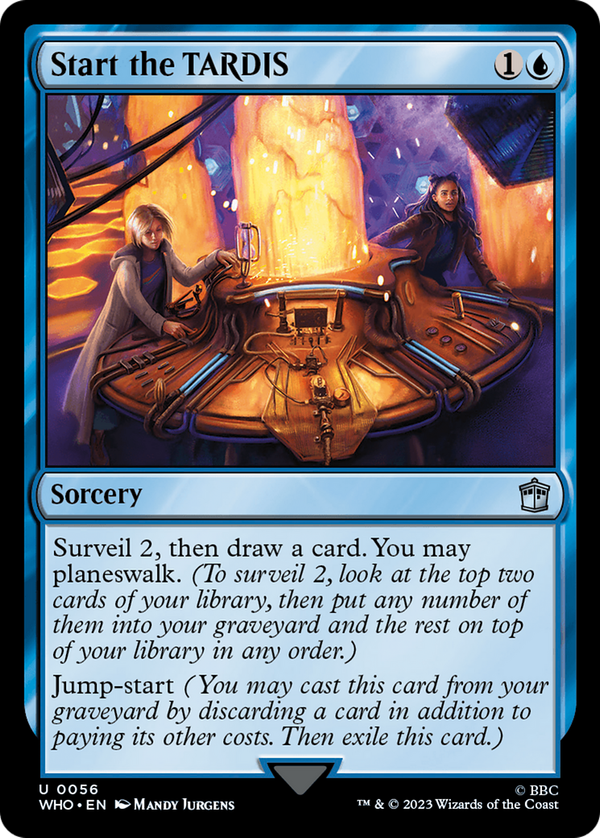
Start the TARDIS


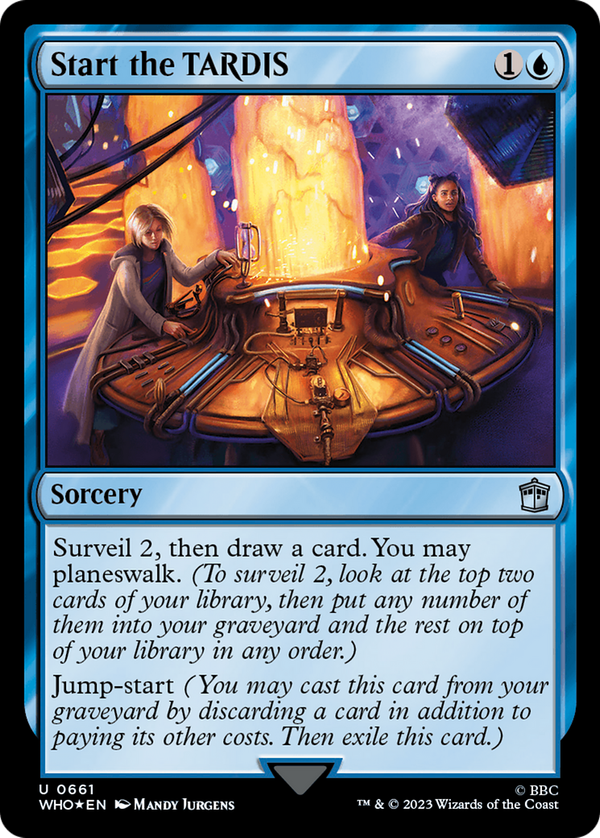
For two mana this digs two cards deep with surveil, replaces itself with a draw, and tacks on a permission to planeswalk. That is a clean cantrip: card parity, not card advantage, since the draw pays back the card you spent to cast it. The selection is the value, not the count. Jump-start is the clause that widens the design, offering a second cast from the graveyard paid for by discarding a card. That discard is what gates the encore, and it changes what the sequence is doing. Because the discard happens as an additional cost before the spell resolves, the pitched card is already in the yard by the time you surveil, so the second cast is really a conversion: a card you did not want in hand and a card sitting dead in the graveyard, traded for fresh selection and a fresh draw. There is no loop, because jump-start exiles the spell on resolution, and the empty hand that would most want a mana sink is exactly the hand with nothing to discard. What you get is a two-stage cantrip whose value is spread across the game rather than spent at once: a smooth early dig, then a stored second use for the midgame when you have spare cards to feed it. The lesson is old and clean: a cantrip with a graveyard clause is worth close to two cantrips, so long as you can pay the cost that gates the second.