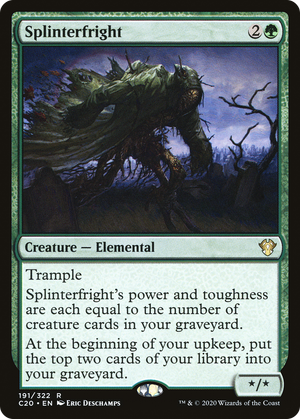
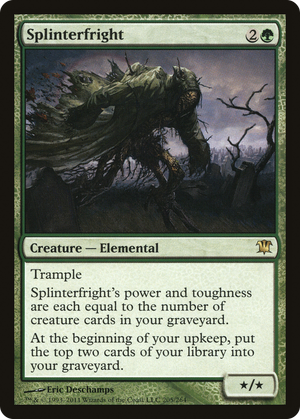
Splinterfright


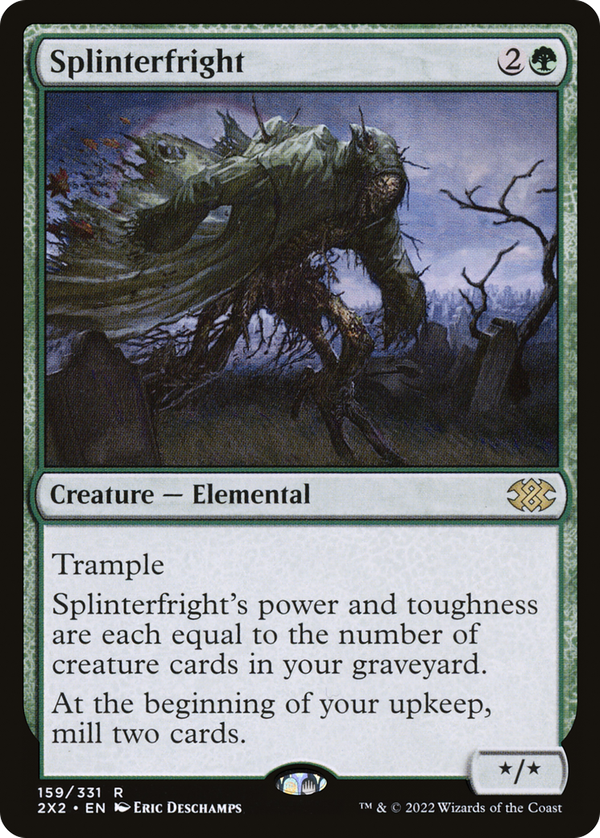
Self-milling as a resource loop instead of a deck-out liability is the whole structural bet. The upkeep mill is a cost most decks fear, but this body inverts it: every creature card that lands in the graveyard makes it bigger, so grinding through your own library becomes the act of growing your threat. The size is read off the graveyard, not the battlefield, which sidesteps the usual ways green creatures get shrunk: bounce resets nothing, and the count survives anything that only touches the body on the field. The real soft spot is the public zone the count lives in. A graveyard-hate effect that exiles your whole yard does not just shrink it; it sets power and toughness to zero and kills it outright, doing far more work than spending a removal spell on the creature itself. Even a single targeted exile from the graveyard chips a point off. Trample matters because the count compounds fast, turning a clock that started small into one that no longer cares about a chump blocker. That fragility asks you to commit to a self-mill engine rather than splash it. It belongs to the green graveyard-matters lineage where the yard is treated as a second hand of resources, an early take on green-as-graveyard-color that points at a design space the color spent the following years widening: the graveyard not as a loss column but as a battlefield in waiting.