Spell Stutter


Miscalculation and Rune Snag long ago established the shape of the soft counter that taxes by a fixed floor plus a variable rider. What this one riffs on is Faerie count as the escalator: the  base is the kind of tax that bites in the early game, when an opponent on curve has tapped out and cannot spare the extra mana, but slackens later once they are flush and can simply pay through. The Faerie rider is the fix for that late-game softness. Every additional Faerie on your side widens the toll until the tax grows steep enough that few opponents can afford it, tying the ceiling directly to board development, which is exactly what a tribal tempo shell wants: the counter you play early to trade evenly becomes, five permanents later, a near-prohibitive wall. The design trades reliability for slope. With no Faeries down yet it is the weakest kind of tax, a speed bump; committed to a wide Faerie board it becomes very hard to pay through. That volatility is the honest cost of the effect, and it forces a sequencing question most counterspells never ask: hold it until your creature count makes the tax prohibitive, or spend it early as a tempo tool and accept it might not stick. The card only reads as generically weak if you evaluate it in a vacuum; its power is a function of everything you have already resolved.
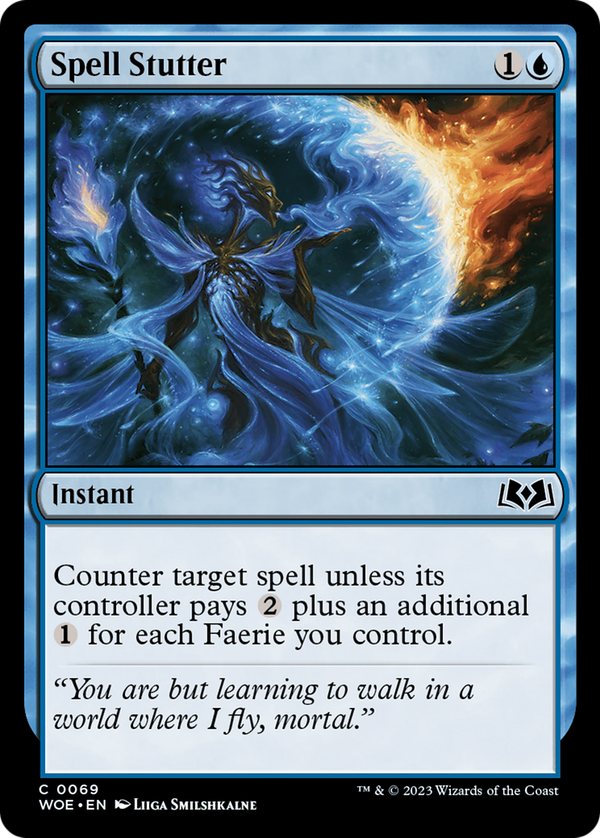
Rules text
plus an additional for each Faerie you control.