Rune Snag


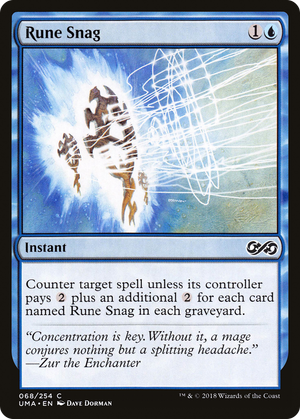
Mana Leak with a memory. The base tax is a clean two: enough to matter early, soft enough to lapse once the opponent untaps with land to spare. What separates this from the run of soft counters is the escalation clause, which scales off Rune Snag copies sitting in any graveyard. The second one you resolve is a harder wall than the first, and the third harder still, because each spent copy raises the toll on the next. That turns a deck running the full set into something that gets meaner as the game grinds on, exactly the window where a generic two-mana counter usually decays into a dead card. The clause counts graveyards plurally, too, so an opponent's own discarded or milled copy feeds the count against them. Most tax counters age badly: strongest on the turn you draw them, worthless by turn eight, when the opponent has mana to burn. This one banks its earlier casts as future leverage, so the late copies arrive harder than the early ones rather than softer. It rewards committing to the redundancy rather than splashing a single copy, which is the opposite of how most counterspells reward their pilots.
Rules text
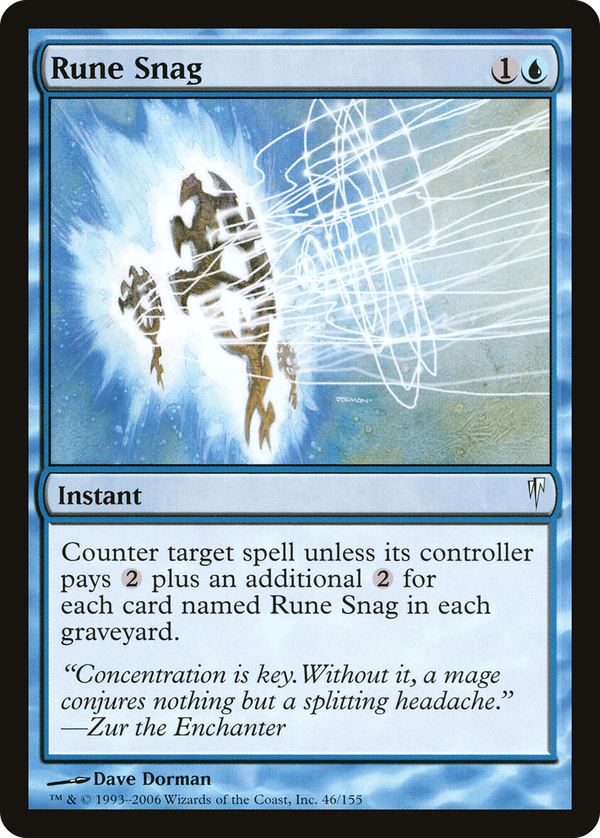
 plus an additional for each card named Rune Snag in each graveyard.