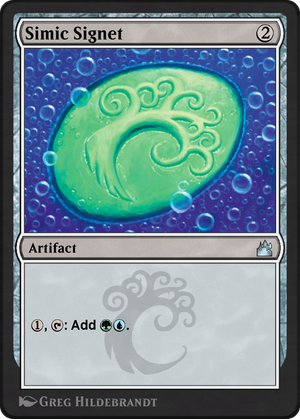
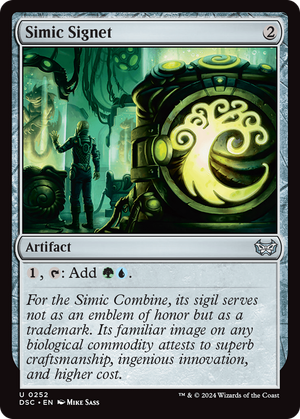
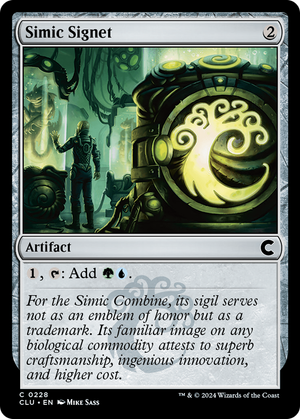
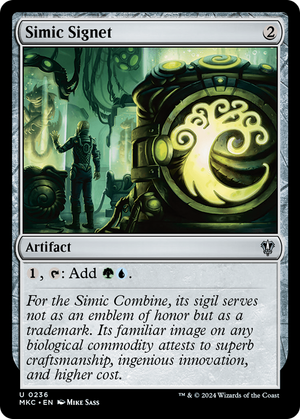
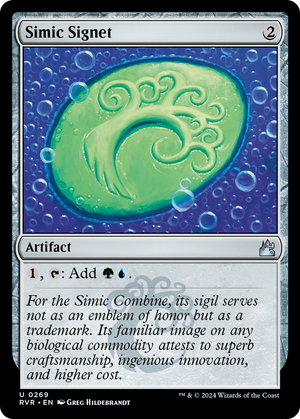
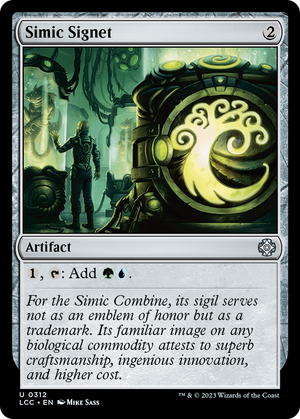
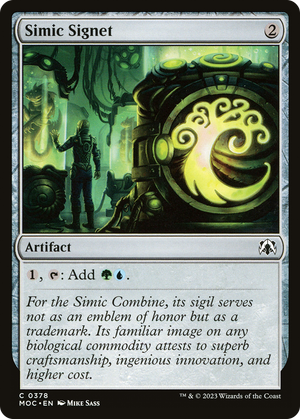
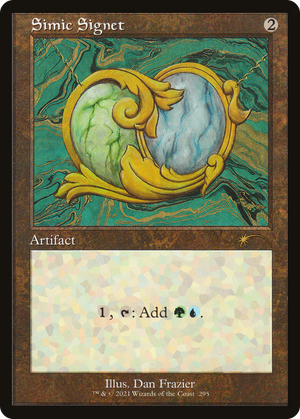
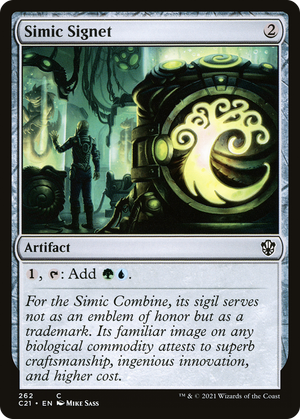
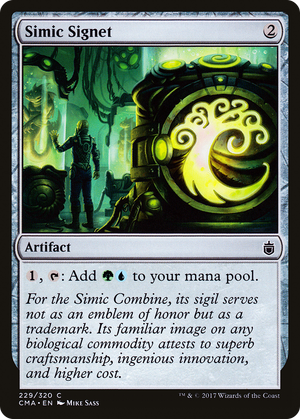
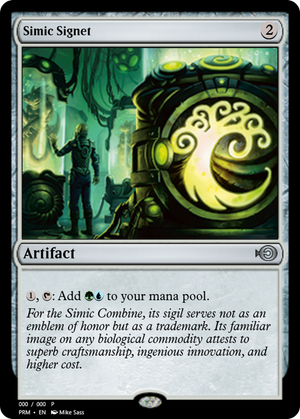
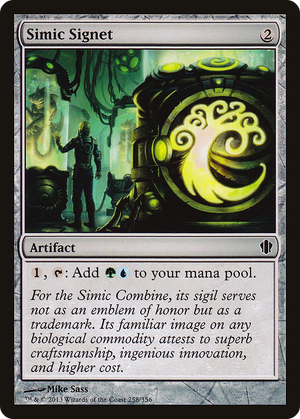
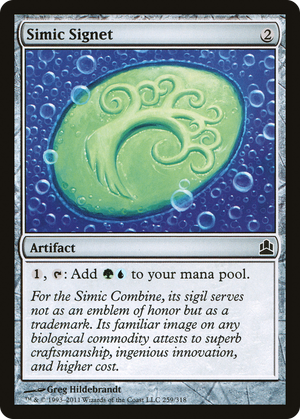
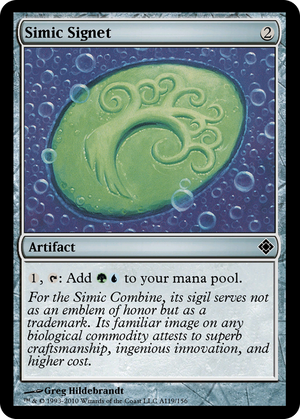
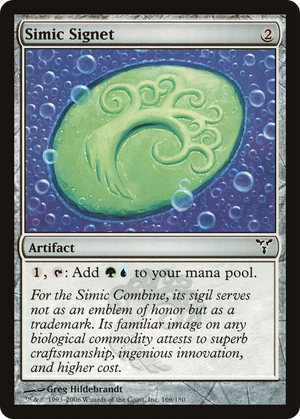
Simic Signet

The Signet template solved a fixing problem older mana rocks could not: how to convert mana of one kind into a specific two-color pair, on demand, rather than committing to colors the moment the rock taps. The  activation launders generic mana into
 , which means the card filters rather than simply ramps. The net is modest (one mana from the activation), and that restraint is the point: the design trades raw acceleration for color certainty, so a deck splashing for its best spells can pay one mana from any source and get back exactly the two pips it was short. That structural choice is why the ten-card cycle covering every guild pair became the default fixing skeleton for two-color and wedge decks, the thing reached for before anything fancier. The green-blue printing does double duty within that frame: it serves the ramp-and-draw pairing, smoothing color requirements while still nudging the curve forward for a strategy built to land a turn ahead. None of it is glamorous, and that is by design. A Signet earns its slot by disappearing from your attention once it resolves; you stop thinking about your colors because the rock is thinking about them for you. That quiet reliability is exactly why this kind of card has never left the conversation.
Rules text
,  : Add .