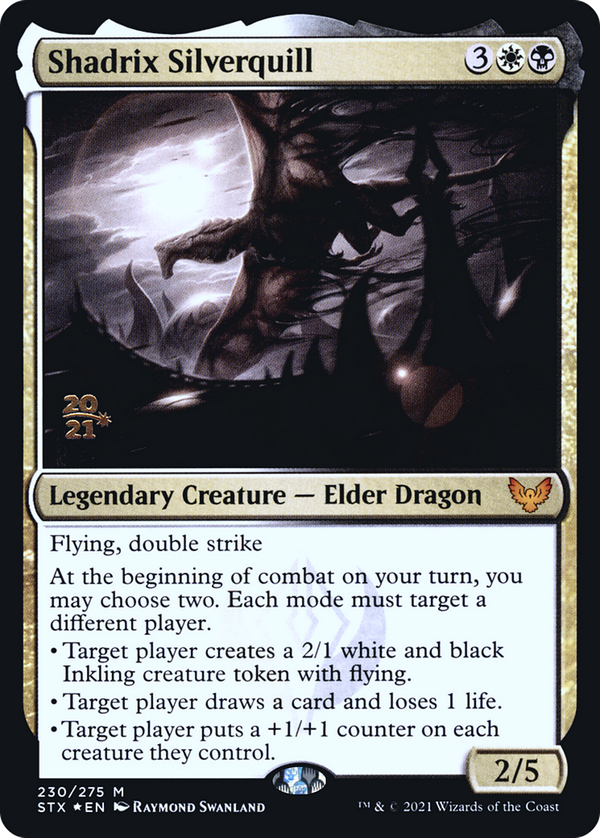
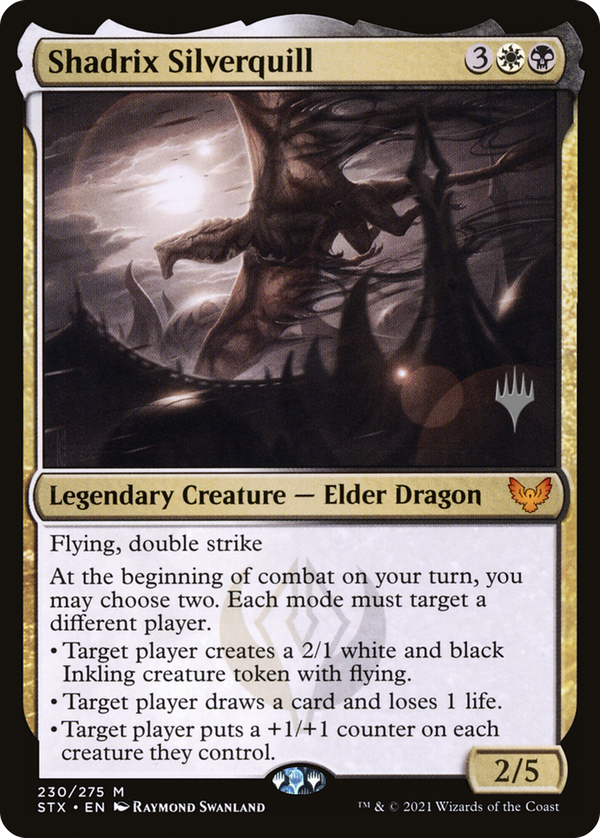
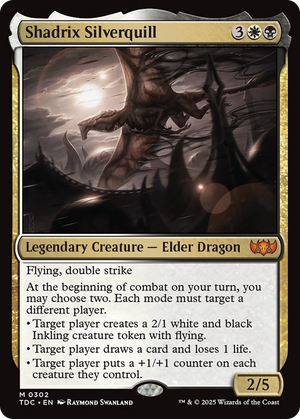
Shadrix Silverquill



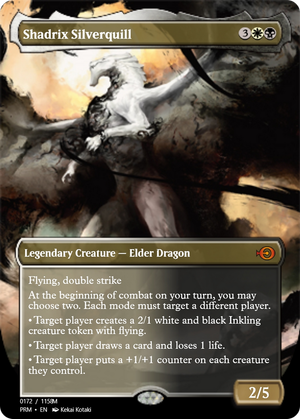
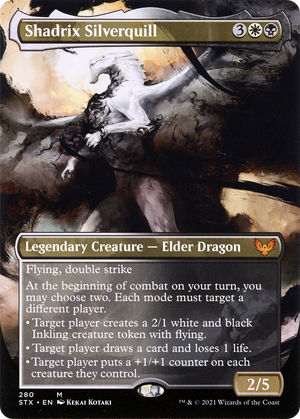
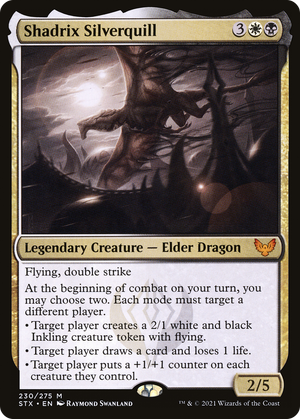
The mode-and-target structure is the whole design, and it runs against a decade of instinct about what a value engine should do. At the beginning of combat on your turn, you pick two of three modes, and each chosen mode must point at a different player: the Inkling token, the draw-and-drain, the team-wide counter. Because the two effects have to fan out across separate seats, you cannot funnel both onto yourself and pull ahead in a vacuum; the card is written to leak value, every trigger handing at least one of your two picks to somebody else's side of the table. All three modes are gifts. A 2/1 flier, a card at the trivial cost of one life, a +1/+1 counter on every creature the target controls: whichever you route where, someone benefits. That is the tension. The card gives constantly, and the skill lives in deciding whose board to grow and whose hand to fill against the concessions you are forced to hand out. Route the counter mode to a durdling opponent and you have anointed a kingmaker; point the draw-and-drain at the player closest to winning and you have handed them exactly what they least needed to sit on. It belongs to the small family of designs whose text mandates multiplayer generosity rather than a closed value loop, forcing negotiation into the combat step itself. The flying, double strike on a 2/5 body keeps the evasive clock honest while all this diplomacy is being brokered.