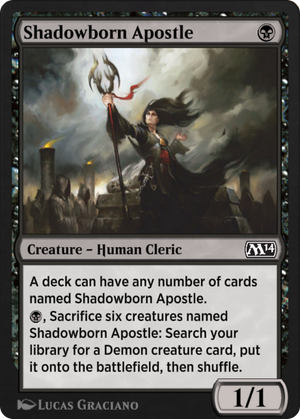
Shadowborn Apostle

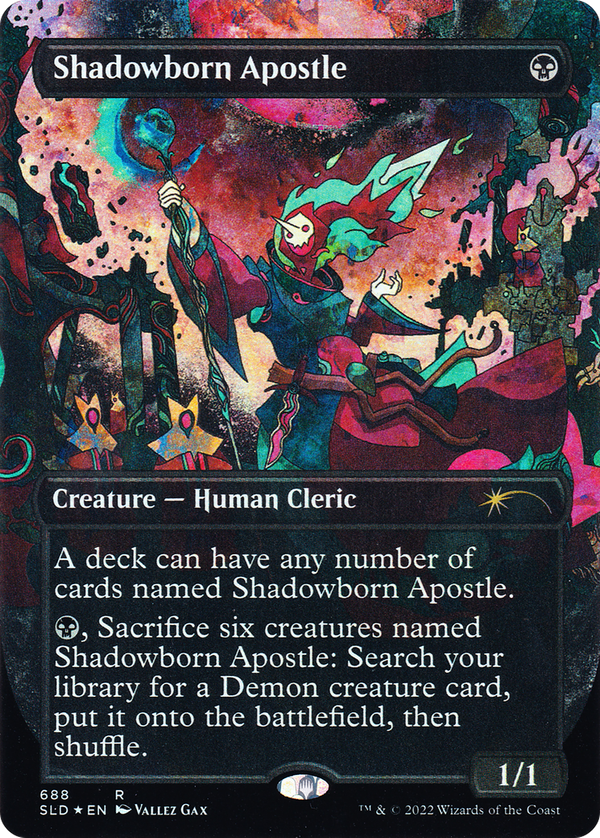
The deckbuilding constraint is the entire premise: the line "a deck can have any number of cards named Shadowborn Apostle" overrides the four-copy rule that governs nearly every other nonbasic card, and that single sentence reframes a humble 1/1 into a deck-defining engine piece. The math is brutal and deliberate. Sacrificing six bodies plus a black mana to fetch a single Demon means the payoff has to justify a board's worth of investment, so the design pushes you toward the largest, most game-ending Demons available, then asks you to assemble a small army of identical Clerics first. This belongs to the rare lineage of cards that exist to be played in bulk, alongside Relentless Rats and Rat Colony, where the singleton-restriction inversion is the point rather than a footnote. What separates the Apostle is that it does not reward its own redundancy directly; it converts redundancy into a tutor for something else entirely, making the creature a renewable resource you spend rather than a horde you grow. The sacrifice cost is what keeps it honest: six is a steep tax that forces real setup before any Demon arrives, and the activation is repeatable only as long as you can keep refilling the bodies. Its strategic identity lives almost entirely in the deck list rather than on the battlefield, a one-drop whose whole reason for existing is that you can run forty of it.
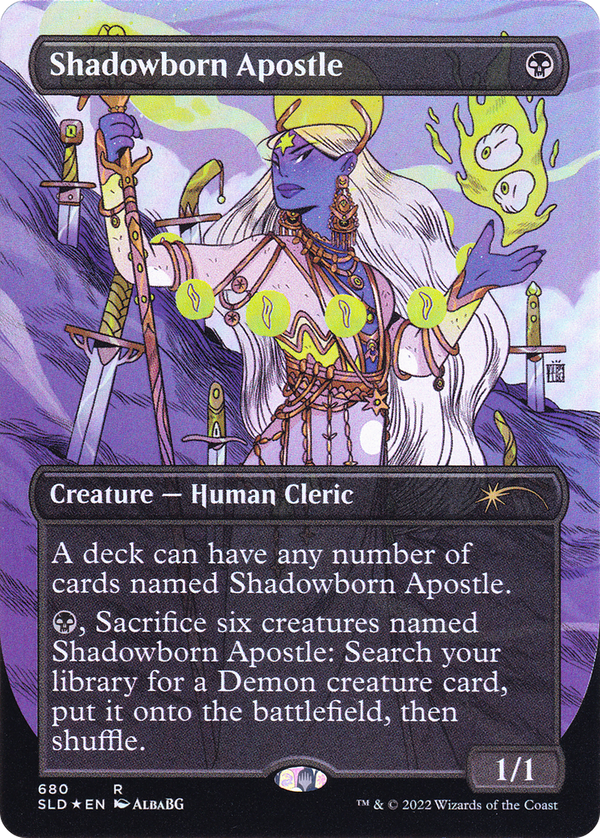
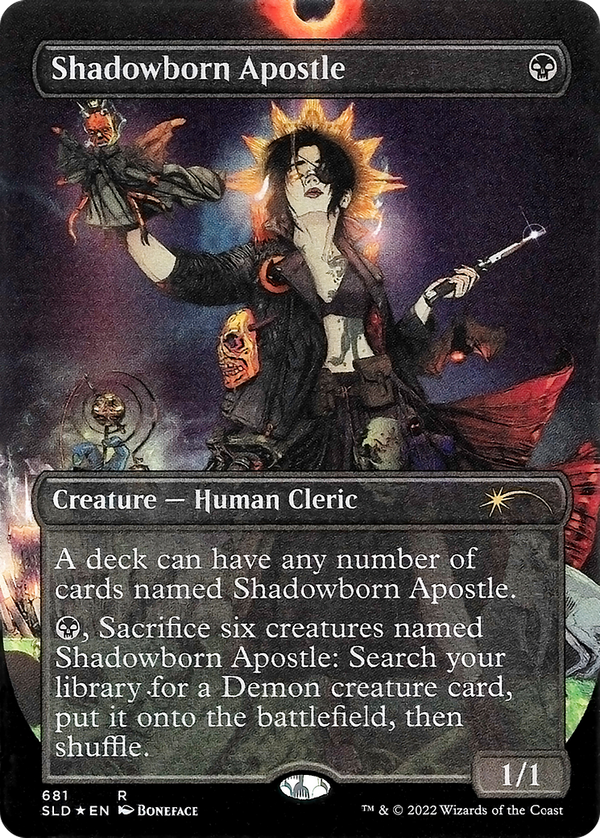
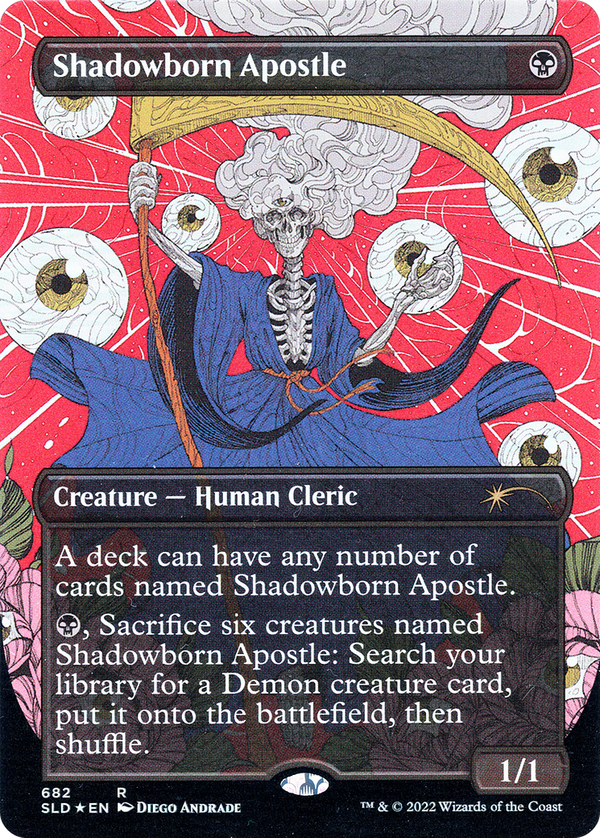
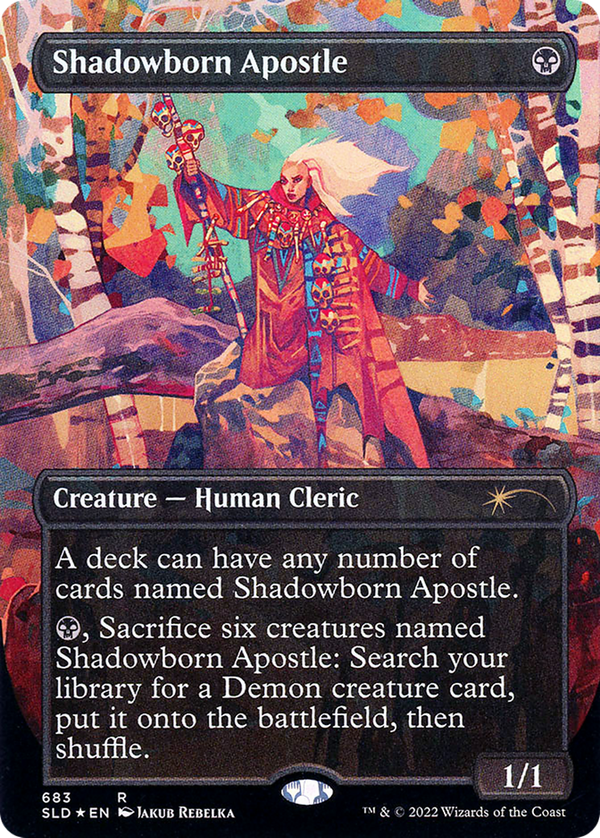
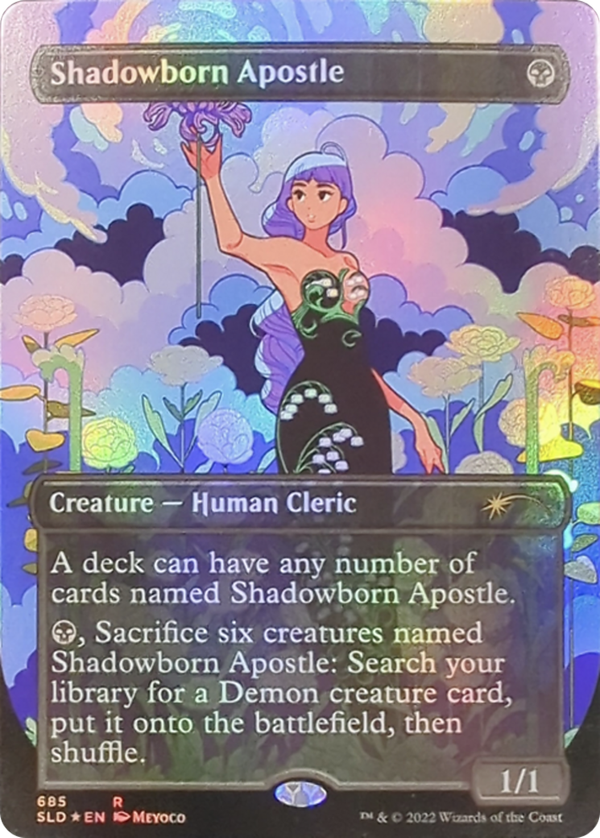
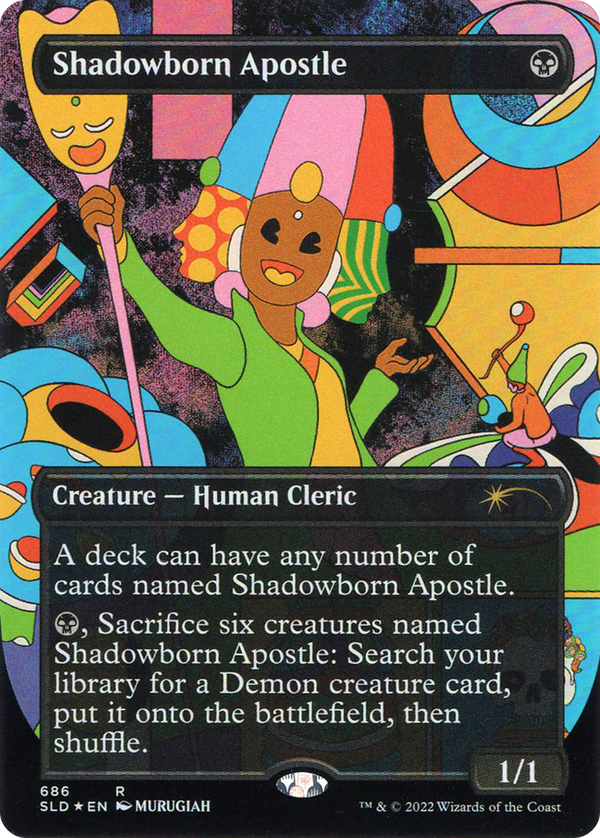
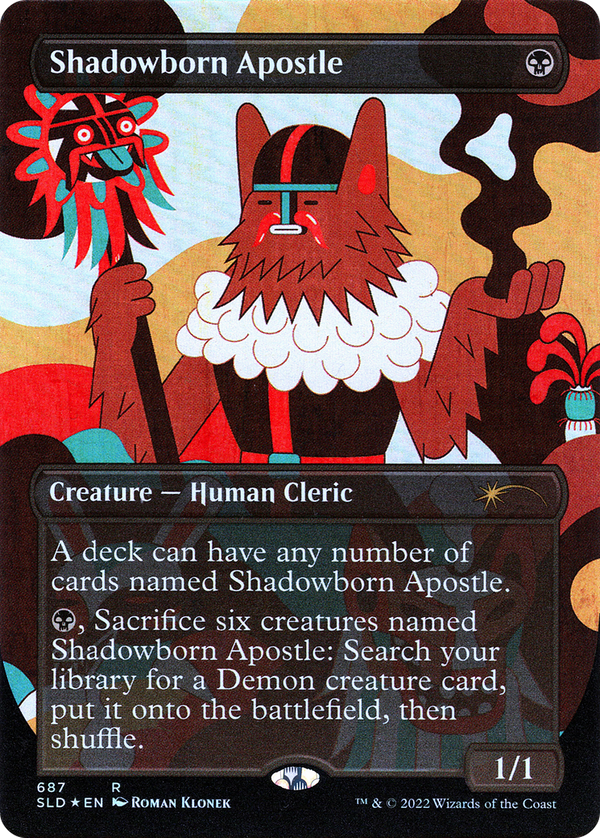
Rules text
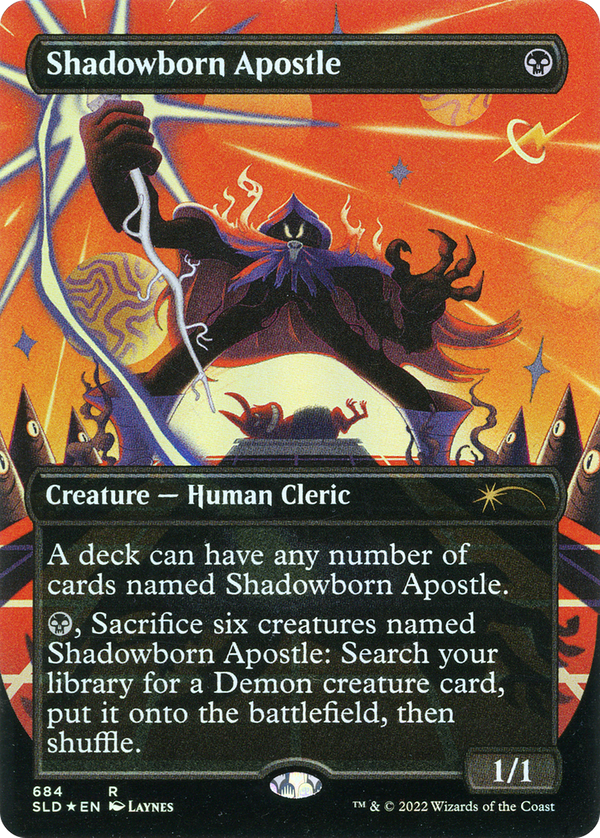
, Sacrifice six creatures named Shadowborn Apostle: Search your library for a Demon creature card, put it onto the battlefield, then shuffle.