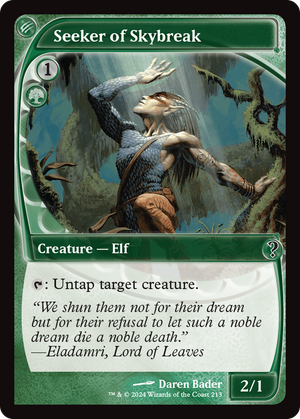
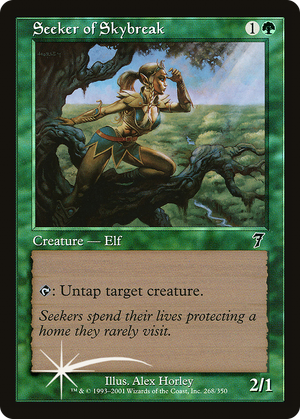
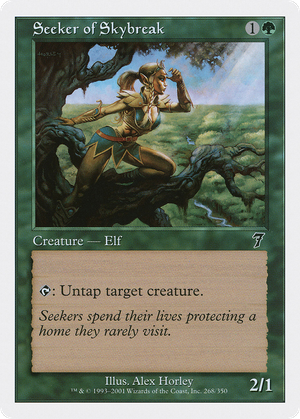
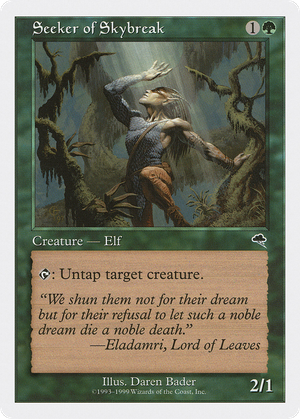
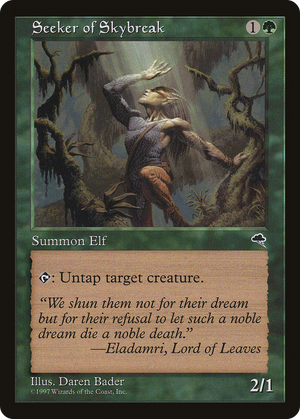
Seeker of Skybreak


Untapping a creature for free reads like a small effect, but the design lever it pulls is large: any tap ability worth using once becomes worth using twice per turn, and the elf body keeps the cost in green's wheelhouse. The target clause is deliberately open, and that includes the Seeker itself. Point it at a mana creature and you have ramp that can spill a single green into another spell; point it at a tap-to-draw or tap-to-deal-damage line and the loop becomes a deck's engine; point it at nothing in particular and it sits as a 2/1 with no combat presence. The body is the floor the designers were willing to live with. The real payoff is pushed entirely into combinations the card cannot promise on its own, which is also why it can serve as half of a self-contained engine: paired with an effect that punishes untapping (an untap-trigger mill piece, for instance), the Seeker's own tap-and-untap becomes the cost-free fuel for the loop rather than a service it performs for someone else. That is the structural trade Tempest made: a low floor on the creature, with the value written in entirely by what you aim the ability at. Untap target creature is a blank check, and its long afterlife in elf and combo shells comes from exactly that open-endedness. How much it is worth depends on what you write into it.
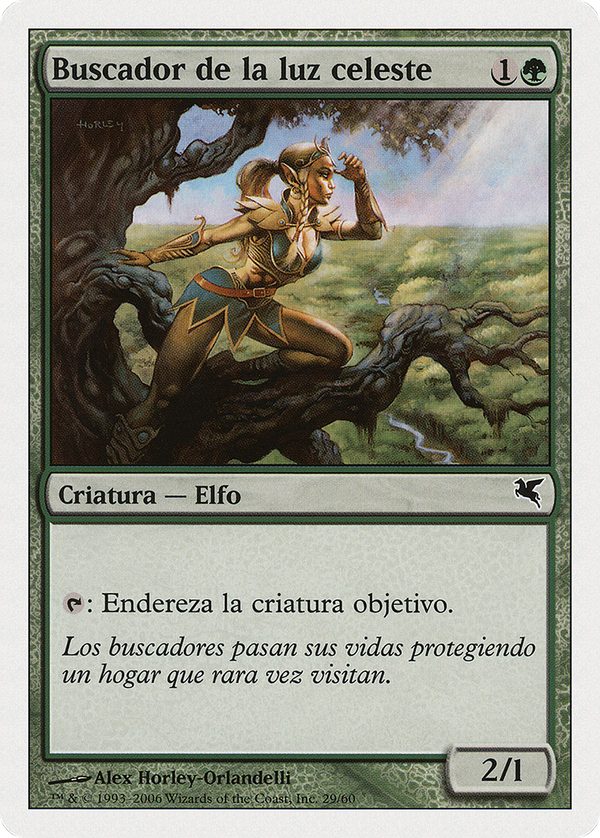
Rules text
 : Untap target creature.