Sail into the West



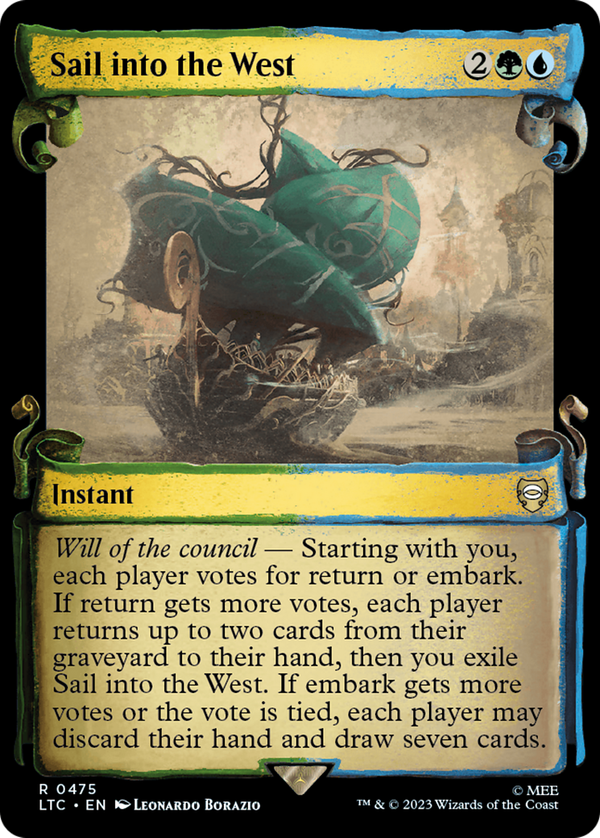
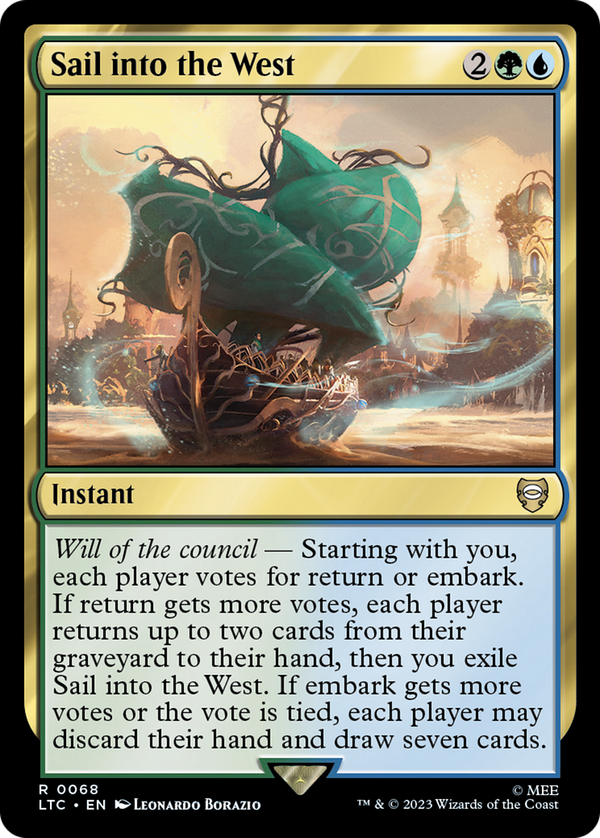
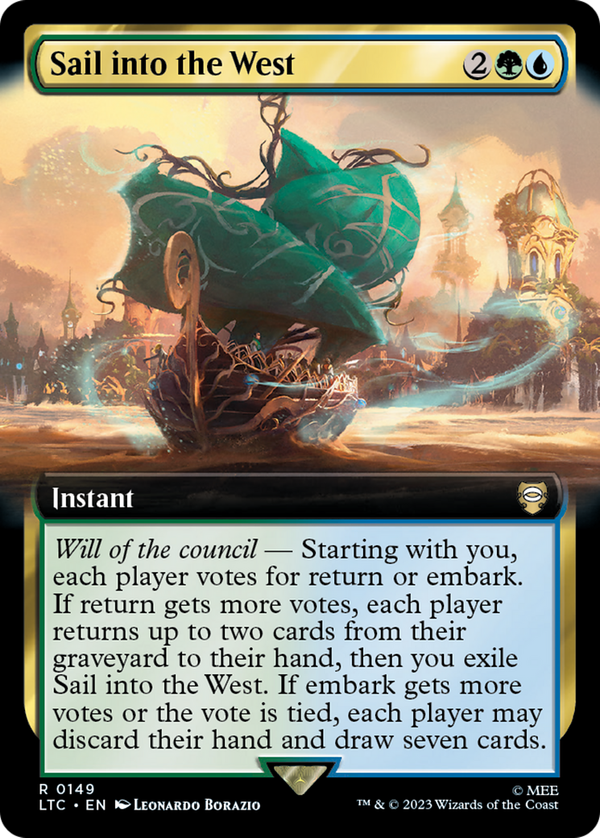
Will of the council mechanics live or die on how the two options are priced against each other, and this one is unusually honest about the trade. The vote is not between symmetric outcomes: return hands everyone up to two cards back from the graveyard, a modest table-wide value bump that leaves this instant exiled and gone; embark is a group Timetwister, a full hand dump into seven fresh cards for anyone who wants it. The design tension is that the strong effect is the default. Ties break toward embark, so the caster only needs to reach parity, not a majority, to protect the reload; the return outcome demands an outright plurality. That inverts the usual voting-card instinct, where the caster steers toward the outcome that helps only them. Here the caster's private incentive (exiling their own spell to reach back for two graveyard cards) is the weaker path, and the mass-refuel that most benefits an empty-handed opponent is the one the tiebreaker guards. The instant-speed window matters too: cast at the end of a turn, embark refills you before your untap while catching everyone else mid-plan, and return can rebuy a key card in response to removal or a wrath. It reads as a political parlor trick, but the real work is deciding which of two green-blue card-advantage engines the table gets, then reading the room well enough to know whether embark's tiebreaker cushion is enough to land the vote where you already wanted it.