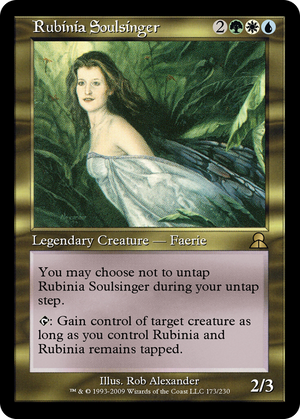
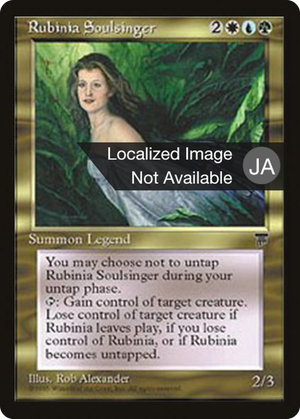
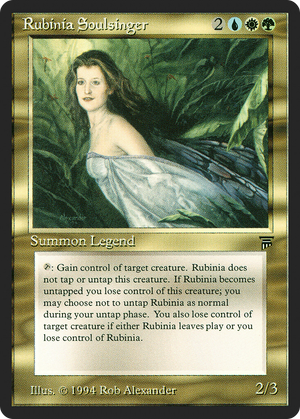
Rubinia Soulsinger




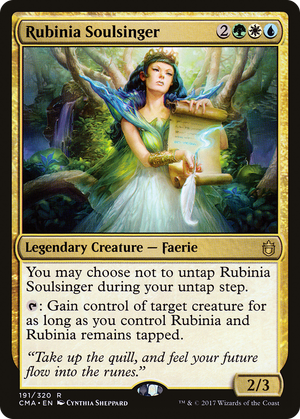
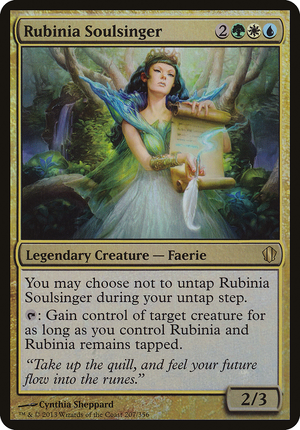
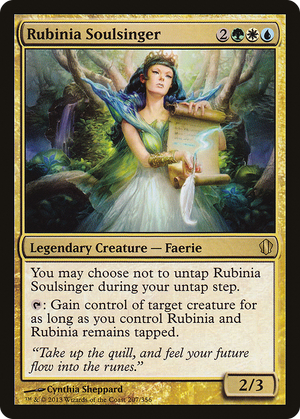
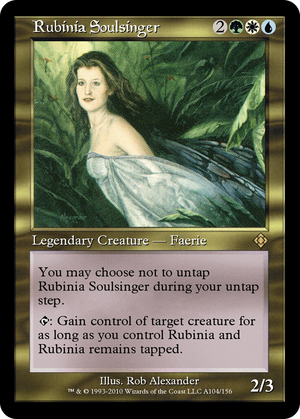
Bant control-magic on a 2/3 body is the design idea, and the lock mechanism is what makes the card worth talking about thirty years later. The "may choose not to untap" clause is the engine: tap her to steal a creature, and that creature stays yours indefinitely because the duration is gated on her remaining tapped, a state you now control by simply never untapping her. Because tapping is the only cost, the constraint is built into her body: she can hold exactly one prisoner at a time, since the theft ends the instant she untaps or dies, returning the stolen creature to its previous controller. Each untap step is therefore a decision point: release the current captive and reach for a new target, or hold the lock and let her sit, tapped and vulnerable. That makes her a repeatable, redirectable Control Magic stapled to a legendary creature, with the leash being her own tap-state. The design predates the modern template language for "as long as" effects and the cleaner answers that would later untangle stolen creatures, so in her era the lock was genuinely sticky. She sits in the lineage of creatures whose job is not to attack but to convert opposing threats into your own, with the controller's tap-state as the tether: Old Man of the Sea did it earlier, Vedalken Shackles and Agent of Treachery later. The Bant color identity, unusual for a theft effect, is the wrinkle that has kept her a distinctive build-around rather than a card power-crept into irrelevance.
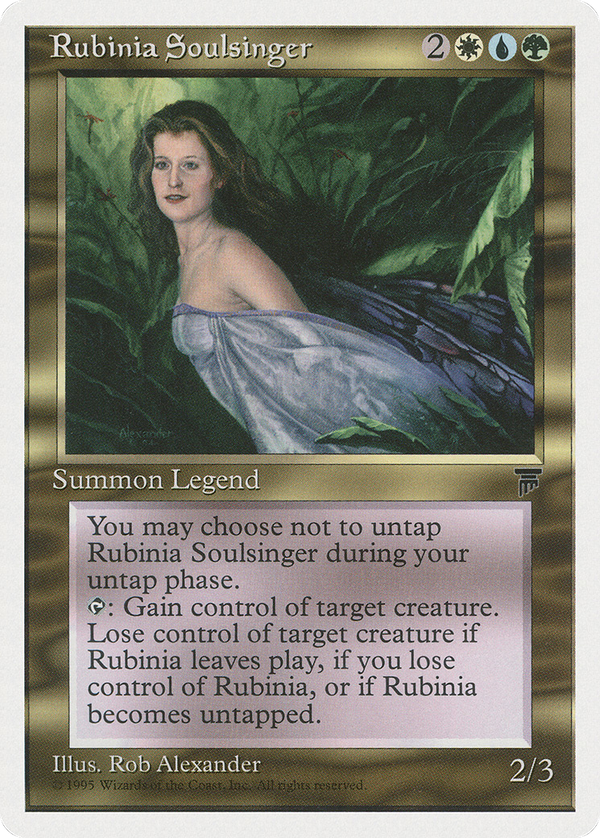
Rules text
 : Gain control of target creature for as long as you control Rubinia Soulsinger and Rubinia Soulsinger remains tapped.