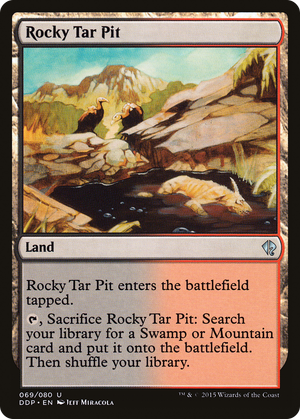
Rocky Tar Pit
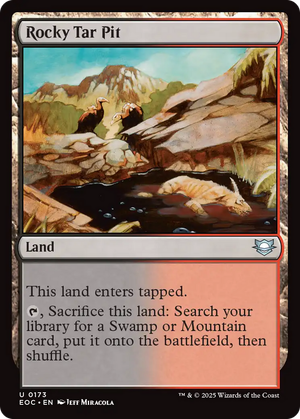
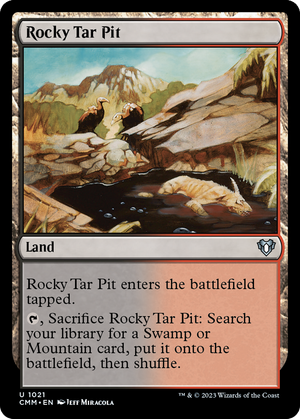
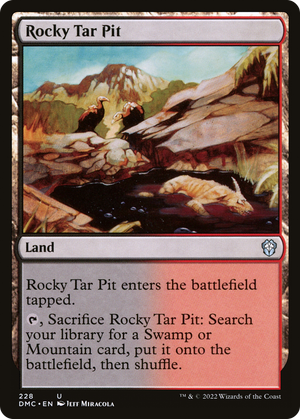
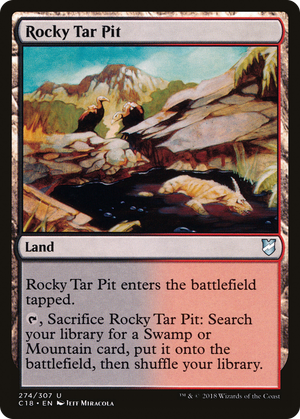
Six years before the Onslaught cycle made fetching the foundation of competitive manabases, this established the verb on a much rougher engine. The search clause is the one Magic eventually built around (find a typed land, put it onto the battlefield, shuffle), and because it reaches any Swamp or Mountain card by type rather than by name, it can grab a shock-typed land like Blood Crypt or an original dual like Badlands, not just a basic. What separates it from its descendants is not the targets but the price. Later fetches paid a single life to grab an untapped land at instant speed; this generation taxed tempo instead. It enters tapped, and the sacrifice ability still costs the tap, so cracking it the turn it lands is impossible. Together those two clauses cost a full turn of development. The lesson is buried in that gap. Every friction Wizards relaxed when it returned to the mechanic (the enters-tapped clause, the tap on the sacrifice) was a constraint these cards proved players would rather not pay. The fetch land did not become a staple until those frictions were sanded off; this is the prototype that proved the verb was worth keeping and the costs were not.
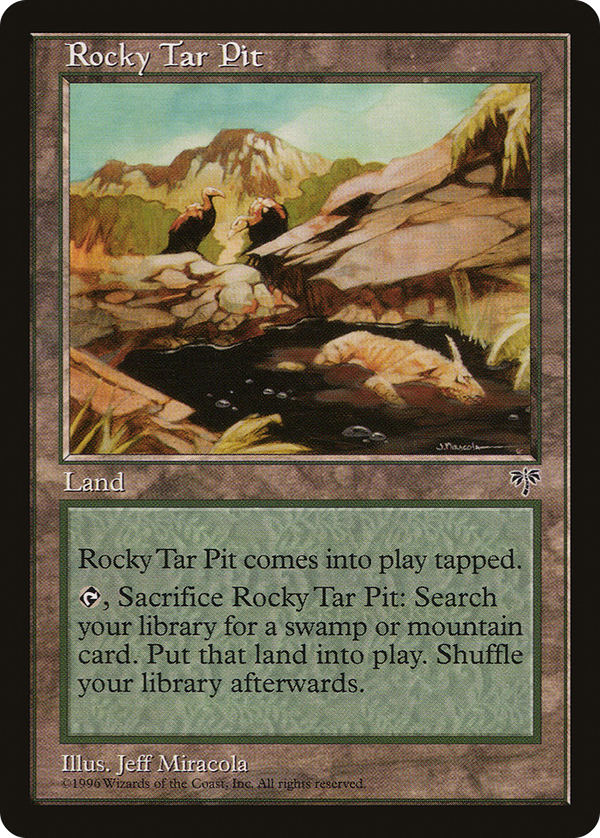
Rules text
 , Sacrifice this land: Search your library for a Swamp or Mountain card, put it onto the battlefield, then shuffle.